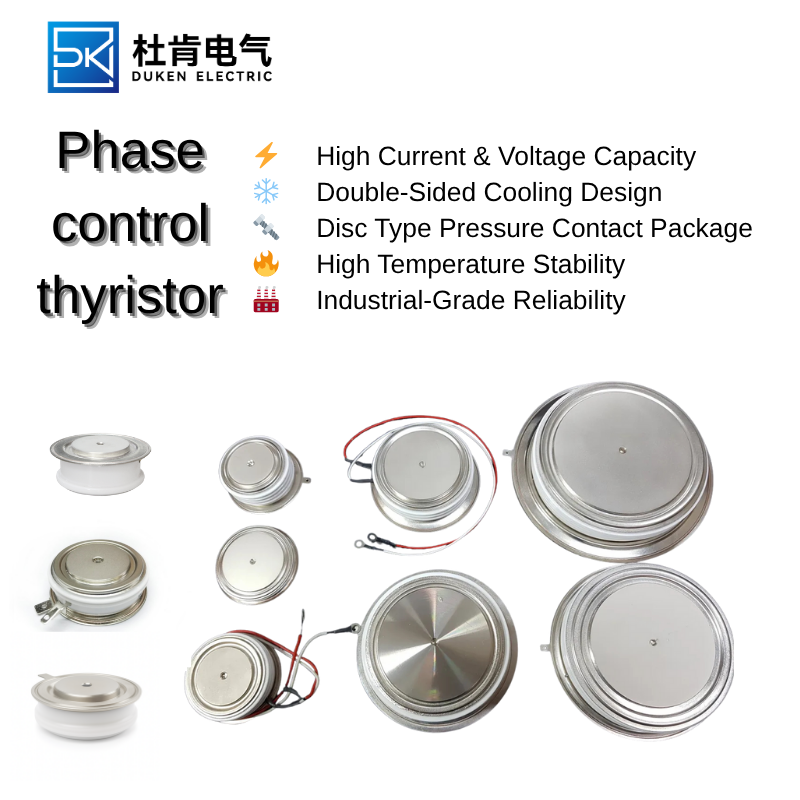
Selecting a 1600A Phase Control Thyristor for Demanding Industrial Power Systems
Selecting the right high-current semiconductor is a critical decision in industrial power system design. When equipment must regulate thousands of amperes under continuous operating conditions, reliability is not optional. A 1600A phase control thyristor is commonly used in applications where stable switching, accurate power regulation, and strong thermal endurance are required.
Industrial users often evaluate current rating, blocking voltage, surge capacity, gate trigger characteristics, thermal resistance, mounting structure, cooling method, and package type before choosing a thyristor. A device may appear suitable by current rating alone, but successful operation depends on how well it performs inside the complete electrical system.
Current Capacity and Application Matching
A 1600A thyristor is designed for heavy-duty power conversion. It is suitable for industrial rectifiers, large motor control systems, heating equipment, soft starters, DC power supplies, and controlled AC power circuits. In these systems, the thyristor must handle high current repeatedly while maintaining predictable electrical behavior.
One important use case is DC load voltage control gate trigger control 1600A phase control thyristor operation in controlled rectifier circuits. By adjusting the gate trigger angle, engineers can regulate the output voltage supplied to DC loads. This is useful in processes that require smooth voltage variation rather than simple on-off switching.
A properly selected DC load voltage control gate trigger control 1600A phase control thyristor can improve system stability by reducing sudden voltage changes. It also helps protect sensitive loads from excessive electrical stress.
For long-term operation, DC load voltage control gate trigger control 1600A phase control thyristor performance must remain consistent under temperature changes, load fluctuations, and repeated firing cycles.
Package Design and Thermal Management
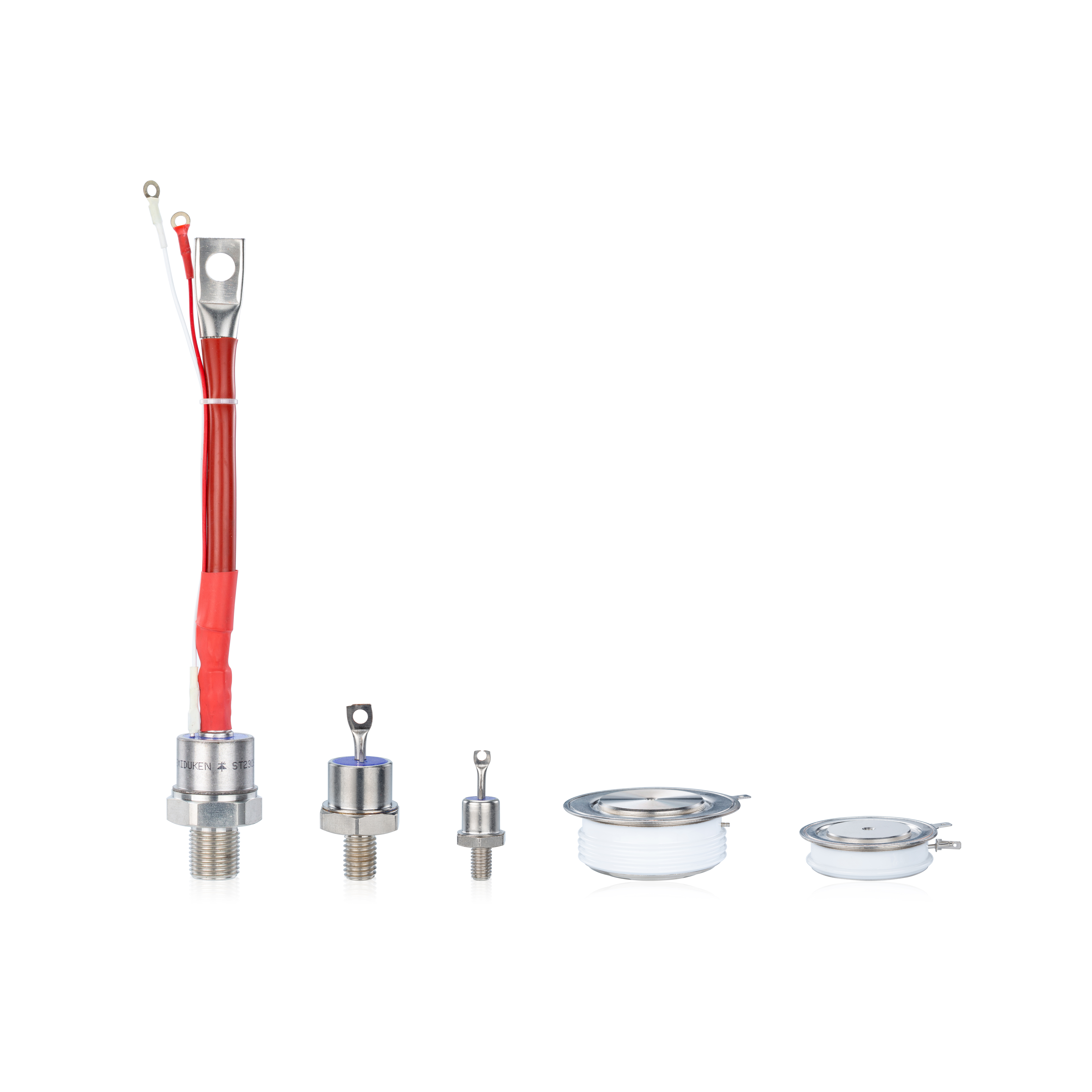
Package structure has a major impact on performance. Disc-package thyristors are widely used in high-current systems because they offer strong mechanical contact and efficient heat transfer. Uniform pressure across the semiconductor wafer helps reduce thermal resistance and improves reliability.
Many drive and converter manufacturers choose variable frequency drives (VFD) Aluminium housing disc package 1600A phase control thyristor designs because they combine high current capability with practical thermal performance. Aluminium housing assists heat dissipation, while the disc package supports stable compression mounting.
In high-power cabinets, variable frequency drives (VFD) Aluminium housing disc package 1600A phase control thyristor devices must be installed with suitable cooling assemblies. Depending on the application, engineers may use air cooling, water cooling, or custom heat sink structures.
A high-quality variable frequency drives (VFD) Aluminium housing disc package 1600A phase control thyristor helps reduce temperature rise during operation, which contributes to longer equipment life and fewer unexpected shutdowns.
Gate Trigger Requirements
Gate trigger control determines when the thyristor turns on during each AC cycle. A stable gate signal is essential for accurate power regulation. Poor gate triggering can cause uneven conduction, output instability, overheating, or device stress.
The gate driver should provide sufficient trigger current and voltage while maintaining electrical isolation from the power circuit. In industrial environments, electromagnetic interference, long cable runs, and cabinet layout can affect signal quality. Therefore, engineers must design the gate circuit carefully.
For heating applications, electromagnetic heating systems gate trigger control 1600A phase control thyristor systems depend heavily on accurate firing control. Even small timing errors may affect heating uniformity and temperature stability.
A reliable electromagnetic heating systems gate trigger control 1600A phase control thyristor configuration allows heating equipment to adjust power output smoothly according to process feedback.
When combined with temperature sensors and automation controllers, electromagnetic heating systems gate trigger control 1600A phase control thyristor technology supports precise thermal regulation in continuous manufacturing lines.
Protection and Safety Design
High-current thyristor systems require proper protection. Overvoltage, overcurrent, short circuits, poor cooling, and incorrect mounting pressure can all reduce device life. Engineers commonly use fuses, snubber circuits, surge suppressors, temperature monitoring, and current sensors to protect the power assembly.
Mechanical installation is equally important. Disc thyristors must be clamped according to the manufacturer’s recommended force. Too little pressure can increase contact resistance, while too much pressure may damage the semiconductor structure.
Insulation distance, cabinet ventilation, busbar design, and grounding must also be considered. In industrial plants, safety and reliability depend on the complete system design rather than the thyristor alone.
Maintenance Considerations
Although thyristors are solid-state devices, they still require system-level maintenance. Operators should inspect cooling systems, check terminal tightness, monitor temperature trends, verify gate signal integrity, and look for signs of insulation aging.
Preventive maintenance helps identify problems before they lead to production stoppages. In continuous processes such as steel production, chemical processing, and high-power heating, avoiding unplanned downtime can save significant operating costs.