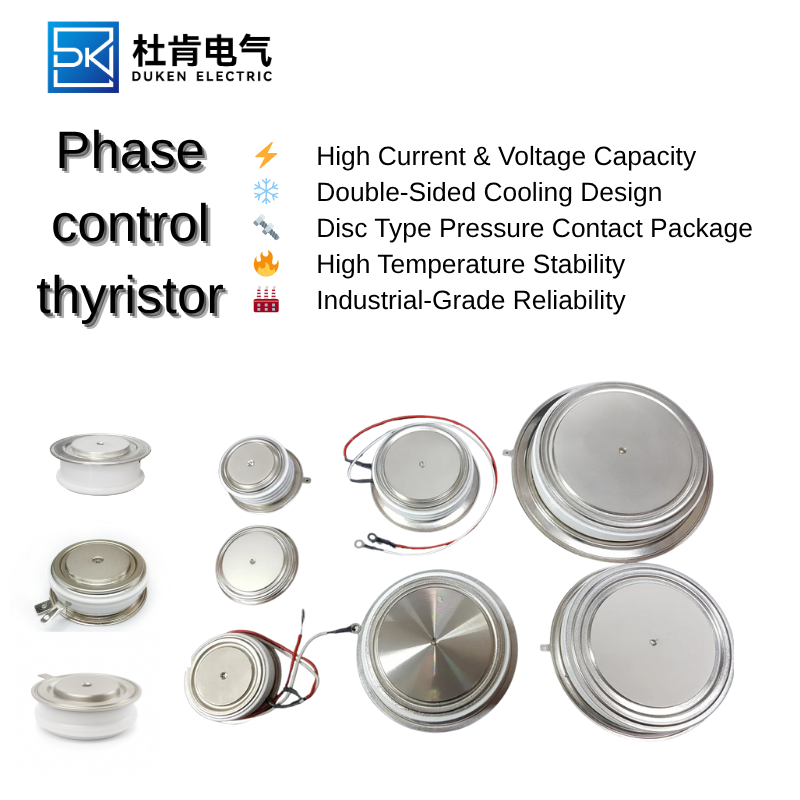
Practical Installation Guide for an 800A Phase Control Thyristor in Heavy-Duty Power Systems
Installing an 800A phase control thyristor requires more than simply mounting a semiconductor device inside a cabinet. In high-current industrial systems, the thyristor becomes part of a complete thermal, electrical, and mechanical control environment. A reliable installation must consider clamping force, insulation distance, cooling performance, trigger wiring, surge protection, and long-term maintenance access. This is especially important when the device is used in demanding applications such as mining drives, AC regulation panels, furnace control systems, and large heater banks.
Before installation, engineers should review the AC power regulators datasheet KP800A-6500V 800A phase control thyristor information carefully. The datasheet helps confirm the voltage class, current capacity, gate trigger requirements, thermal limits, and outline dimensions. In a high-voltage cabinet, even a small mismatch between the thyristor rating and operating conditions can lead to overheating, false triggering, or insulation failure.
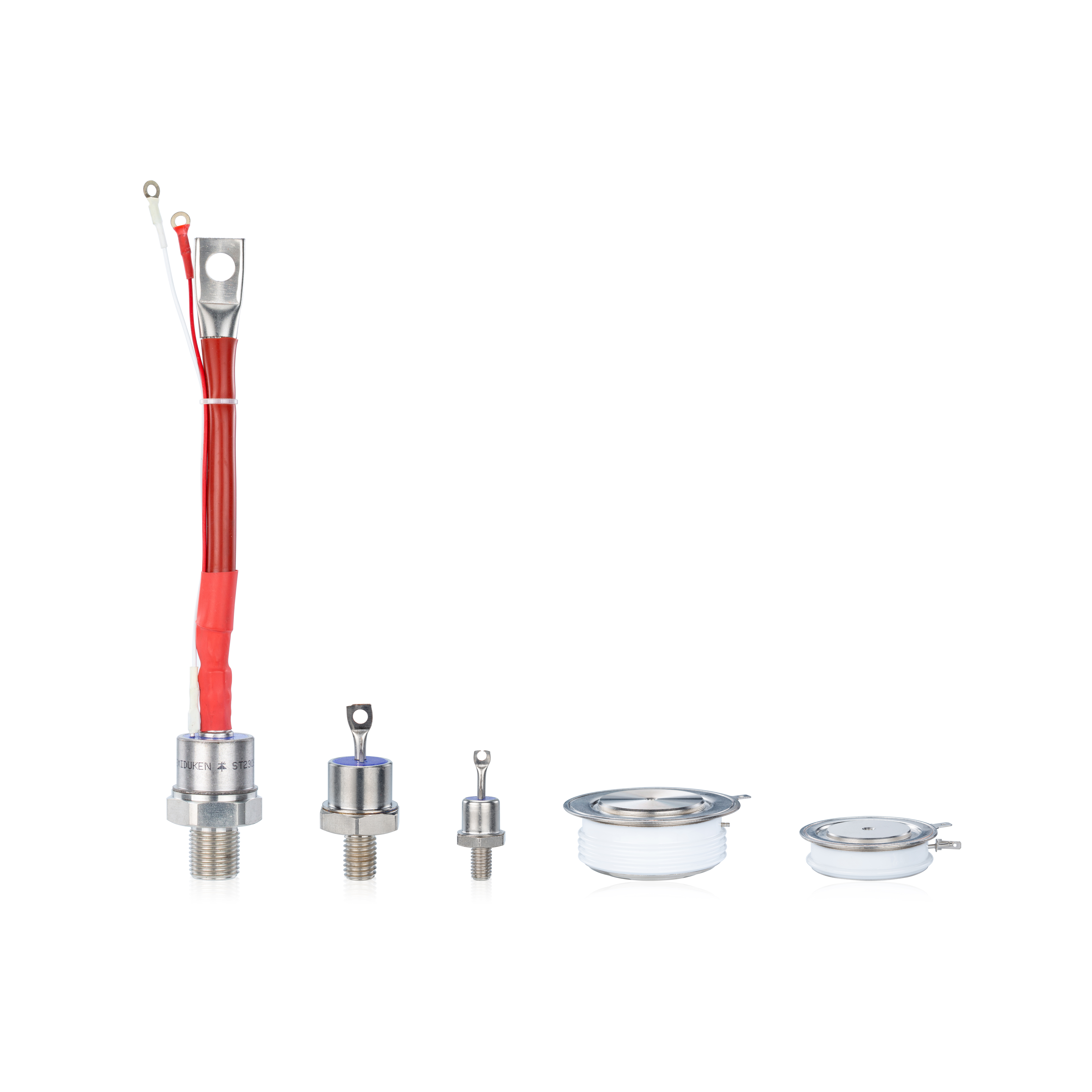
A typical installation starts with inspection. The disc surface must be clean, flat, and free from scratches. The heat sink contact faces should also be cleaned before assembly. For high-current use, the mining equipment power control forced-cooling heat sink 800A phase control thyristor configuration is often preferred because forced air or water-assisted cooling can remove heat more effectively than natural convection. The cooling system should be verified before energizing the equipment.
Mechanical pressure is one of the most critical factors. A disc thyristor must be clamped evenly between heat sinks. Uneven pressure can create localized hot spots, increasing forward voltage drop and reducing service life. The installer should follow the recommended mounting pressure from the manufacturer and use a calibrated clamping assembly. Never tighten one side aggressively while leaving the other side loose.
Electrical polarity must also be confirmed before wiring. The anode and cathode markings should be checked against the circuit drawing. In phase-angle control circuits, incorrect polarity can prevent proper conduction or cause damage during the first power test. Gate and cathode auxiliary leads should be routed away from high-current busbars to reduce electromagnetic interference. Shielded twisted-pair wiring is recommended for long gate signal runs.
Thermal design must match the load profile. For heater control, the large-scale heating elements 6500 V VRRM 800A phase control thyristor application requires stable heat dissipation because heating elements can run for long duty cycles. The thyristor may operate under repetitive conduction, and the heat sink must maintain the junction temperature within safe limits. Temperature sensors should be installed near the heat sink base, not far away in the cabinet airspace.
Surge protection is another key installation step. RC snubber circuits, MOVs, and properly rated fuses can help protect the thyristor from voltage spikes and short-circuit events. When applying the AC power regulators datasheet KP800A-6500V 800A phase control thyristor, the selected protection components should be coordinated with the thyristor’s blocking voltage and expected transient environment.
For mining and heavy machinery, vibration resistance matters. A mining equipment power control forced-cooling heat sink 800A phase control thyristor assembly should use secure busbar supports, anti-loosening hardware, and stable cable routing. Forced-cooling fans should include airflow monitoring because a failed fan can quickly raise the heat sink temperature.
Commissioning should be gradual. Start with insulation testing, then verify gate pulses without main power, then apply reduced voltage if possible. Observe waveform symmetry, heat sink temperature, fan operation, and abnormal noise. For large-scale heating elements 6500 V VRRM 800A phase control thyristor systems, current balance between phases should be checked because heater imbalance can overload one thyristor path.
After the first operating period, retighten mechanical supports according to maintenance procedures, inspect the heat sink surface temperature, and verify that the cabinet remains clean. Dust accumulation can reduce insulation and cooling performance. In harsh environments, filters and sealed ventilation paths are essential.
A successful installation depends on treating the thyristor as part of a complete engineered system. The AC power regulators datasheet KP800A-6500V 800A phase control thyristor should guide rating selection, while field conditions determine cooling, protection, and maintenance details. Whether used in a mining equipment power control forced-cooling heat sink 800A phase control thyristor cabinet or a large-scale heating elements 6500 V VRRM 800A phase control thyristor power controller, correct installation improves reliability, safety, and long-term performance.