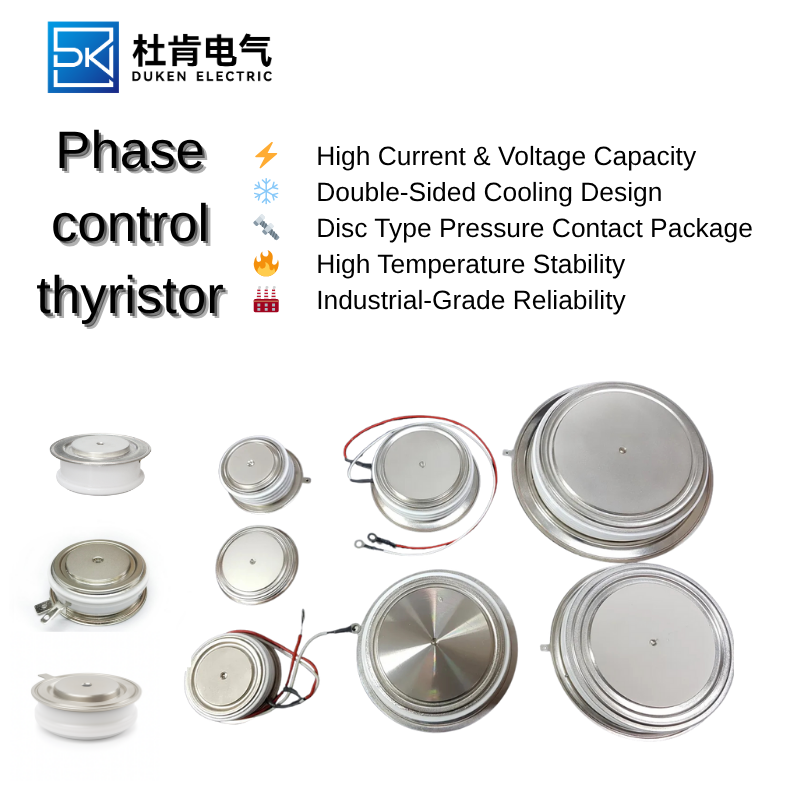
How an 800A Phase Control Thyristor Improves DC Rectifier Performance
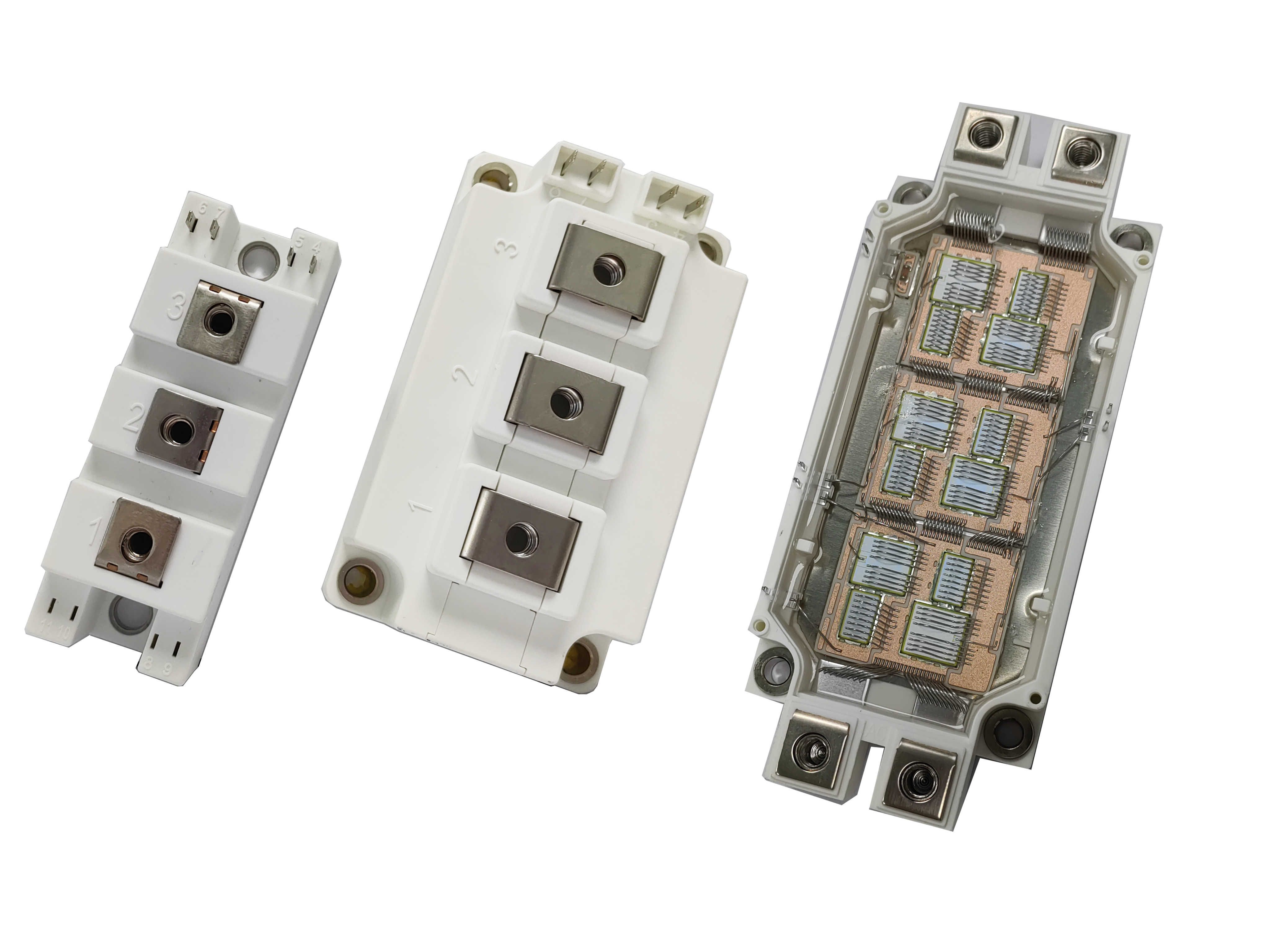
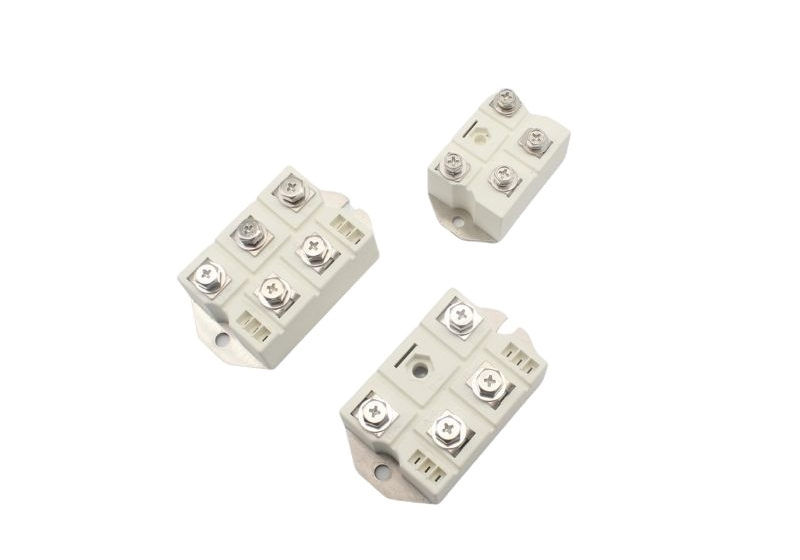
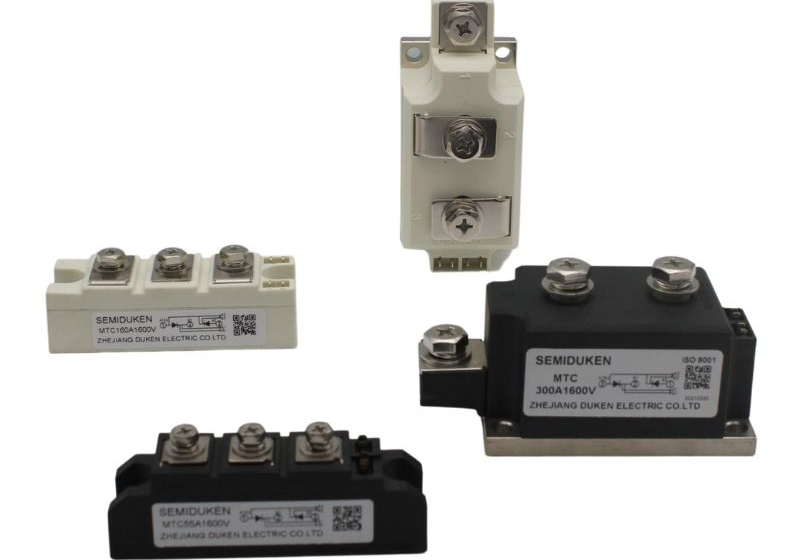
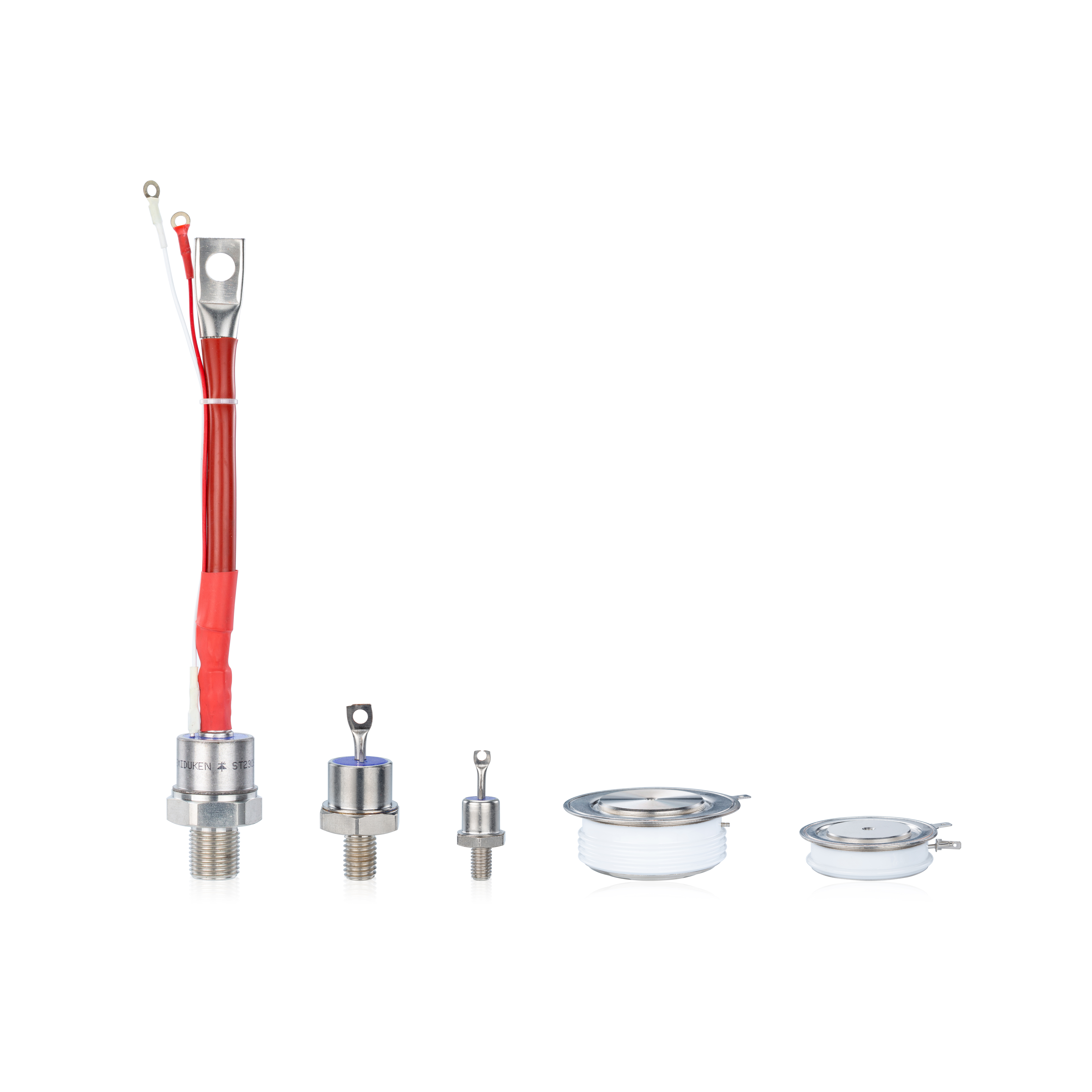
Industrial DC rectifier systems must deliver stable current under demanding electrical, thermal, and mechanical conditions. Whether the rectifier is used in metal processing, industrial battery systems, electrochemical equipment, motor drives, or utility power control, the semiconductor at the heart of the circuit determines overall efficiency and reliability. An 800A phase control thyristor provides the high-current capacity and controllable conduction required for these applications while supporting precise regulation of the DC output.
Unlike a standard diode, a phase control thyristor can be triggered at a selected point in the AC waveform. This allows the rectifier controller to regulate average DC voltage and current without relying entirely on bulky mechanical equipment or highly complex switching arrangements. When properly selected and integrated, the device can improve load control, reduce maintenance requirements, and extend the operating life of the complete power conversion system.
1. Operating Principle in a Controlled Rectifier
A phase control thyristor remains in its blocking state until a gate pulse is applied. After triggering, it conducts current until the current falls below the holding level or the AC waveform reaches its natural current zero. By adjusting the firing angle, the rectifier can increase or decrease the average DC output.
In a three-phase controlled bridge, several thyristors operate in a coordinated sequence. The control circuit sends accurately timed gate signals so that each device conducts during the appropriate section of the waveform. Early firing produces a higher average DC voltage, while delayed firing reduces the output. This method is suitable for industrial loads that require controlled current, gradual startup, or adjustable process power.
The current rating must provide sufficient margin for normal operation, overload events, cooling limitations, and transient conditions. An 800A device gives designers additional current headroom in systems where continuous operating current may vary significantly. It is also useful when the rectifier must tolerate short-duration surges caused by transformer energization, load changes, or abnormal operating conditions.
2. Benefits for Battery Charging Rectifiers
Industrial battery charging requires more than a fixed DC supply. Charging current often needs to be limited during the initial stage, adjusted according to battery voltage, and reduced as the battery approaches full capacity. A controlled thyristor bridge makes these charging profiles possible through firing-angle regulation.
A well-designed battery charging rectifier robust insulation for high voltage 300A phase control thyristor application illustrates why insulation coordination is important even when the nominal load current is below the maximum rating of the main power device. High-voltage isolation between the semiconductor, heat sink, gate circuit, transformer, and enclosure helps prevent leakage current and flashover. This becomes especially important in substations, telecommunications backup systems, railway power equipment, and industrial emergency power installations.
The same design principles apply when upgrading to an 800A device. The rectifier must include adequate creepage distance, clearance distance, insulation materials, thermal interface components, and surge suppression. A battery charging rectifier robust insulation for high voltage 300A phase control thyristor configuration may be used as a reference for smaller charging modules, while an 800A solution can serve larger battery banks or multiple parallel charging channels.
Reliable charging also depends on current feedback, voltage sensing, temperature compensation, and fault detection. The thyristor provides controllable power, but the control system must react correctly to reverse polarity, short circuits, battery disconnection, transformer faults, and excessive heat. For this reason, the final battery charging rectifier robust insulation for high voltage 300A phase control thyristor design should be evaluated as a complete electrical and thermal system rather than as an isolated semiconductor specification.
3. Supporting Reactive Power Compensation Equipment
Phase control thyristors are also used in utility and industrial power-quality equipment. A static VAR compensator regulates reactive power by controlling thyristor-switched capacitors, thyristor-controlled reactors, or a combination of both. Because the devices operate directly on medium- or high-energy AC networks, they must tolerate rapid voltage changes and repeated switching stress.
A static VAR compensator (SVC) high dv/dt immunity 300A phase control thyristor solution demonstrates the importance of resistance to false triggering. High dv/dt can produce displacement current through the internal junction capacitances of a thyristor. If the device does not have sufficient immunity, it may turn on without a valid gate command. Such an event can disturb the compensation sequence or damage other components.
In an 800A design, high dv/dt capability remains essential. The system normally uses RC snubber networks, controlled gate circuits, surge arresters, and coordinated transformer impedance to limit switching stress. However, the thyristor itself must still provide a strong blocking characteristic. A static VAR compensator (SVC) high dv/dt immunity 300A phase control thyristor may meet the requirements of a moderate-current branch, while higher-power installations benefit from the greater current capacity of an 800A component.
Thermal cycling is another major concern in SVC equipment. Reactive power demand can change rapidly, causing repeated variations in device current and junction temperature. Proper clamping pressure, heat-sink flatness, cooling-air management, and temperature monitoring help maintain consistent performance. Engineers evaluating a static VAR compensator (SVC) high dv/dt immunity 300A phase control thyristor should therefore consider both electrical immunity and long-term thermal fatigue.
4. Reliability in High-Current Switching
Industrial rectifiers may operate in locations where ambient temperature is not tightly controlled. Equipment installed in outdoor cabinets, mining facilities, transportation systems, or remote power stations may experience very cold startup conditions and elevated summer temperatures.
A high current switching device extended temperature range (–40°C to +85 °C) 300A phase control thyristor is intended for applications where standard commercial temperature limits are insufficient. At low temperature, gate sensitivity, mechanical stress, and material contraction must be considered. At high temperature, leakage current rises and the available thermal margin decreases.
An 800A device can provide additional current capability, but its junction temperature must still remain within the specified limit. The cooling system should be calculated using conduction losses, transient thermal impedance, ambient temperature, interface resistance, and expected duty cycle. A high current switching device extended temperature range (–40°C to +85 °C) 300A phase control thyristor may be appropriate for distributed switching branches, while the main rectifier stage may require the larger 800A rating.
Long-term reliability also depends on avoiding excessive clamping force, contamination, moisture, loose busbar connections, and uneven current sharing. A properly engineered high current switching device extended temperature range (–40°C to +85 °C) 300A phase control thyristor installation should include environmental sealing, controlled mounting pressure, periodic inspection, and accurate temperature protection.
Conclusion
An 800A phase control thyristor gives DC rectifier designers a practical combination of high-current conduction, controlled output regulation, surge capability, and industrial durability. Its performance depends on more than the headline current rating. Voltage class, gate characteristics, dv/dt immunity, cooling conditions, insulation design, surge protection, and load profile must all be evaluated together.
When these factors are coordinated correctly, the thyristor can support stable battery charging, dependable industrial DC power, controlled process loads, and reactive power compensation. Careful component selection and system-level engineering turn the device into a reliable foundation for long-service-life power conversion equipment.