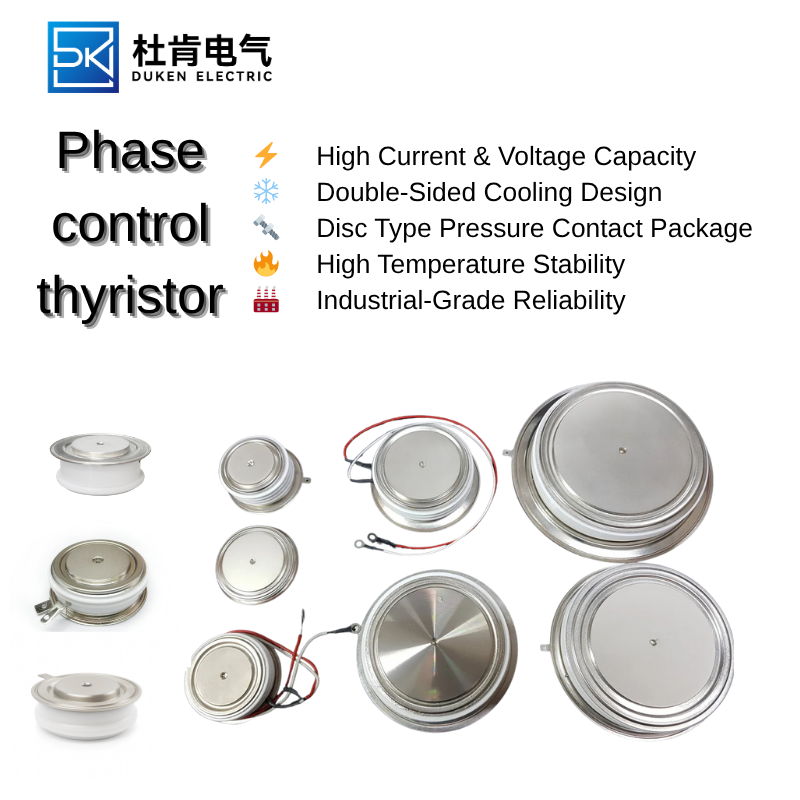
Engineering Reliable Power Conversion with an 1800A Phase Control Thyristor for Inverter Applications
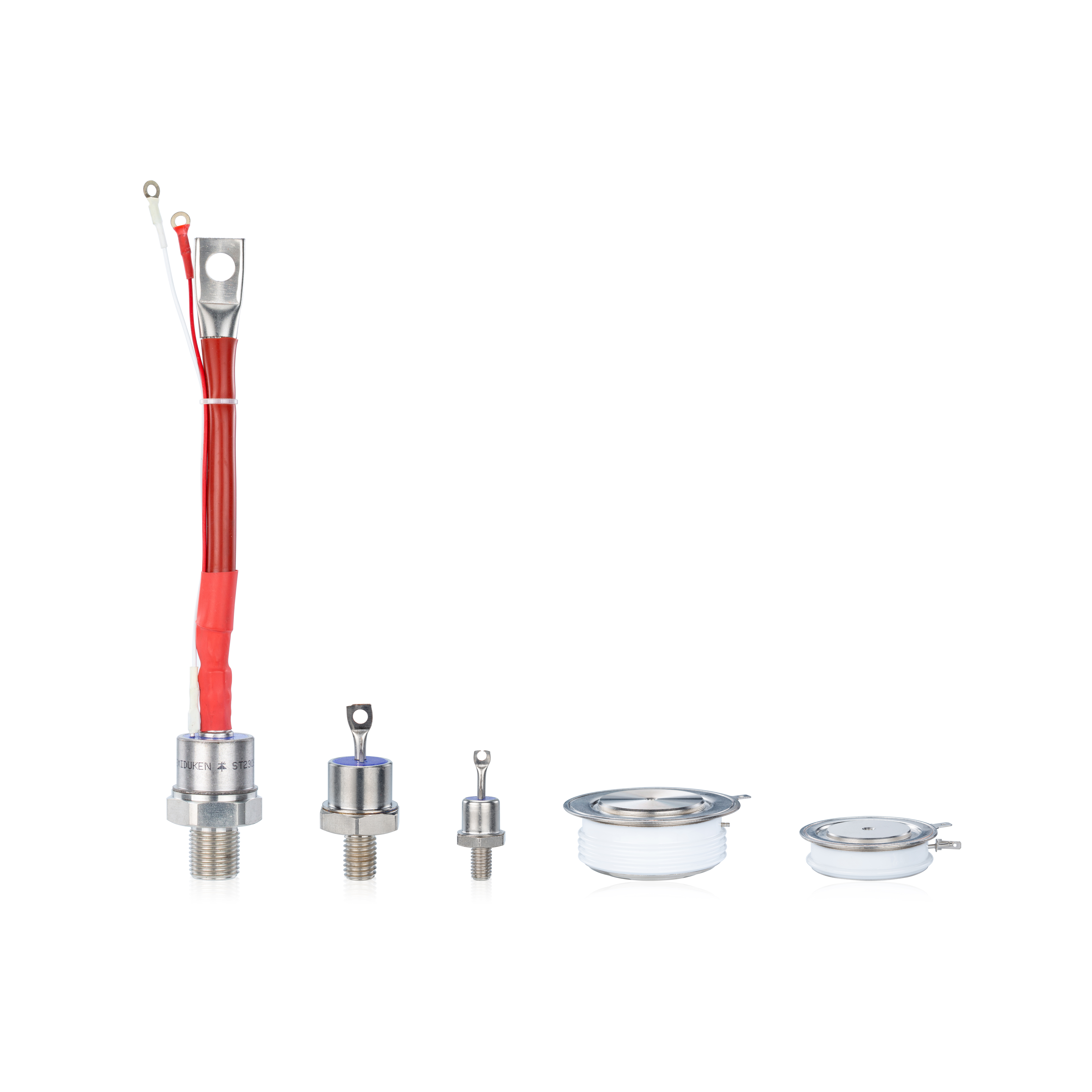
In high-power industrial inverter systems, component selection directly affects efficiency, thermal stability, operational safety, and long-term equipment reliability. Among the most important semiconductor devices used in heavy-duty power conversion is the 1800A phase control thyristor, a device designed to manage large current loads while maintaining predictable switching behavior under demanding electrical conditions.
For industries such as mining, metallurgy, motor control, induction heating, and large-scale energy conversion, the ability to control high voltage and high current with precision is essential. A properly selected thyristor can help reduce system losses, improve controllability, protect connected equipment, and extend service life in harsh environments. This is why engineers often evaluate specifications such as voltage rating, surge current capacity, thermal resistance, gate trigger characteristics, dv/dt performance, and on-state voltage drop before choosing a device for inverter design.
High-Current Performance in Industrial Inverters
Industrial inverters are often required to convert and regulate power under continuous heavy loads. In these systems, an 1800A phase control thyristor provides the current-handling capacity needed for stable operation. When used in inverter circuits, the thyristor supports controlled conduction and allows the system to regulate output power according to process requirements.
A major advantage of using this type of device is its ability to operate reliably in electrically stressful environments. For example, mining equipment power control 6500 V VRRM 1800A phase control thyristor solutions are commonly considered when equipment must perform under high voltage stress, vibration, dust, temperature variation, and continuous mechanical loading. In mining operations, power control systems must not only deliver energy but also withstand abnormal operating conditions without frequent shutdowns.
In inverter-based applications, voltage blocking capability is especially important. A 6500 V VRRM rating allows the device to tolerate high reverse repetitive voltages, making it suitable for medium-voltage industrial platforms. When paired with proper cooling, snubber design, and gate control, mining equipment power control 6500 V VRRM 1800A phase control thyristor technology can support demanding loads such as crushers, hoists, conveyors, and large pumps.
Electrical Stability and Protection Requirements
Power semiconductor devices in inverter circuits are exposed to transient voltages, rapid current changes, and electromagnetic interference. Therefore, engineers must design protection circuits around the thyristor to prevent overstress. Proper coordination of fuses, snubber circuits, heat sinks, and control boards is necessary to keep the thyristor operating within its safe limits.
The phrase mining equipment power control 6500 V VRRM 1800A phase control thyristor reflects more than a product specification. It represents a performance requirement for equipment that depends on rugged power regulation. In a mine, inverter failure can cause production interruption, safety risks, and expensive downtime. By selecting a thyristor with suitable voltage margin and current capacity, system designers can improve operational continuity.
Use in Electromagnetic Heating Systems
Another important application field is industrial heating. Electromagnetic heating systems require fast, stable, and controllable power delivery. These systems may be used in metal processing, forging, melting, surface treatment, and thermal forming. Because heating loads can change rapidly, the thyristor must tolerate voltage transients and switching stress.
For this reason, electromagnetic heating systems high dv/dt immunity 1800A phase control thyristor devices are valuable in applications where unwanted triggering must be avoided. High dv/dt immunity helps prevent false turn-on caused by rapid voltage rise across the device. This is especially important in high-frequency or pulsed power environments where electrical noise and transient voltage spikes are common.
A reliable electromagnetic heating systems high dv/dt immunity 1800A phase control thyristor can improve process stability by allowing the inverter to deliver controlled energy to the heating coil. Stable switching performance helps maintain uniform temperature, reduce product defects, and protect the power circuit from abnormal conduction events. In thermal processing industries, even small instability in power delivery can affect material quality.
Thermal Management and Heat Dissipation
High-current thyristors generate heat during conduction. Although they are efficient devices, conduction losses and switching-related stress must still be managed carefully. Heat sinks, liquid cooling plates, forced-air systems, and accurate temperature monitoring are often used in inverter cabinets.
The on-state voltage drop is a key parameter because it directly affects power loss. A lower voltage drop means less heat generation during conduction, which improves efficiency and reduces cooling system burden. In large inverter systems, even a small reduction in conduction loss can produce meaningful energy savings over long operating periods.
For applications involving motor acceleration, soft-start motor drive low on-state voltage drop 1800A phase control thyristor designs are especially useful. During motor start-up, current can be several times higher than rated operating current. A thyristor with low conduction loss can reduce thermal stress while enabling smooth voltage ramping to the motor.
Soft-Start Motor Drive Applications
Large motors are used in pumps, compressors, fans, crushers, mills, conveyors, and processing equipment. Direct starting of these motors can create mechanical shock, electrical disturbance, and excessive inrush current. Soft-start technology helps solve this problem by gradually increasing voltage and limiting current during start-up.
A soft-start motor drive low on-state voltage drop 1800A phase control thyristor allows the motor drive system to start heavy loads more smoothly. This reduces stress on shafts, belts, gears, and couplings while also lowering the impact on the electrical supply network. For industrial plants, smoother starting improves both equipment protection and power quality.
In repeated start-stop operations, thermal performance becomes even more important. A soft-start motor drive low on-state voltage drop 1800A phase control thyristor helps reduce accumulated heat during each start cycle. This supports longer device life, improved cabinet reliability, and reduced maintenance requirements.
Design Considerations for Engineers
When choosing a thyristor for inverter applications, engineers should consider the complete system environment rather than only the current rating. Important factors include operating voltage, surge current, cooling method, mounting pressure, insulation coordination, gate drive compatibility, and overload protection strategy.
In electromagnetic heating systems high dv/dt immunity 1800A phase control thyristor applications, snubber design and layout are especially important. Short wiring paths, proper insulation, and balanced thermal design all help improve switching stability. Engineers should also evaluate whether the device can maintain predictable behavior during load fluctuations and voltage transients.
For motor drive and inverter platforms, correct matching between the thyristor, control board, and cooling structure can determine long-term performance. A high-quality device may still fail prematurely if installed with poor contact pressure, insufficient heat transfer, or inadequate protection against surge events.
Reliability in Harsh Industrial Environments
Industrial environments often expose power electronics to dust, moisture, vibration, temperature swings, and electrical noise. In such conditions, rugged device construction and conservative system design are essential. Thyristors used in heavy-duty inverters must maintain stable blocking capability and consistent triggering behavior over many operating cycles.
Electromagnetic heating systems high dv/dt immunity 1800A phase control thyristor solutions are particularly useful where electrical disturbance is frequent. Meanwhile, high-voltage inverter and mining systems benefit from thyristors with strong voltage endurance and current capacity. Across these industries, the objective is the same: stable control of large amounts of power with minimal downtime.
Conclusion
An 1800A phase control thyristor is a critical component for high-power inverter systems that require robust current control, high voltage blocking capability, efficient conduction, and reliable switching. Whether applied in mining equipment, electromagnetic heating systems, or soft-start motor drives, the device must be selected according to real operating conditions and supported by proper system design.
For mining applications, high VRRM capability helps protect equipment in demanding power environments. For heating systems, high dv/dt immunity supports stable operation under transient conditions. For motor drives, low on-state voltage drop improves efficiency and reduces thermal stress. By combining the correct thyristor specification with effective cooling, protection, and control design, industrial inverter systems can achieve safer operation, longer service life, and more dependable performance.