Building Long-Term Reliability Through Service, Maintenance, and Application Expertise
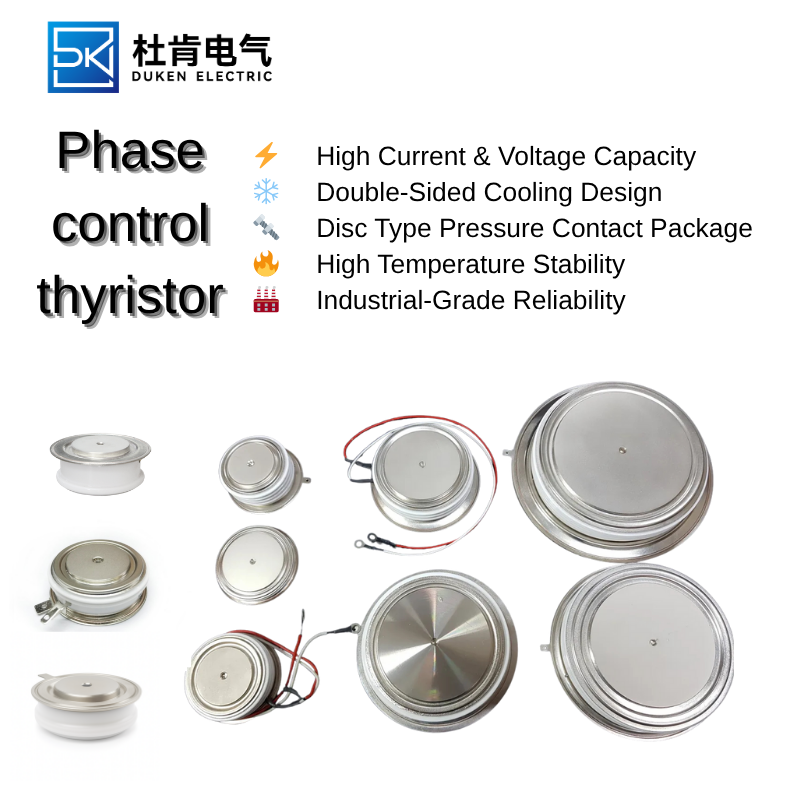
Long-term reliability in industrial power electronics is not created by component selection alone. It is built through a combination of sound design, proper installation, disciplined maintenance, and knowledgeable technical support. This is especially true in systems using high-current semiconductors, where electrical, thermal, and mechanical factors interact continuously. A 3000A phase control thyristor may be chosen for its current capability and operating robustness, but those advantages only translate into reliable service life when the supplier and the customer work together effectively after delivery. In practice, long-term reliability depends as much on after-sales service and application expertise as it does on the semiconductor itself.
The reliability journey starts with correct matching between the component and the application. Customers often assume that a device with adequate current and voltage margins will automatically perform well. In reality, the surrounding system determines whether those margins are preserved or wasted. In thermal processing environments, melting furnace rectifiers gate trigger control 3000A phase control thyristor performance depends on stable gate pulses, clean synchronization, dependable cooling, and the ability to withstand process-driven load variation. If any one of these supporting conditions is weak, the device may operate with hidden stress that reduces service life over time. This is why after-sales service should begin with application review, not wait for a fault report.
Maintenance Discipline Extends Useful Operating Life
A major contributor to reliability is maintenance quality. High-current power devices need regular inspection of mounting pressure, thermal interfaces, connection integrity, and cooling performance. These checks are often simple, but they must be performed consistently and with an understanding of why they matter. A support team with strong application knowledge can help the customer build maintenance routines that are practical and effective. Instead of recommending broad, generic inspections, it can focus on the points most likely to affect performance in a specific environment.
In drive applications, for instance, a low on-state voltage drop for DC link rectification in drives 3000A phase control thyristor can help control losses and improve thermal behavior, but only if maintenance preserves the original installation quality. Dust buildup, weakened airflow, loose electrical joints, or trigger irregularities can gradually erode the expected benefit. Service teams should therefore support not just fault repair, but ongoing maintenance discipline. The goal is to preserve efficiency and stability across months and years of operation, not merely restore function after something fails.
Reliability Requires Attention to Operating Environment
Many reliability issues are environmental before they are electrical. Cabinet contamination, ambient heat, vibration, humidity, and corrosive process conditions can all shorten service life if they are ignored. Electro-plating environments are a good example. Users may select an Aluminium housing disc package for electro-plating rectifiers 3000A phase control thyristor because it offers a robust package style for demanding installations. Even so, reliability still depends on cabinet protection, cooling path cleanliness, and disciplined inspection of mechanical and thermal interfaces. Environmental stress does not always create immediate alarms. More often, it causes gradual deterioration that remains invisible until the next high-load event or shutdown.
This is where field experience becomes highly valuable. A supplier that has supported similar installations can recognize environmental risks early and recommend preventive action before failures appear. That may include more frequent cleaning, better enclosure management, improved spare rotation, or tighter inspection procedures during seasonal temperature changes. These details are not secondary. In many industrial settings, they are the real difference between average performance and dependable long-term operation.
Application Expertise Turns Service into Reliability Engineering
The best after-sales service is not reactive. It functions as a form of reliability engineering. Instead of treating every incident as a one-time issue, it looks for repeat patterns, weak process points, and opportunities for improvement. A furnace operator may report unstable control only during specific shifts or production campaigns. A drive customer may see temperature rise only after a load profile changed. A plating line may experience repeat faults only in one cabinet zone. Service teams with application expertise know how to connect these observations to likely causes and practical remedies.
For example, review of melting furnace rectifiers gate trigger control 3000A phase control thyristor behavior may show that pulse quality drifts during periods of electrical noise or control board aging. Analysis of a low on-state voltage drop for DC link rectification in drives 3000A phase control thyristor installation may reveal that the expected efficiency gain is being offset by avoidable cooling problems. Field study around an Aluminium housing disc package for electro-plating rectifiers 3000A phase control thyristor may identify contamination control as the key reliability lever rather than the device rating itself. In each case, application expertise transforms routine support into a structured reliability improvement process.
Reliable Service Partnerships Deliver Measurable Value
Long-term reliability does not come from isolated interventions. It comes from a service partnership in which the supplier understands the application and the customer shares operating realities honestly. When this relationship works well, maintenance becomes more targeted, troubleshooting becomes faster, spare planning becomes smarter, and equipment life becomes more predictable. These outcomes have measurable business value because they reduce downtime, improve production consistency, and lower the total cost of ownership.
For industrial users, the lesson is clear. Choosing a 3000A phase control thyristor is not only a product decision. It is also a service decision. The supplier’s ability to support installation, maintenance, environmental control, and application-specific analysis will strongly influence whether the system performs reliably over the long term. When service, maintenance, and expertise are aligned, reliability stops being a hope and becomes a managed result.