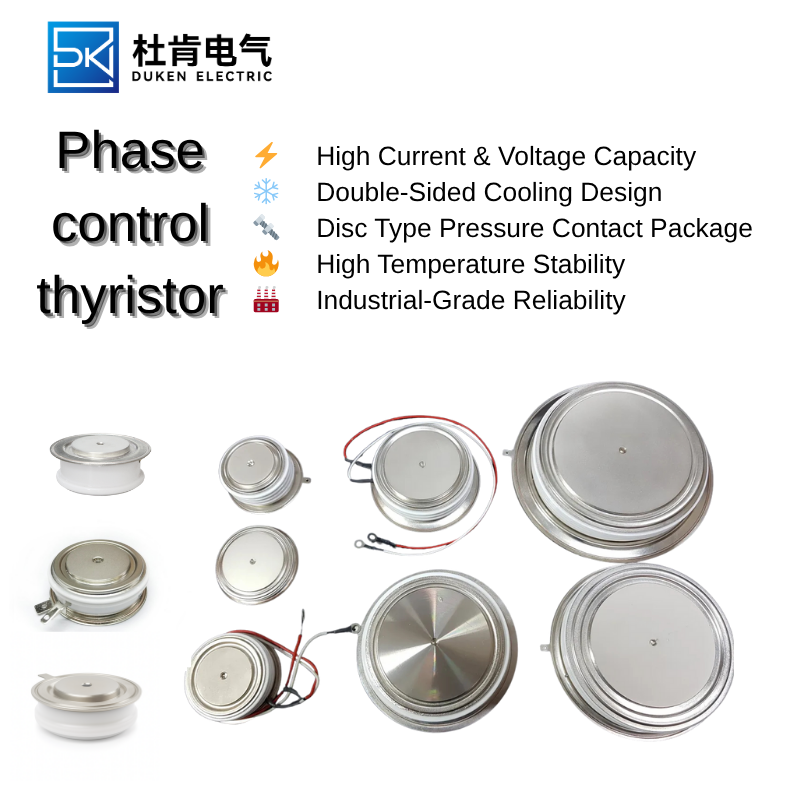
Article 1: How to Select a Reliable 300A Phase Control Thyristor Replacement
Replacing a high-current thyristor is not simply a matter of finding a device with the same current rating. In industrial power systems, a replacement component must match the electrical, thermal, mechanical, and control requirements of the original installation. This is especially important in rectifiers, motor drives, heating equipment, plating systems, and power conversion cabinets where a small mismatch can lead to unstable firing, excessive heat, or premature failure.
Engineers searching for a replacement must consider the complete operating environment. Applications involving melting furnace rectifiers gate trigger control 300A phase control thyristor requirements often experience high surge currents, repeated thermal cycling, electrical noise, and demanding duty cycles. A suitable replacement must therefore provide more than a nominal 300A current specification. It must also deliver dependable blocking capability, predictable gate sensitivity, efficient heat transfer, and long-term mechanical stability.
1. Verify the Electrical Ratings
The first step is to compare the voltage and current ratings of the original thyristor with those of the proposed replacement. The average on-state current should meet or exceed the normal operating current, but designers must also review RMS current, repetitive peak reverse voltage, repetitive peak off-state voltage, surge current, and current rise capability.
A 300A rating does not mean that the device can safely carry 300A under every condition. The published current value is usually based on a defined case temperature, cooling method, conduction angle, and waveform. If the original system operates with limited airflow or a high ambient temperature, the replacement may need additional current margin.
Surge current is equally important. Rectifier systems may experience transformer inrush, load faults, capacitor charging current, or short-duration overloads. The replacement should tolerate these events without exceeding its junction temperature limit. Engineers should also compare the I²t rating, because this value indicates the energy the device can withstand during a surge or fault-clearing event.
For drive systems, low on-state voltage drop for DC link rectification in drives 300A phase control thyristor performance can significantly influence efficiency. Even a small reduction in on-state voltage can lower conduction losses when hundreds of amperes pass through the semiconductor. Lower losses reduce heat-sink requirements, improve cabinet temperature, and may extend the service life of nearby components.
2. Match the Gate Trigger Characteristics
A replacement thyristor must be compatible with the existing gate driver. Important parameters include gate trigger voltage, gate trigger current, gate non-trigger voltage, gate pulse width, and the required rate of current rise after firing.
If the gate trigger current of the new device is much higher than that of the original part, the existing firing board may not provide enough energy to switch it reliably. This can result in delayed conduction, partial triggering, or an imbalance between devices in a multi-phase rectifier. If the new device is significantly more sensitive, electrical noise may cause unwanted triggering unless the gate circuit includes appropriate filtering and shielding.
Systems built around melting furnace rectifiers gate trigger control 300A phase control thyristor operation often require strong, well-timed gate pulses because furnace loads can change rapidly. The gate signal should have sufficient amplitude and duration to establish full conduction under worst-case conditions. Pulse transformers, isolated drivers, and gate resistors should be inspected during replacement to ensure that degraded control components are not mistaken for a thyristor fault.
The latching current and holding current should also be reviewed. A thyristor may receive a correct gate pulse but fail to remain on if the anode current does not rise above the latching current quickly enough. This is particularly relevant in systems with inductive loads, low-current startup conditions, or unusual firing angles.
3. Evaluate Thermal and Mechanical Compatibility
Thermal performance is a major factor in thyristor reliability. The replacement must be able to transfer heat efficiently from the semiconductor junction to the cooling assembly. Compare the junction-to-case thermal resistance, maximum junction temperature, mounting pressure requirements, and recommended heat-sink arrangement.
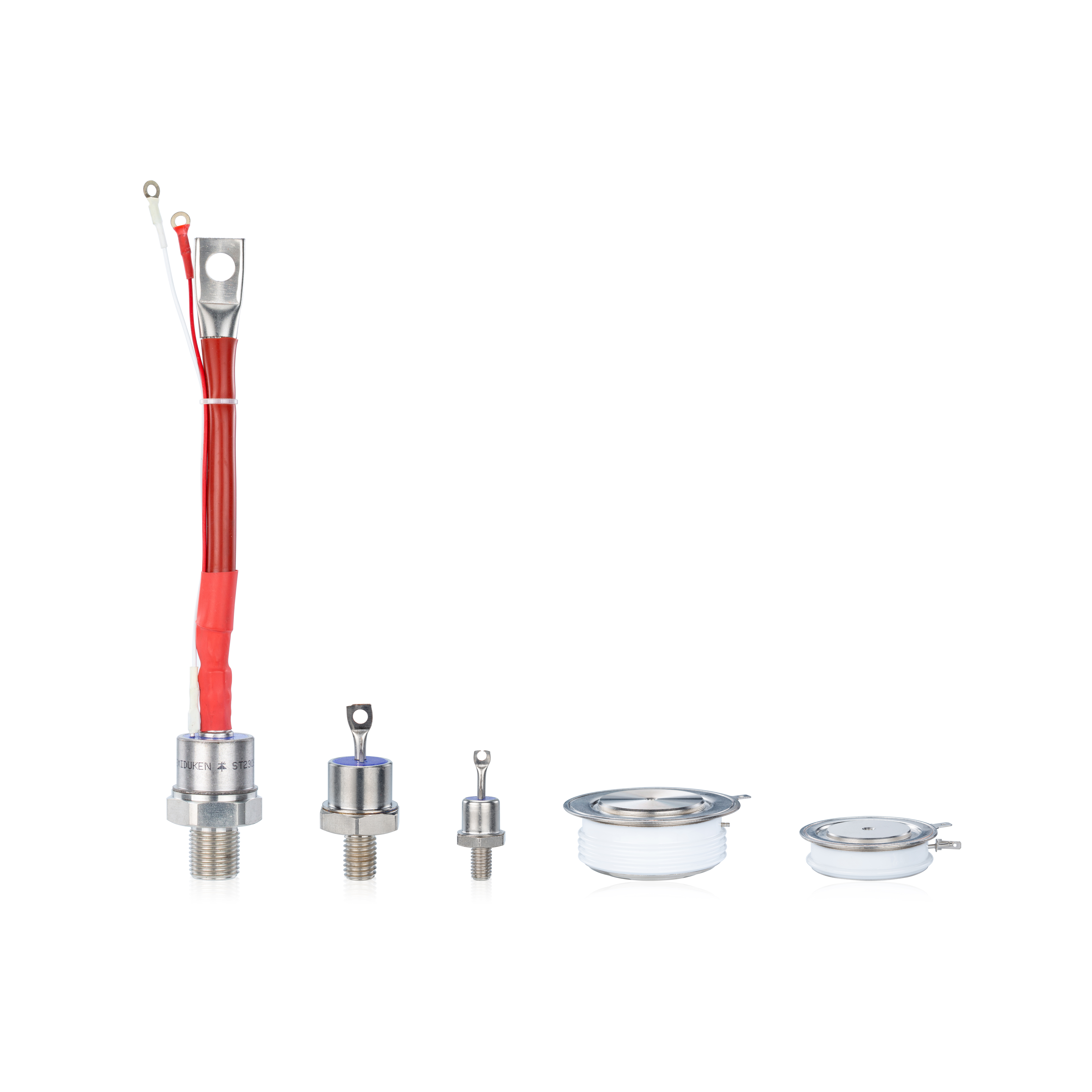
Disc devices require even pressure across both contact surfaces. Insufficient pressure can increase electrical and thermal resistance, while excessive force can damage the ceramic body or internal structure. Surfaces should be clean, flat, and free from oxidation. The clamping assembly should distribute force evenly and maintain pressure during temperature changes.
Many industrial systems require an Aluminium housing disc package for electro-plating rectifiers 300A phase control thyristor because the mechanical format supports compact, high-current rectifier construction. However, package diameter, pole-face dimensions, overall height, terminal configuration, and gate connection must still be checked carefully. A device that is electrically suitable may not fit the existing clamp or heat sink without modification.
Thermal interface materials should also be evaluated. Some disc thyristors are mounted directly between conductive heat sinks, while others use isolation components depending on the rectifier topology. Any insulating layer must provide the required dielectric strength without introducing excessive thermal resistance.
4. Consider the Application Duty Cycle
A replacement part should be selected according to the actual load profile rather than the maximum current alone. Continuous-duty electroplating rectifiers may operate for many hours at a stable current. Melting furnaces may experience rapid current changes and repeated high-load cycles. Motor drives may operate with changing firing angles and varying DC link demand.
In an Aluminium housing disc package for electro-plating rectifiers 300A phase control thyristor application, corrosion resistance and mechanical sealing may be important because plating facilities can contain moisture and chemically aggressive vapors. The rectifier enclosure should provide adequate protection, but the device package and terminals should also resist oxidation during long service periods.
For conversion equipment, low on-state voltage drop for DC link rectification in drives 300A phase control thyristor selection helps control temperature rise during continuous operation. Conduction loss can be estimated by using the manufacturer’s on-state voltage model rather than relying on a single typical voltage value. This produces a more realistic thermal calculation across the expected current range.
5. Validate the Replacement Before Full Operation
Before returning the equipment to full load, technicians should inspect the gate wiring, snubber network, fuses, heat sinks, cooling fans, temperature sensors, busbars, and clamping hardware. A failed thyristor may be the result of another problem, such as a weak gate pulse, poor cooling, an open snubber resistor, or an intermittent load fault.
Initial testing should begin at reduced voltage or reduced current where possible. Gate pulses should be checked with isolated measurement equipment, and conduction should be observed across all phases. Current sharing, heat-sink temperature, and output ripple should remain balanced.
A replacement intended for melting furnace rectifiers gate trigger control 300A phase control thyristor service should be tested under several firing angles because problems may appear only during particular stages of the heating cycle. Likewise, an Aluminium housing disc package for electro-plating rectifiers 300A phase control thyristor should be monitored during extended continuous operation to confirm stable thermal performance.
Ultimately, choosing a low on-state voltage drop for DC link rectification in drives 300A phase control thyristor is only one part of a successful replacement strategy. Engineers must evaluate voltage margin, surge capability, gate compatibility, thermal resistance, package dimensions, cooling conditions, and application duty. A carefully matched replacement can restore efficiency and reliability without requiring major changes to the existing power system.