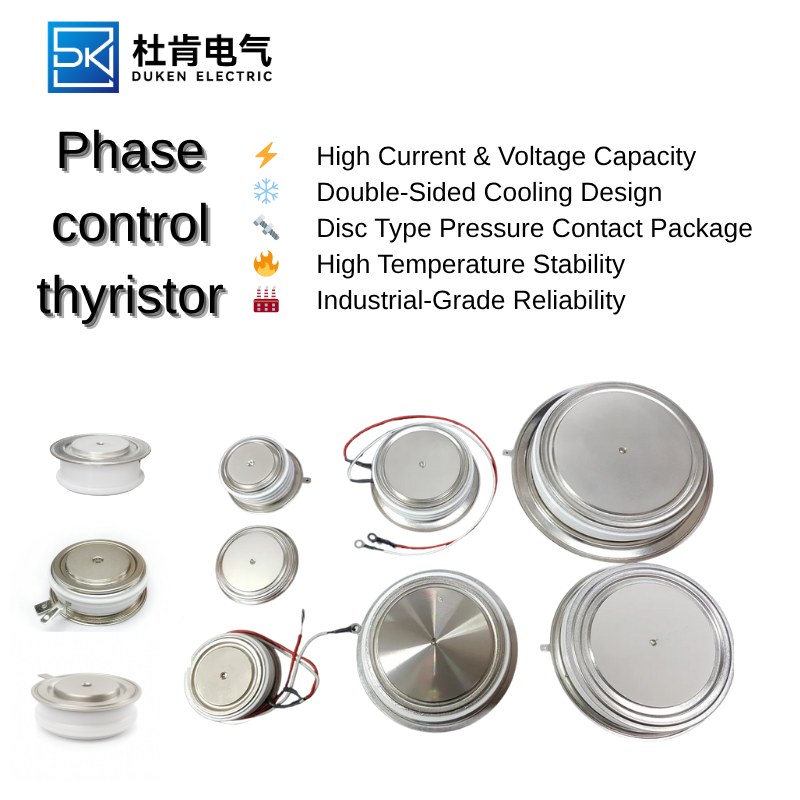
1000A Phase Control Thyristor Installation Guide for Safe and Stable Operation
Installing a 1000A phase control thyristor correctly is essential for safe operation, reliable switching, and long service life. Because this type of thyristor handles very high current, small installation errors can cause overheating, unstable triggering, insulation stress, or premature device failure. A proper installation process should include electrical verification, mechanical mounting, thermal management, gate circuit checking, and final system testing.
1. Pre-Installation Inspection
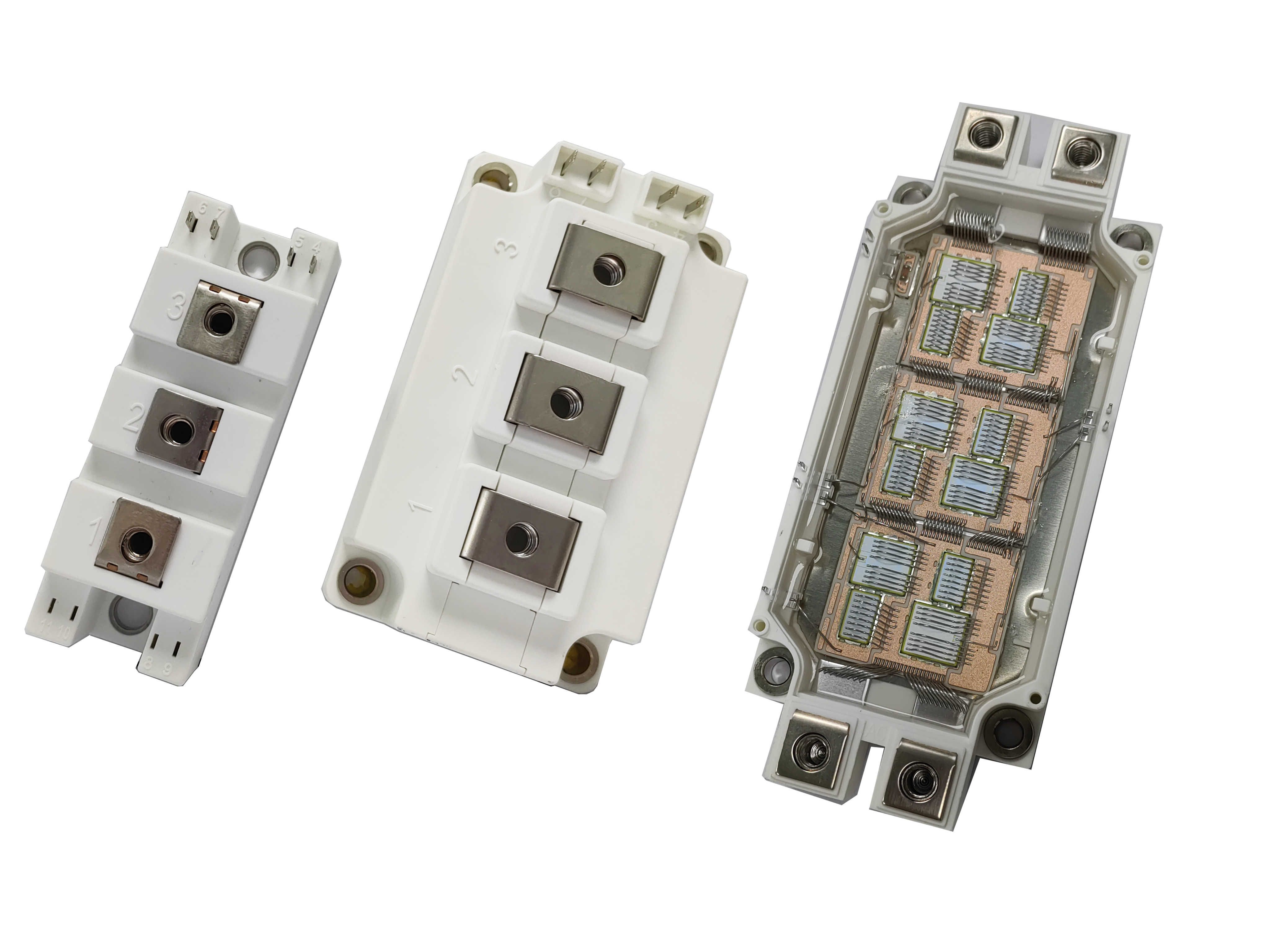
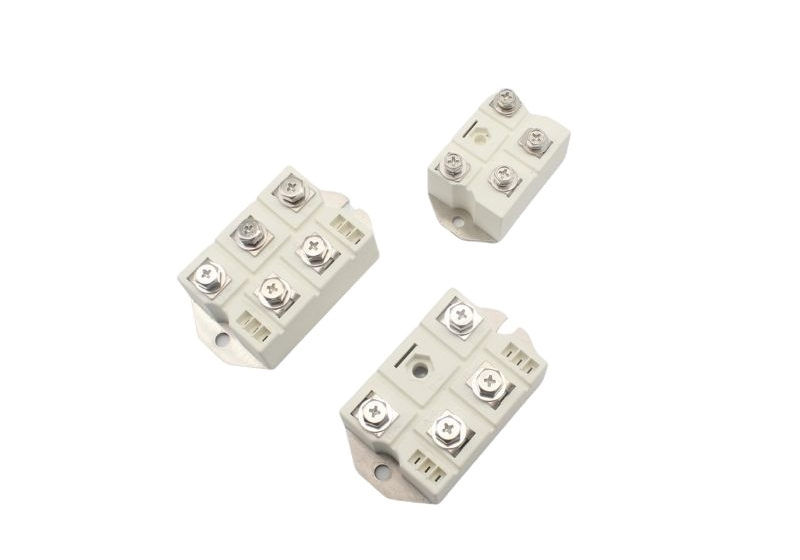
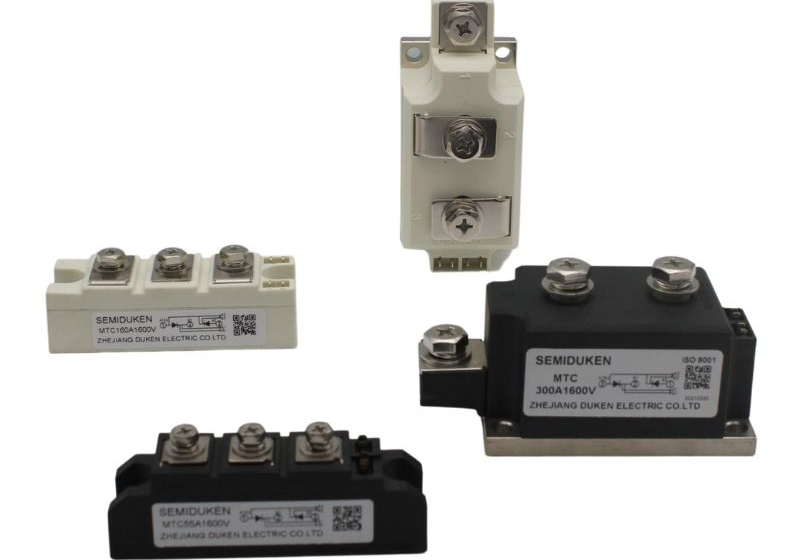
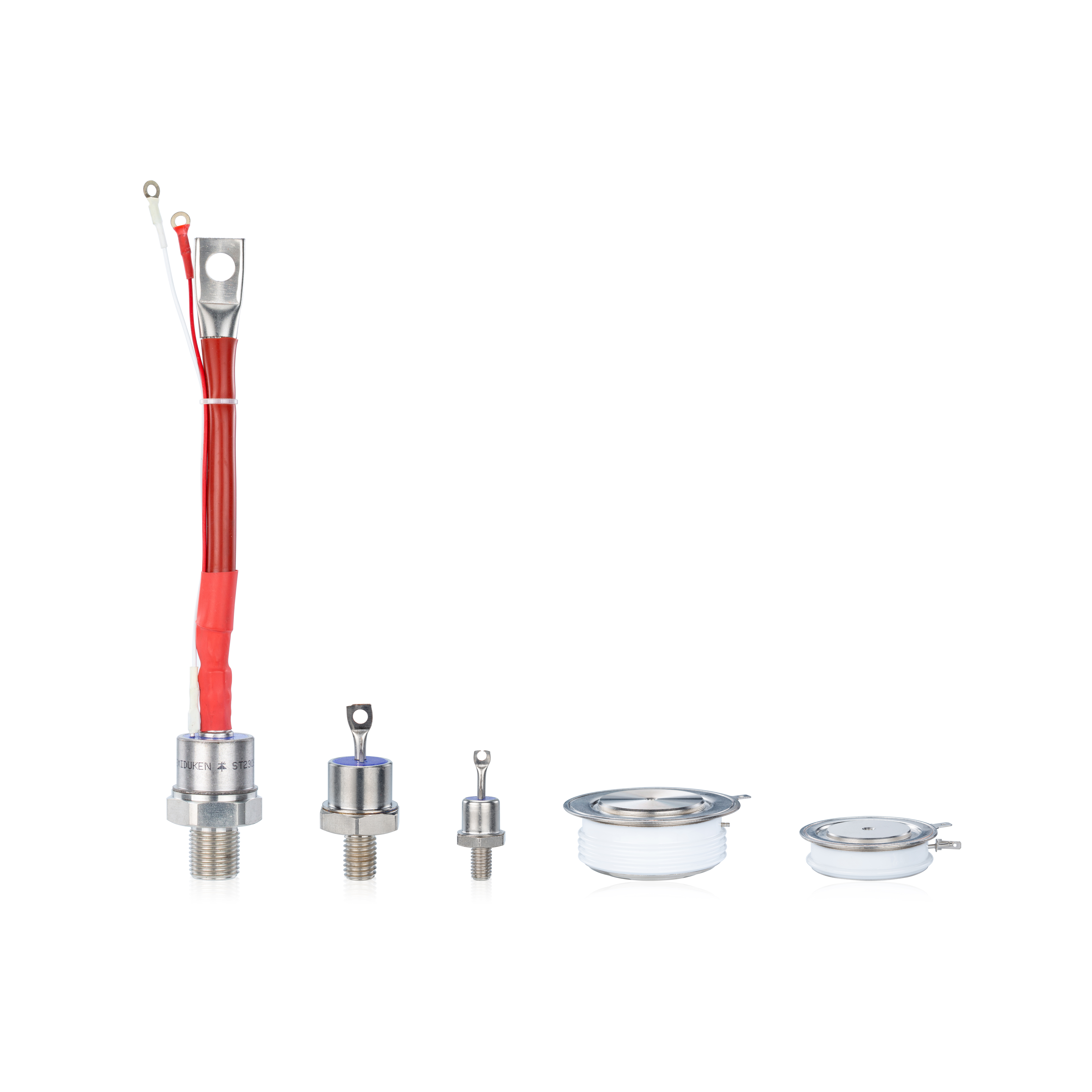
Before installation, the thyristor should be checked carefully. Confirm the current rating, voltage class, package type, polarity, gate terminal marking, and datasheet specifications. The selected device should match the actual system requirements, not only the nominal current. In applications with motor loads, transformer inrush, or pulsed current, a gate trigger control high surge current rating 1000A phase control thyristor is preferred because it provides better protection against short-term overload conditions.
Inspect the package for cracks, damaged terminals, contamination, or signs of moisture. The mounting surface should be clean, flat, and free from burrs. Heat sinks and busbars should also be checked before assembly. Even minor surface defects can reduce thermal contact and increase operating temperature.
2. Mechanical Mounting Procedure
Correct mounting pressure is critical. If the pressure is too low, thermal resistance increases and the device may overheat. If the pressure is too high, the semiconductor structure can be damaged. Always follow the recommended clamping force or torque from the product documentation.
A gate trigger control high surge current rating 1000A phase control thyristor should be mounted with proper alignment to ensure even pressure distribution. Use suitable washers, clamps, or mounting hardware depending on the package type. The heat sink surface should be treated with appropriate thermal compound, but excessive compound should be avoided because it may reduce contact quality.
3. Electrical Insulation and High-Voltage Safety
High-current thyristor assemblies often operate at dangerous voltage levels. A robust insulation for high voltage high thermal stability 1000A phase control thyristor helps improve safety, but system-level insulation design is still necessary. Maintain proper creepage and clearance distances between live conductors, heat sinks, cabinet walls, and control wiring.
Insulating pads, sleeves, barriers, and terminal covers should be selected based on voltage rating and temperature conditions. A robust insulation for high voltage high thermal stability 1000A phase control thyristor should also be protected from dust, metal particles, oil mist, and moisture, as contamination can reduce insulation resistance over time.
4. Gate Trigger Circuit Setup
The gate circuit must deliver the correct trigger current and voltage at the correct timing. Weak gate drive can cause delayed firing, uneven current sharing, or incomplete conduction. Excessive gate current can damage the gate junction. For this reason, gate wiring should be short, shielded where necessary, and separated from high-power conductors.
A gate trigger control extended temperature range (–40°C to +85 °C) 1000A phase control thyristor requires a gate circuit that remains reliable across the expected operating temperature range. In cold conditions, triggering characteristics may differ from hot operation. The gate drive should be designed with enough margin to maintain stable firing without overstressing the device.
5. Thermal Management and Final Testing
Thermal design is one of the most important parts of thyristor installation. The heat sink must be sized for continuous current, ambient temperature, airflow, and duty cycle. Cooling fans should be positioned to move air effectively across the heat sink. In high-load systems, thermal sensors can be installed near the thyristor assembly to monitor temperature rise.
A gate trigger control extended temperature range (–40°C to +85 °C) 1000A phase control thyristor can support demanding environments, but it still requires correct cooling. Extended temperature capability does not replace thermal design; it improves reliability when the system is engineered properly.
After installation, perform insulation resistance testing, gate trigger verification, no-load testing, and gradual load testing. Monitor voltage drop, heat sink temperature, output waveform, and abnormal noise. If the thyristor is part of a bridge circuit, confirm that all devices fire correctly and share current as expected.
For long-term reliability, maintenance should include periodic tightening checks, dust cleaning, fan inspection, thermal compound evaluation, and waveform analysis. A properly installed system using a gate trigger control high surge current rating 1000A phase control thyristor, a robust insulation for high voltage high thermal stability 1000A phase control thyristor, and a gate trigger control extended temperature range (–40°C to +85 °C) 1000A phase control thyristor can deliver stable performance in rectifiers, drives, heating controllers, and other heavy-duty power systems.