The Importance of Low Leakage Current in 1000A Phase Control Thyristors
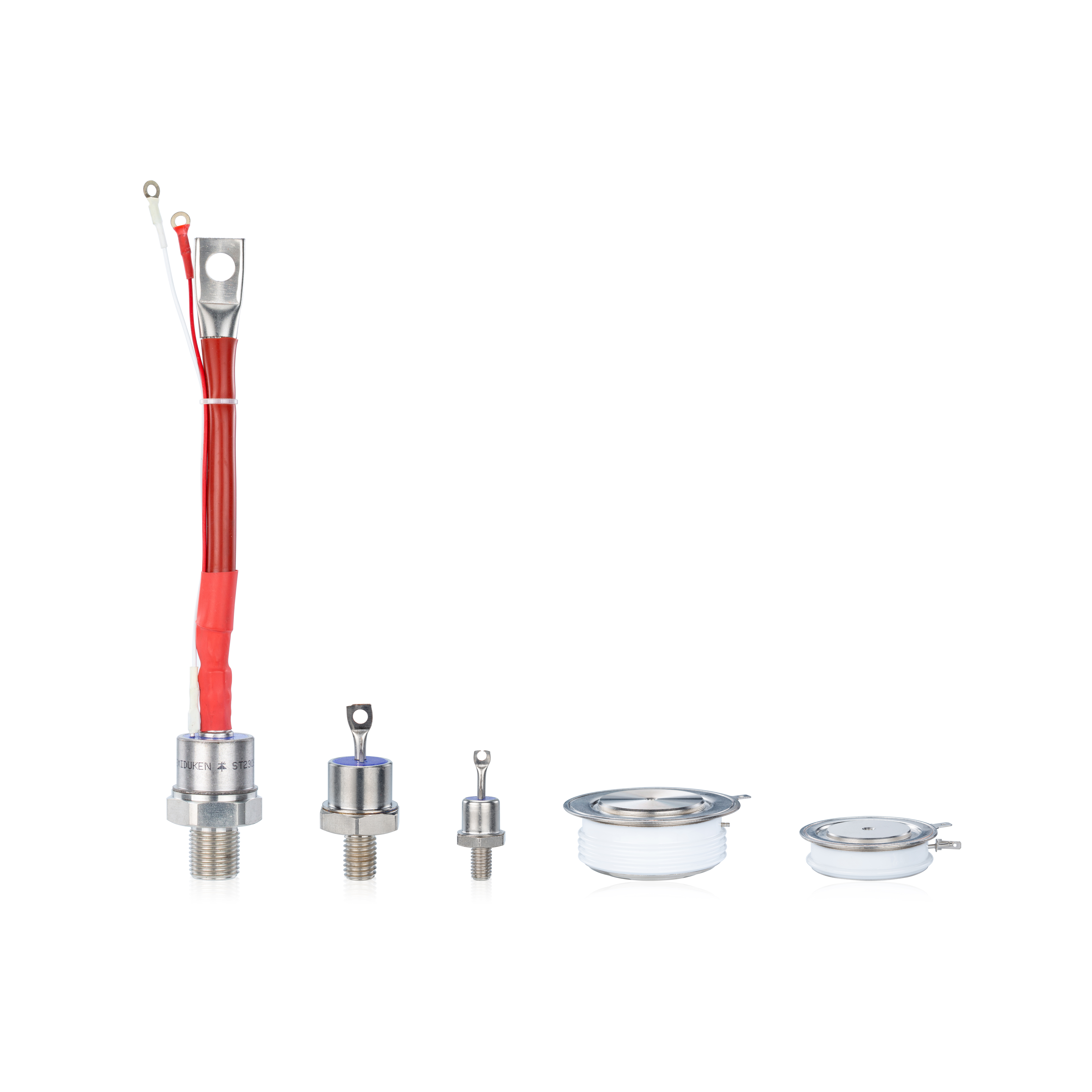
In the realm of high-power electronics, the performance and reliability of components like 1000A phase control thyristors are crucial. These devices control the flow of electrical energy in systems that require high surge current handling, such as motor drives, rectifiers, and power grids. One of the most important characteristics of a 1000A phase control thyristor is its leakage current.
Leakage current—often defined as the small current that flows through a thyristor even when it is in the off-state—is a critical parameter that impacts the efficiency, longevity, and safety of electrical systems. In this article, we will discuss why low leakage current is vital for 1000A phase control thyristors and how manufacturers ensure that these devices meet high standards of performance.
1. Understanding Leakage Current in Thyristors
Leakage current in 1000A phase control thyristors refers to the small amount of current that flows through the device when it is not conducting power in the "off" state. This current is a result of the material properties and the construction of the thyristor, as well as the junctions within the semiconductor device.
In a datasheet KP1000A‑6500V low leakage current 1000A phase control thyristor, the manufacturer will specify this current, which should be minimized for optimal performance. If leakage current is too high, it can lead to several issues, such as:
Reduced efficiency: Excess leakage current contributes to power loss, which in turn increases the energy consumption of the system.
Heating: Even small amounts of leakage current can generate heat, leading to increased thermal stress on the thyristor and surrounding components.
Inaccurate control: In high-precision applications, such as battery charging or power factor correction, high leakage current can lead to inaccuracies and system malfunctions.
2. The Role of Low Leakage in Long-Term Reliability
For a 1000A phase control thyristor, especially in demanding industrial environments, low leakage current is critical for ensuring long-term reliability. High leakage current can accelerate the aging of the device, increasing the likelihood of failure and reducing the lifespan of the thyristor.
Manufacturers of datasheet KP1000A‑6500V low leakage current 1000A phase control thyristor models often implement rigorous testing procedures, such as high-temperature reverse bias (HTRB) testing, to ensure that the device will continue to perform well over time. By minimizing leakage current, these manufacturers help enhance the longevity of the thyristor, making it more reliable and reducing the need for maintenance and replacement.
3. Design Considerations for Low Leakage Current
Achieving low leakage current in 1000A phase control thyristors requires careful attention to design and manufacturing processes. Several key design considerations include:
Silicon passivation: This technique involves adding a layer of passivating material on the semiconductor's surface to reduce surface leakage. This is a critical step in minimizing the leakage current in high-voltage thyristors.
Edge termination technology: Specialized edge terminations are used to control the electric field distribution around the thyristor's junctions, further reducing the leakage current.
Optimized junction design: The way the semiconductor junctions are constructed, including doping levels and the interface materials, plays a significant role in minimizing the leakage current.
By implementing these advanced manufacturing techniques, companies can produce datasheet KP1000A‑6500V low leakage current 1000A phase control thyristor units that perform reliably in high-stress environments while maintaining minimal leakage.
4. The Impact of Low Leakage on Power Systems
The presence of low leakage current in 1000A phase control thyristors has a direct impact on the overall performance of power systems. For example, in applications like motor drives or power grids, low leakage ensures that energy losses are minimized, making the system more efficient and reducing operational costs.
In addition, minimizing leakage current also ensures that thyristors can be used in systems requiring high precision, such as static VAR compensators (SVC), where rapid and accurate control of reactive power is crucial. By reducing energy loss and maintaining accurate control, low leakage current contributes to the stable operation of power systems.
5. Global Standards for Low Leakage Current
Leading manufacturers of 1000A phase control thyristors, particularly those producing datasheet KP1000A‑6500V low leakage current 1000A phase control thyristor units, adhere to international standards such as IEC, UL, and RoHS to ensure that their products meet the highest quality criteria. These standards set limits on the allowable leakage current, ensuring that only high-quality components are used in critical power systems.
Manufacturers who comply with these standards provide greater confidence to buyers, knowing that their thyristors will operate efficiently and safely over the long term.
Conclusion
The importance of low leakage current in 1000A phase control thyristors cannot be overstated. Whether used in datasheet KP1000A‑6500V low leakage current 1000A phase control thyristor applications or static VAR compensator (SVC) high dv/dt immunity 1000A phase control thyristor systems, reducing leakage current improves efficiency, longevity, and reliability. By selecting products with low leakage current, buyers can ensure that their power systems run efficiently and safely, minimizing energy loss and reducing the likelihood of component failure.