The Critical Role of Gate Trigger Control in 1400A Phase Control Thyristors
As industries continue to push for higher efficiency, reliability, and precision in power control, 1400A phase control thyristors have become indispensable in modern electrical systems. Their capacity to handle massive currents while maintaining consistent performance makes them the preferred choice in demanding applications such as DC load voltage control, variable frequency drives (VFD), and electromagnetic heating systems. A key component of this performance lies in the quality and design of their gate trigger control systems.
This article delves into how gate triggering influences the performance of 1400A thyristors, how Aluminium housing disc packages help ensure system stability, and why properly managing the gate characteristics is essential in every high-current industrial setting.
Why Gate Trigger Control Matters
The gate terminal in a thyristor acts as the switch activator—determining when and how the device transitions from a non-conductive to a conductive state. In high-current thyristors, such as the 1400A phase control thyristor, achieving fast, reliable switching is not just important for efficiency but critical for safety and component longevity.
Accurate gate trigger control ensures that conduction begins only when desired, preventing false turn-on caused by noise, voltage transients, or incomplete gate pulses. This is especially important in DC load voltage control systems, where controlled power delivery is fundamental. An unstable or weak gate pulse may lead to partial conduction, increased power dissipation, or catastrophic failure.
Modern thyristors are equipped with gate sensitivity enhancements that allow for better noise immunity. Working with distributors who understand the nuances of gate trigger control 1400A phase control thyristor configurations ensures system compatibility and operational reliability.
Application in Variable Frequency Drives (VFD)
In variable frequency drives (VFD), thyristors are often used in the rectification stage or for soft-start functionalities. Here, the need for synchronized triggering is vital. Misfiring or delayed firing can introduce harmonics, reduce power factor, and lead to motor instability.
By implementing a precision gate trigger control strategy, designers can time the thyristor conduction to correspond exactly with phase angles, ensuring smooth AC to DC conversion. This is particularly important in high-powered VFDs where the motor load exceeds 200 kW and power input surges are significant.
The 1400A phase control thyristor’s ability to handle these surges with fast gate response reduces the risk of drive tripping, equipment overheating, and unplanned downtimes.
Optimizing Heating Systems with Gate Control and Disc Packaging
In electromagnetic heating systems, the challenge lies in controlling rapidly changing load conditions without introducing thermal imbalance. Precise gate control ensures smooth transitions in power output, helping maintain a stable heating profile and avoiding overshoots or undershoots in temperature-sensitive processes.
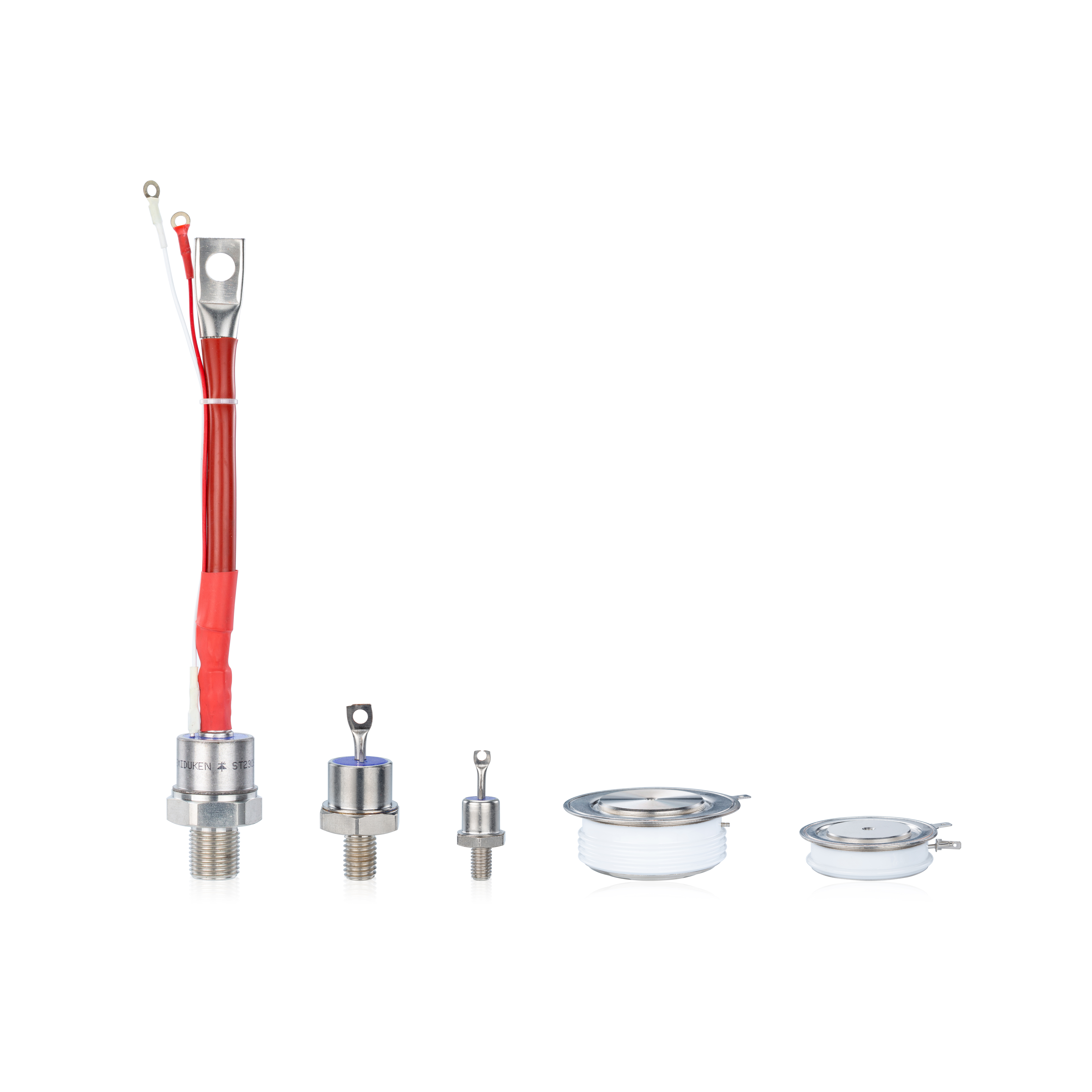
Here, the Aluminium housing disc package design offers a dual benefit. First, it provides a low thermal resistance path, dissipating heat generated during conduction rapidly. Second, it ensures stable mounting pressure, which maintains consistent contact between the thyristor and heatsink—preventing hot spots that degrade performance.
The combination of gate trigger control precision and Aluminium housing disc package robustness makes the 1400A phase control thyristor the ideal solution for high-power heating units in metal processing, chemical manufacturing, or food sterilization.
Best Practices for Implementing Gate Trigger Control
To harness the full potential of 1400A thyristors, engineers must consider several aspects of gate design:
Pulse Width: A minimum pulse width is needed to ensure full triggering across the junction. Short pulses may result in delayed or partial conduction.
Trigger Current and Voltage: Matching these parameters to the datasheet is essential. Under-driving the gate can cause non-uniform conduction and overheating.
Isolation: In noisy industrial environments, optical or pulse transformers are recommended to isolate gate drive circuits.
Gate Protection: Snubber networks and clamping diodes can protect the gate from dv/dt-related false firing.
By optimizing these parameters, systems achieve better synchronization, efficiency, and overall power quality.
Conclusion: Unlocking the Potential of High-Current Thyristors
The 1400A phase control thyristor is more than a high-current switch—it’s a precision instrument made effective by its gate trigger control capabilities and thermal design. Whether used in DC load voltage control, variable frequency drives (VFD), or electromagnetic heating systems, the combination of fast gate response and rugged Aluminium housing disc package construction ensures peak performance.
Investing in proper gate design and working with experienced suppliers not only enhances efficiency but also prolongs equipment life and reduces maintenance costs. For industries seeking the next level of electrical control, these thyristors provide a reliable, scalable, and robust foundation.