Key Performance Criteria of 106A Thyristor Modules for Motor Soft Starters
Motor soft starters play an essential role in reducing inrush current and mechanical stress during motor startup. One of the most critical components in a soft starter is the 106A thyristor module, responsible for controlling voltage ramp-up through phase-angle modulation. This article discusses essential performance parameters of thyristor modules optimized for motor soft starters, focusing on thermal behavior, surge handling, and connection reliability.
1. Thermal Resistance and Cooling Management
Motor soft starters generate significant heat due to continuous modulation during the startup phase. Efficient cooling and thermal management are vital to prevent device failure.
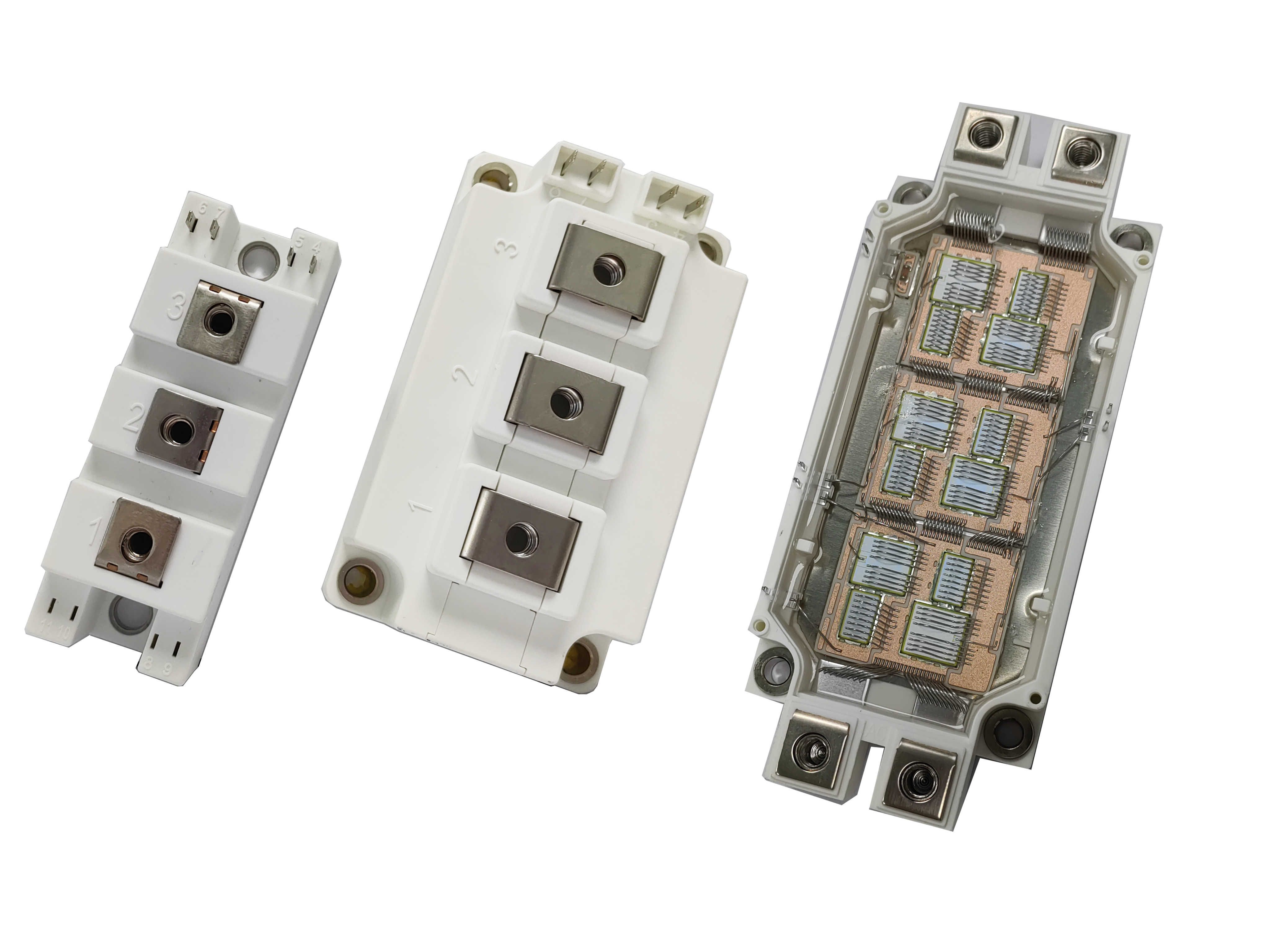
The forced-air-cooling low Rth(j-c) certified 106A thyristor module for ups systems is specifically designed to maintain low junction temperatures. Its reduced Rth(j-c) (junction-to-case thermal resistance) ensures heat is rapidly conducted away from the chip, extending module lifespan under motor start cycles.
Forced-air-cooled solutions provide a cost-effective way to handle thermal loads compared to liquid-cooled alternatives, making them suitable for compact starter panels.
These modules are ideal for continuous operation in industrial environments with high ambient temperatures, ensuring thermal stability over repeated start/stop cycles.
2. Surge Handling and Electrical Robustness
Motor startup often causes voltage surges due to inductive load switching. Surge-protection is crucial for protecting the thyristor module and downstream equipment.
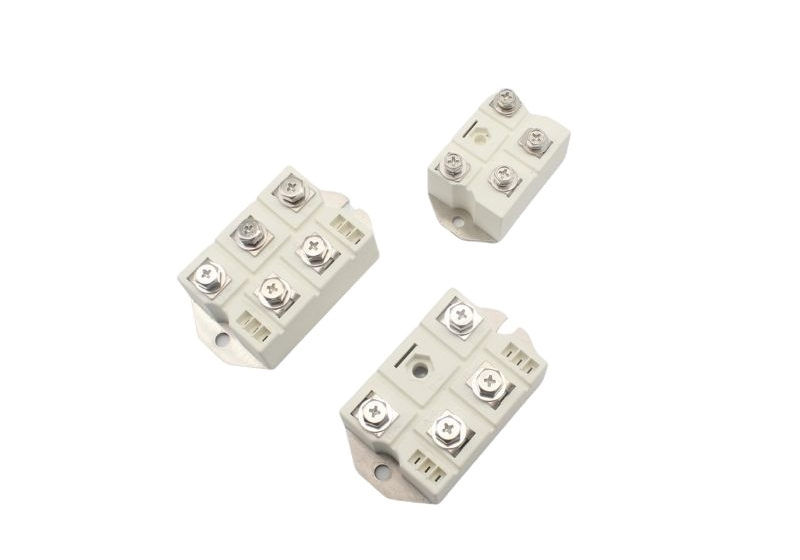
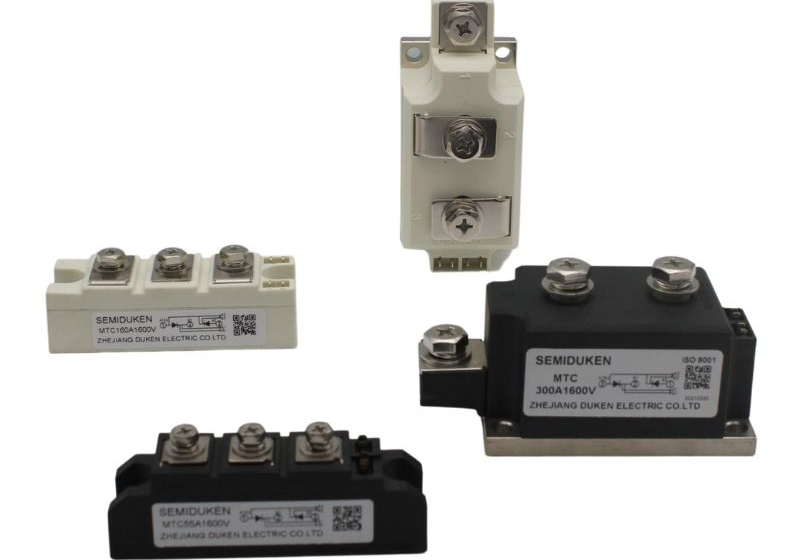
The surge-protection screw-terminal anti-parallel 106A thyristor module for ups systems features built-in protection against transient voltage spikes. Its anti-parallel configuration ensures symmetrical control of both AC half-cycles.
These modules are designed to operate reliably in environments with frequent power fluctuations or harmonic distortion, maintaining gate control without triggering false conduction.
Integration with external MOVs or snubber circuits enhances the overall system robustness during power anomalies.
3. Connection Integrity and Installation Efficiency
The ease and durability of module installation are essential when deploying soft starters in high-volume production or field retrofits.
The surge-protection screw-terminal anti-parallel 106A thyristor module for ups systems uses industrial-grade screw terminals that enable secure cable clamping and minimal contact resistance.
These terminals are compatible with standard ring or fork terminals, reducing the time needed for field connections and supporting re-tightening in maintenance intervals.
Vibration-resistant screw locking features are advantageous in motor control panels, where continuous motor vibrations could otherwise loosen terminal connections.
4. Certification and Compliance for Soft Starter Systems
To ensure compatibility with motor control regulations and safety standards, thyristor modules must carry recognized certifications.
The forced-air-cooling low Rth(j-c) certified 106A thyristor module for ups systems meets various industrial standards such as UL or CE, essential for inclusion in globally deployed soft starter solutions.
Certified modules offer documented test data, including thermal shock, surge testing, and lifecycle validation, which aid in obtaining system-level compliance certifications.
Using certified thyristor modules shortens project approval timelines, particularly for OEMs delivering motor starters to tightly regulated markets.