Why Turn-Off Time, Commutation Margin, and Waveform Testing Decide the Right Replacement
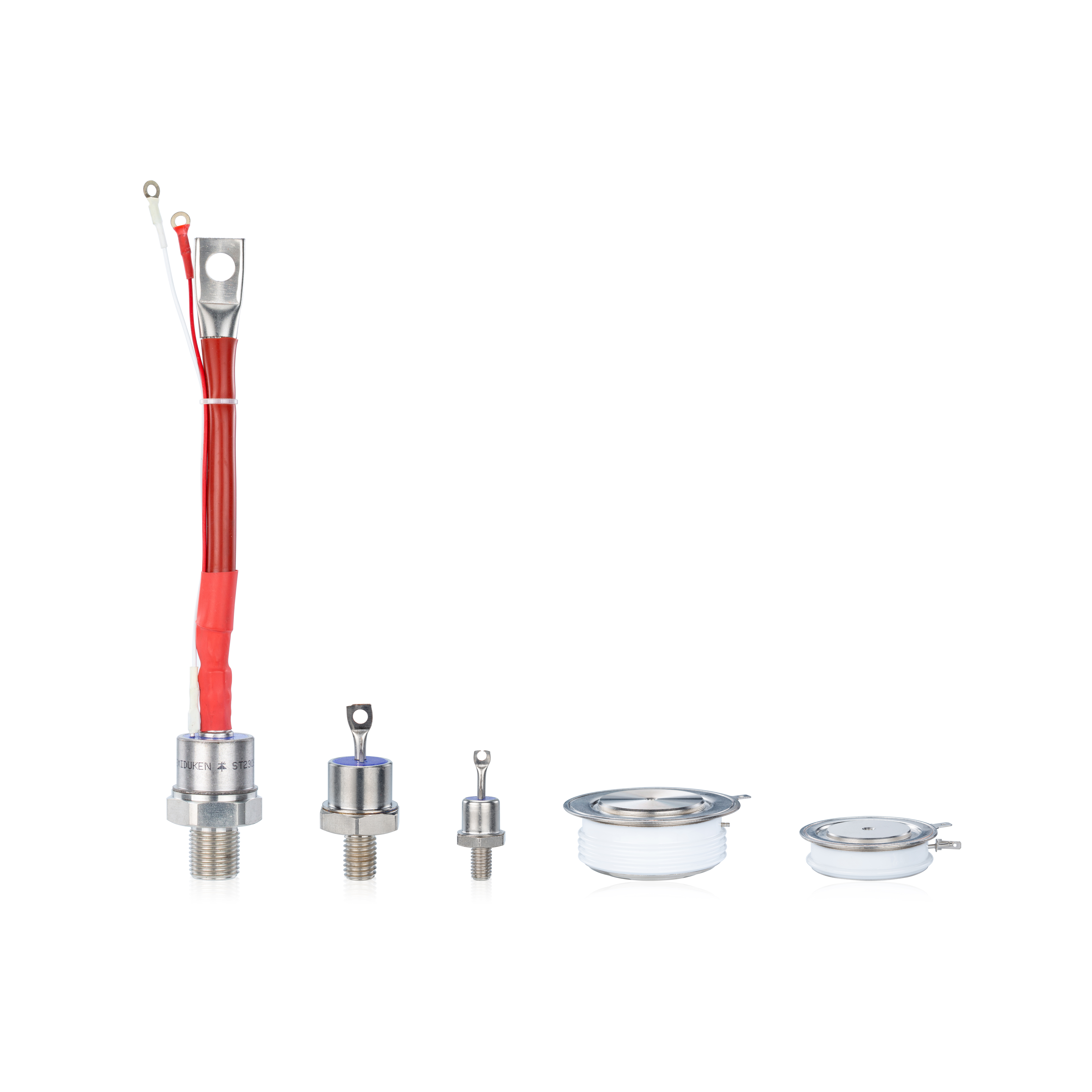
Many replacement searches fail not because the alternative device is fundamentally bad, but because the evaluation process is too static. Engineers compare voltage, current, and package type, then assume the rest will work out in testing. In fast-switching industrial applications, that approach is too optimistic. If you are looking for a substitute for the R2619ZC25J induction heating 2500V fast turn-off thyristor, the real selection challenge lies in switching behavior under actual operating conditions. That same principle applies when qualifying an option against the SEMIDUKEN R2619ZC25J 2500V fast turn-off thyristor or screening an equivalent for the SEMIDUKEN R2619ZC25J 2619A fast turn-off thyristor in legacy equipment.
1. Static matching does not guarantee dynamic success
A thyristor can appear compatible on paper and still fail in a commutated converter. This happens because switching performance is not fully captured by headline ratings.
1.1 The gap between catalog data and circuit behavior
Datasheets provide standardized test conditions, but industrial converters rarely operate under those exact conditions. Load variation, cooling quality, bus inductance, and driver pulse shape all influence switching outcomes.
1.2 Why induction heating is especially sensitive
Induction heating systems often run under rapidly changing load conditions. Coil geometry, workpiece material, coupling distance, and temperature all modify the converter response. That means a substitute for the R2619ZC25J induction heating 2500V fast turn-off thyristor has to be validated in the real system, not just on a spreadsheet.
2. Turn-off time is more than a number
Fast turn-off thyristors are selected to maintain reliable commutation in circuits where timing is tight. A candidate with a slightly slower turn-off characteristic may still pass a light-load bench test but fail once temperature rises or power increases.
2.1 Reduced commutation margin
As operating frequency increases, available recovery time decreases. If the new device needs more time to recover, the circuit margin shrinks.
2.2 Higher loss and extra thermal stress
A part that switches less cleanly can generate more heat in both the semiconductor and the surrounding network, creating a feedback loop that further reduces margin.
2.3 Driver dependency
The observed turn-off outcome depends on the full gate-drive and commutation environment. Engineers evaluating replacements for the SEMIDUKEN R2619ZC25J 2500V fast turn-off thyristor should therefore test with the real driver hardware whenever possible.
3. Waveform capture should be mandatory
A serious replacement program relies on oscilloscope evidence, not assumption. For the SEMIDUKEN R2619ZC25J 2619A fast turn-off thyristor, waveform comparison is one of the most useful decision tools because it reveals how the device behaves in the actual switching loop.
3.1 What to measure
Capture anode-cathode voltage, current waveform, gate pulse timing, overshoot, ringing, and recovery interval across several load points.
3.2 When to measure
Test at startup, nominal load, full load, and elevated cabinet temperature. A replacement that only works in one operating corner is not a robust substitute.
3.3 What differences matter most
Look for delayed recovery, increased overshoot, unstable commutation, or thermal drift. Even moderate changes can indicate that the candidate is less tolerant than the original.
4. Build a realistic validation sequence
The correct way to qualify a candidate is to move from controlled screening to increasingly realistic stress tests.
4.1 Bench screening
Begin with electrical sanity checks, trigger behavior, and thermal contact verification.
4.2 Converter-level testing
Next, install the candidate in the target power stage and compare switching waveforms to the original reference part.
4.3 Stress verification
Finally, perform overload, hot-condition, and repetitive cycle testing. This stage is vital when requalifying the R2619ZC25J induction heating 2500V fast turn-off thyristor in production equipment.
5. Choose the replacement that preserves behavior, not just ratings
The safest replacement is the device that most closely reproduces the original operating envelope. Teams trying to replace the R2619ZC25J induction heating 2500V fast turn-off thyristor should prioritize commutation stability, waveform similarity, and thermal repeatability. Procurement teams sourcing around the SEMIDUKEN R2619ZC25J 2500V fast turn-off thyristor should avoid approving alternatives based on price or lead time alone. And engineers responsible for field reliability should treat any substitute for the SEMIDUKEN R2619ZC25J 2619A fast turn-off thyristor as a system-level change that deserves structured qualification.
In other words, waveform testing is not an optional extra. It is the bridge between a plausible replacement and a dependable one. The more critical the application, the more important it becomes to validate turn-off dynamics, commutation margin, and real thermal behavior before the new part enters service.