What Affects the Price of 1000A Phase Control Thyristors?
The 1000A phase control thyristor is a cornerstone component in critical power infrastructure—supporting applications from smart grids and HVDC systems to electric arc furnaces and railway traction converters.
While amperage rating may appear to be the primary cost driver, real-world pricing is shaped by a deeper combination of manufacturing design, housing type, thermal management strategy, and electrical behavior.
To make an informed sourcing decision, engineers and procurement teams must look beyond surface specifications.
1️⃣ High-Temperature Endurance & Gate Sensitivity
Thermal robustness and precision control increase value
Thyristors classified as high junction temperature tolerance, gate trigger control 1000A phase control thyristors typically command a premium price—and for good reason.
These devices are engineered to:
Operate reliably above 125°C junction temperature, often reaching 140–150°C
Maintain stable switching performance in hot, enclosed, or poorly ventilated environments
Reduce the need for aggressive cooling or derating strategies
Advanced gate trigger control further enhances value. Lower and more consistent gate trigger current and voltage:
Simplify gate driver circuit design
Improve switching accuracy in high-noise industrial environments
Reduce the risk of false triggering or commutation failure
Such features are especially critical in steel plants, mining equipment, and grid-connected converters, where thermal stress and electrical noise are unavoidable. The higher upfront cost reflects the device’s ability to ensure long-term operational stability.
2️⃣ Loss Reduction & Thermal Stability
Efficiency-driven design lowers lifetime operating cost
A high thermal stability, low on-state voltage drop 1000A phase control thyristor offers a significant efficiency advantage. Devices with a forward voltage drop in the range of 1.1V–1.3V generate substantially less heat during continuous conduction.
This translates into:
Reduced conduction losses
Lower internal temperature rise
Extended device lifespan
From a system design perspective, lower losses allow:
Smaller or lighter heatsinks
More compact converter layouts
Improved power density
OEMs and system integrators often favor these thyristors for compact rectifiers, modular power supplies, and traction converters, where efficiency and thermal margin directly affect system reliability and size. Although these devices cost more initially, they help reduce energy consumption and cooling costs over the system’s lifecycle.
3️⃣ Mechanical Design & Surge Endurance
Packaging determines durability and fault tolerance
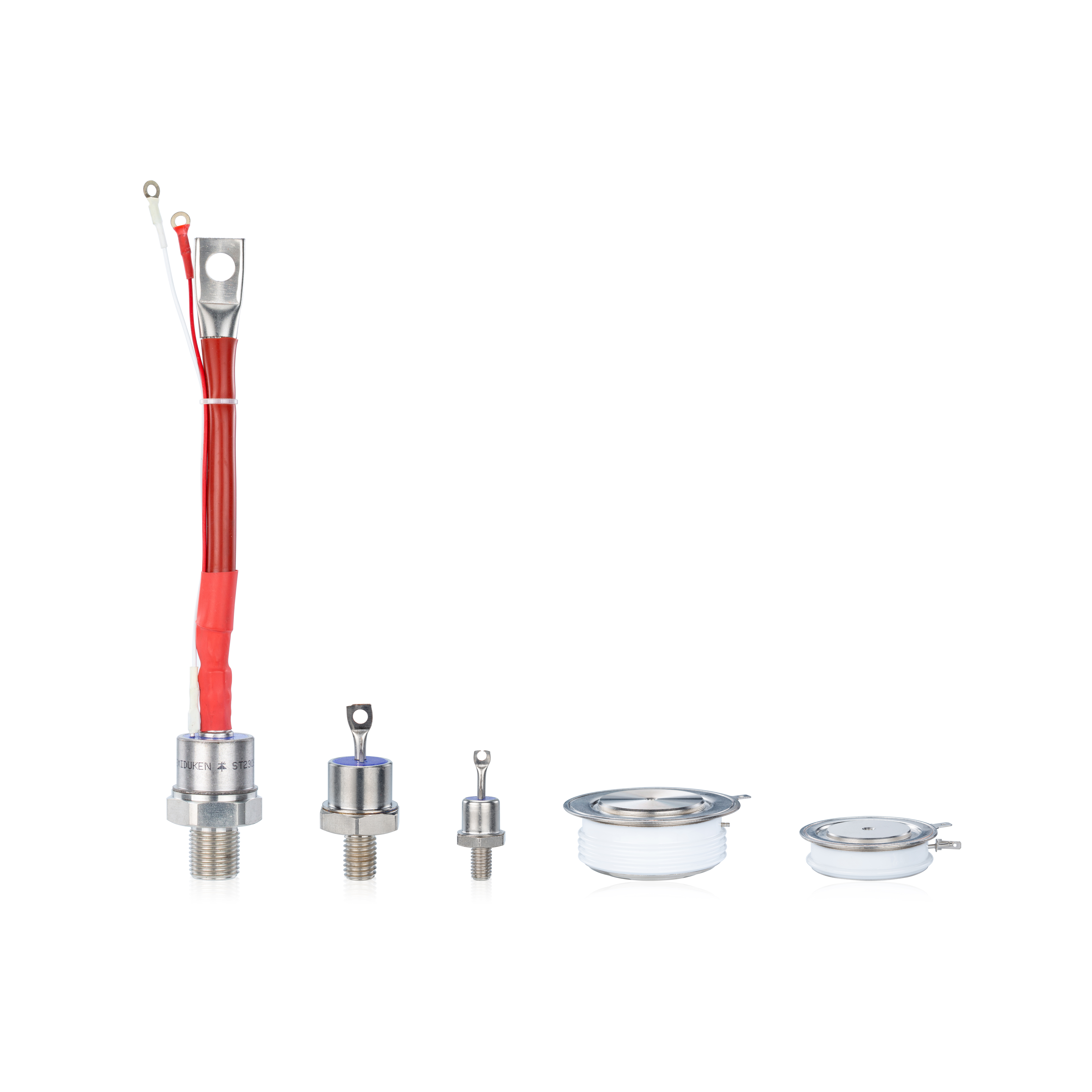
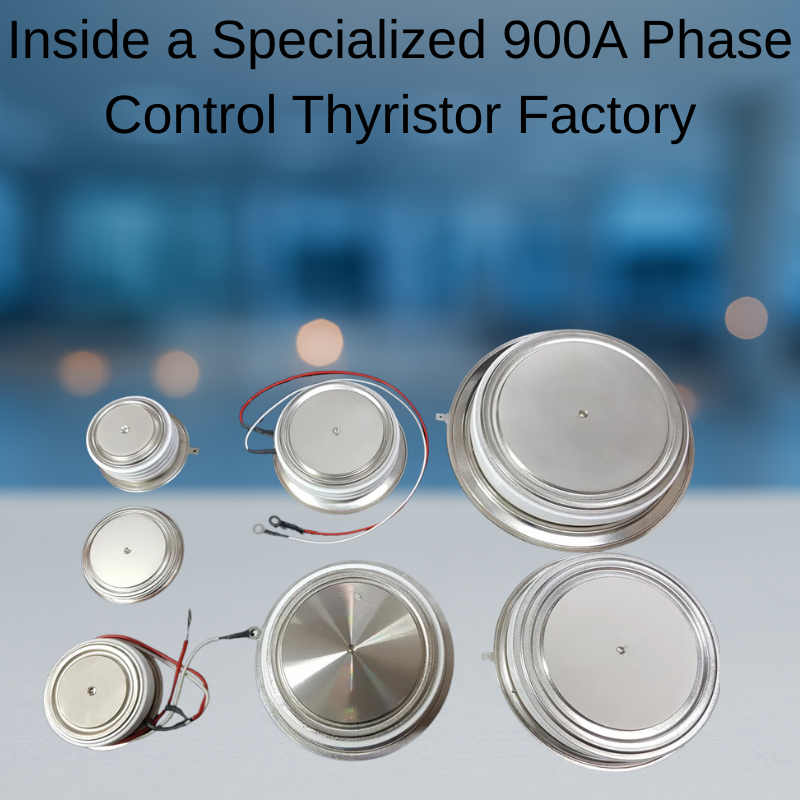
The aluminium housing disc package, high surge current rating 1000A phase control thyristor represents the top tier of mechanical and thermal design.
Disc (press-pack) constructions offer:
Uniform mechanical pressure distribution
Extremely low thermal resistance
Excellent resistance to vibration and mechanical shock
Aluminum housings further enhance:
Heat spreading efficiency
Corrosion resistance in harsh environments
Thermal cycling endurance
These devices are particularly well-suited for HVDC transmission systems, railway traction, marine propulsion, and heavy industrial drives, where frequent surge events and load transients are expected. Their high surge current rating ensures survival under short-circuit or overload conditions—something lower-cost packages may not withstand.
The premium pricing reflects both the complex manufacturing process and the risk reduction they provide in mission-critical installations.
4️⃣ Balancing Price and Performance
Why total system value matters more than unit cost
Selecting a 1000A phase control thyristor should never be about choosing the lowest-priced option. Instead, the decision should align with system-level performance goals.
Thyristors featuring:
Accurate gate trigger control
Low on-state voltage drop
High surge current capability
consistently deliver:
Fewer unplanned shutdowns
Lower maintenance frequency
Improved system uptime
When viewed through the lens of total cost of ownership (TCO), higher-quality thyristors often prove more economical over time—especially in high-duty-cycle or safety-critical applications.