Understanding the Failure Reasons of 600A Phase Control Thyristors in High-Power Applications
In industrial environments, the 600A phase control thyristor plays a crucial role in managing power flow in high-voltage and high-current systems. However, even these robust devices are not immune to failure. This article explores key factors contributing to thyristor failure, helping engineers and technical managers prevent costly system downtime.
Thermal Stress from High Surge Currents
One of the most common causes of failure in a 600A phase control thyristor is thermal stress resulting from repeated high surge currents. When current surges exceed the designed 6500 V VRRM high surge current rating 600A phase control thyristor limit, it leads to localized heating. Over time, this heating breaks down internal junctions, reducing the component's operational lifespan. Engineers must ensure proper surge protection and heat sinking to handle these transients effectively.
Furthermore, the I²t value — a measure of the energy allowed through the device — is a critical factor. Devices with insufficient low leakage current high surge I²t capacity 600A phase control thyristor ratings may fail prematurely when exposed to repetitive short-circuit conditions. Monitoring peak surge currents during design and operation is essential to extend the thyristor's life.
Mechanical and Packaging Limitations
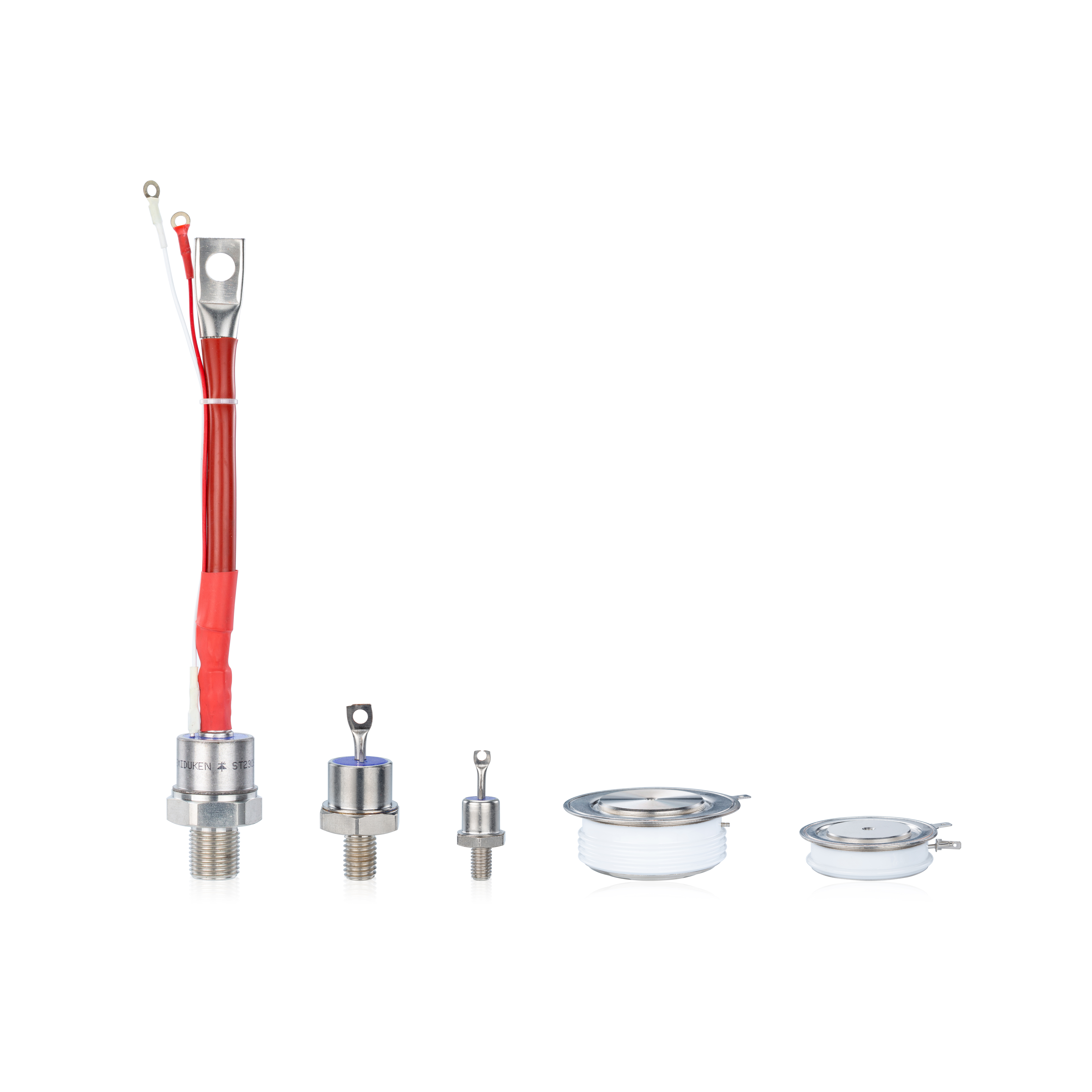
The mechanical design of a thyristor can also impact its performance. Many industrial-grade units feature an Aluminium housing disc package low leakage current 600A phase control thyristor configuration, providing structural strength and heat dissipation benefits. However, if improperly mounted or exposed to vibration, the housing can degrade, causing contact resistance or internal delamination.
Disc-packaged thyristors must be installed with carefully calibrated clamping force to ensure even thermal contact. Excessive or uneven force can result in cracking or increased thermal resistance, both of which contribute to long-term device degradation.
Voltage Spikes and Reverse Recovery Failure
In power conversion systems, voltage spikes can exceed the thyristor's blocking capacity, especially if the 6500 V VRRM high surge current rating 600A phase control thyristor is used without proper snubber circuits. These spikes may puncture the junction, leading to permanent short-circuit failure. This is particularly problematic in inductive loads where switching generates high dv/dt values.
Reverse recovery characteristics also matter. Devices with higher reverse recovery times can dissipate more heat and may experience low leakage current high surge I²t capacity 600A phase control thyristor stress. Selecting thyristors with low leakage and fast recovery times is key in high-frequency switching environments.
Environmental Factors and Insufficient Cooling
Dust, moisture, and chemical exposure can degrade the Aluminium housing disc package low leakage current 600A phase control thyristor performance, especially in poorly sealed enclosures. Moisture can cause corrosion and increase leakage currents, which accelerates aging and failure.
Adequate cooling is also vital. Without proper heatsinks or forced air cooling, internal temperatures may exceed safe operating limits. This thermal overload often leads to failure in high-current devices like the 600A phase control thyristor. Preventative maintenance of cooling systems is necessary to preserve long-term reliability.
Conclusion
Understanding the causes behind 600A thyristor failures helps in designing more reliable systems. By considering factors like 6500 V VRRM high surge current rating, Aluminium housing disc package, and low leakage current high surge I²t capacity, engineers can select components that align with real-world demands.