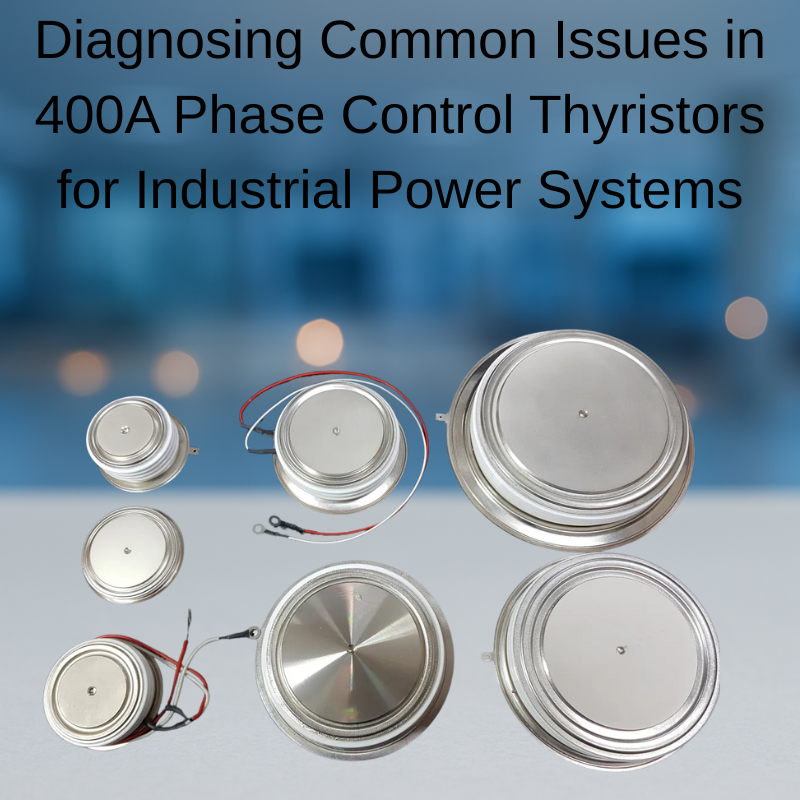
Testing and Performance Analysis of 400A Phase Control Thyristors in High-Power Circuits
The 400A phase control thyristor is a critical component in high-current AC control systems such as industrial furnaces, power converters, and voltage regulators. Its superior high dv/dt immunity, robust Aluminium housing disc package, and exceptional high surge current rating enable it to operate reliably under intense thermal and electrical stress. However, to ensure consistent performance, comprehensive testing and performance analysis must be carried out according to specifications in the datasheet KP400A-6500V. This article explores diagnostic methodologies, parameter validation, and reliability testing for thyristor performance optimization.
Electrical characterization allows engineers to confirm that a 400A phase control thyristor meets operational standards before integration into a system. The datasheet KP400A-6500V outlines critical parameters including gate trigger current, holding current, and dv/dt tolerance.
Testing begins with gate trigger control verification. The gate must be supplied with a calibrated pulse current to initiate conduction without excessive overshoot. Insufficient gate current leads to partial triggering and uneven current distribution across the junction, potentially reducing the high surge current rating.
Equally important is reverse blocking capability testing. The high dv/dt immunity ensures the thyristor can withstand transient spikes without false triggering. This feature must be validated using controlled voltage ramp testing under typical operating conditions.
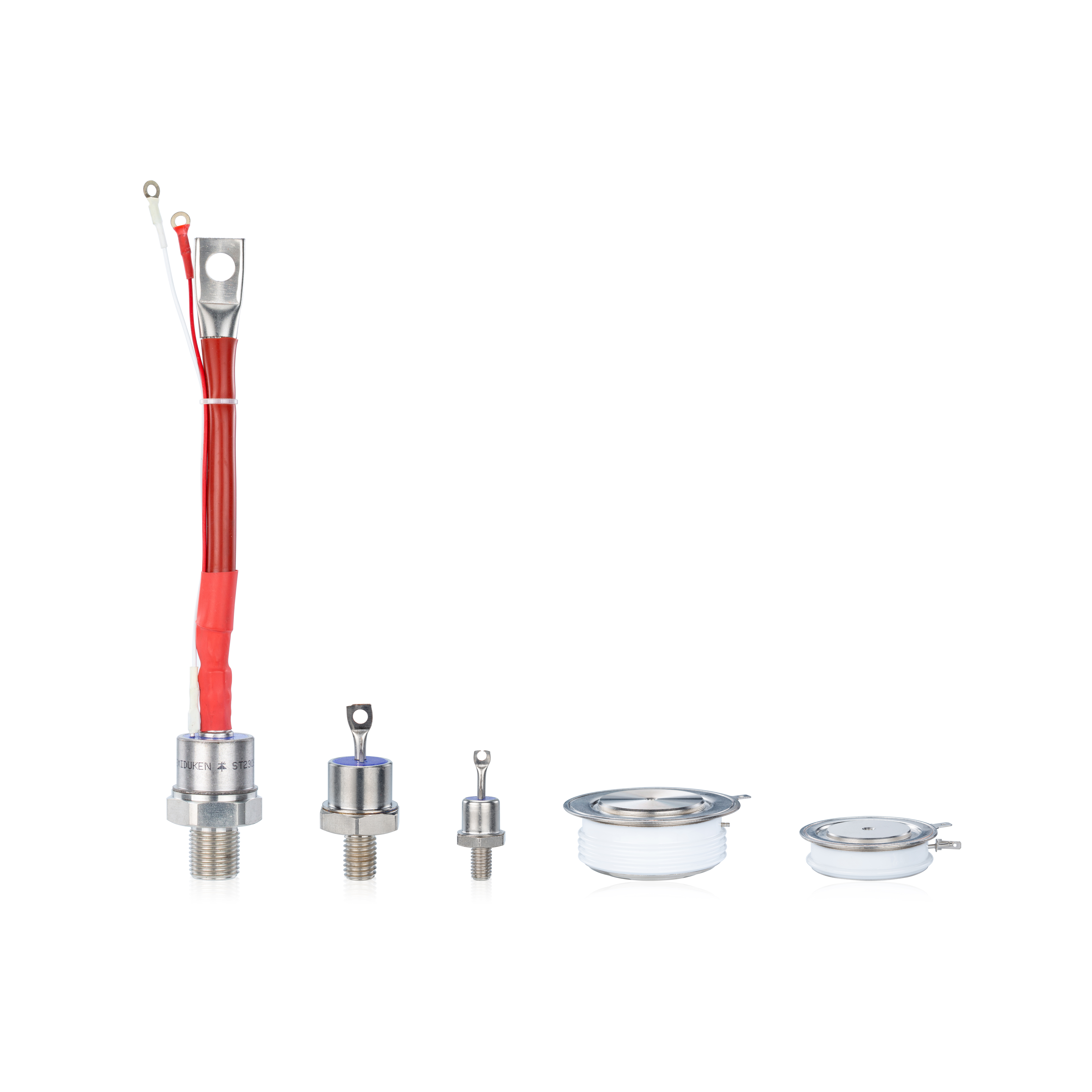
The Aluminium housing disc package provides exceptional thermal dissipation but must be correctly installed for effective performance. During testing, thermal resistance (junction-to-case) is monitored using a calibrated infrared sensor or thermocouple array. Excessive temperature rise during load tests often indicates inadequate pressure or contamination between the disc and heat sink.
A high surge current rating test verifies the thyristor’s ability to handle short, high-current pulses safely. This involves applying repetitive current surges at varying durations while measuring recovery characteristics. Maintaining thermal equilibrium throughout these tests is essential to avoid localized overheating and potential structural degradation of the Aluminium housing disc package.
The gate trigger control circuit significantly influences thyristor reliability. According to datasheet KP400A-6500V, the gate drive circuit should provide consistent current with sufficient rise time to ensure stable conduction. A mismatch between the drive impedance and thyristor gate characteristics can cause delayed triggering, voltage overshoots, and even device failure.
To evaluate high dv/dt immunity, dynamic tests simulate fast voltage changes across the anode and cathode while monitoring gate sensitivity. A high dv/dt threshold indicates good insulation and robust junction design, confirming suitability for harsh inverter or rectifier applications. Testing should also include turn-on and turn-off waveforms to ensure that conduction transitions remain within safe limits, preventing thermal shock.
Reliability testing under cyclic loading provides insights into long-term durability. Repetitive surge cycles at 80–90% of the high surge current rating can expose hidden weaknesses in solder bonds and thermal interfaces. Periodic inspections of the Aluminium housing disc package help detect microcracks or oxidation that may compromise electrical insulation.
Failure analysis often reveals that deviations in gate trigger control or neglecting cooling system maintenance accelerate degradation. For example, an engineering team observed abnormal gate current fluctuations in a high-frequency furnace drive. The root cause was insufficient gate pulse current—below the limit specified in the datasheet KP400A-6500V—combined with poor clamping on the disc housing. Correcting these issues restored the high dv/dt immunity and operational stability.
Testing and analyzing 400A phase control thyristors is not merely a commissioning step but an ongoing process of quality assurance. Electrical and thermal validation ensures that the thyristor maintains its high dv/dt immunity, high surge current rating, and optimal thermal balance within the Aluminium housing disc package. By strictly following datasheet KP400A-6500V specifications and applying proper gate trigger control practices, engineers can prevent premature failure, enhance safety, and maximize the operational lifespan of thyristors in industrial power systems.