Technical Support for 300A Phase Control Thyristors: Reducing Failures and Improving Integration
In complex industrial systems, ensuring stable operation of 300A phase control thyristors demands a proactive technical support framework. From thermal modeling to gate control strategies, each aspect contributes to the long-term reliability and efficiency of these high-current components.
1. Gate Control and Triggering Accuracy
Successful operation begins with proper triggering. The high junction temperature tolerance gate trigger control 300A phase control thyristor supports high-temperature environments, but optimal gate signal design is still crucial. Variations in gate drive impedance or trigger current can lead to failed turn-on events or premature failures.
Technical support helps engineers optimize gate pulses based on application-specific loads, temperature profiles, and snubber network behaviors.
2. Minimizing Power Losses through Voltage Optimization
Reducing on‑state voltage drop directly improves system efficiency. The high thermal stability low on‑state voltage drop 300A phase control thyristor ensures minimal conduction loss across heavy-duty cycles. Understanding thermal impedance curves and heat dissipation pathways helps engineers apply this feature effectively.
Technical teams may offer calculation tools or lab-tested thermal maps to aid in design layout and component selection.
3. Packaging That Supports High Surge Durability
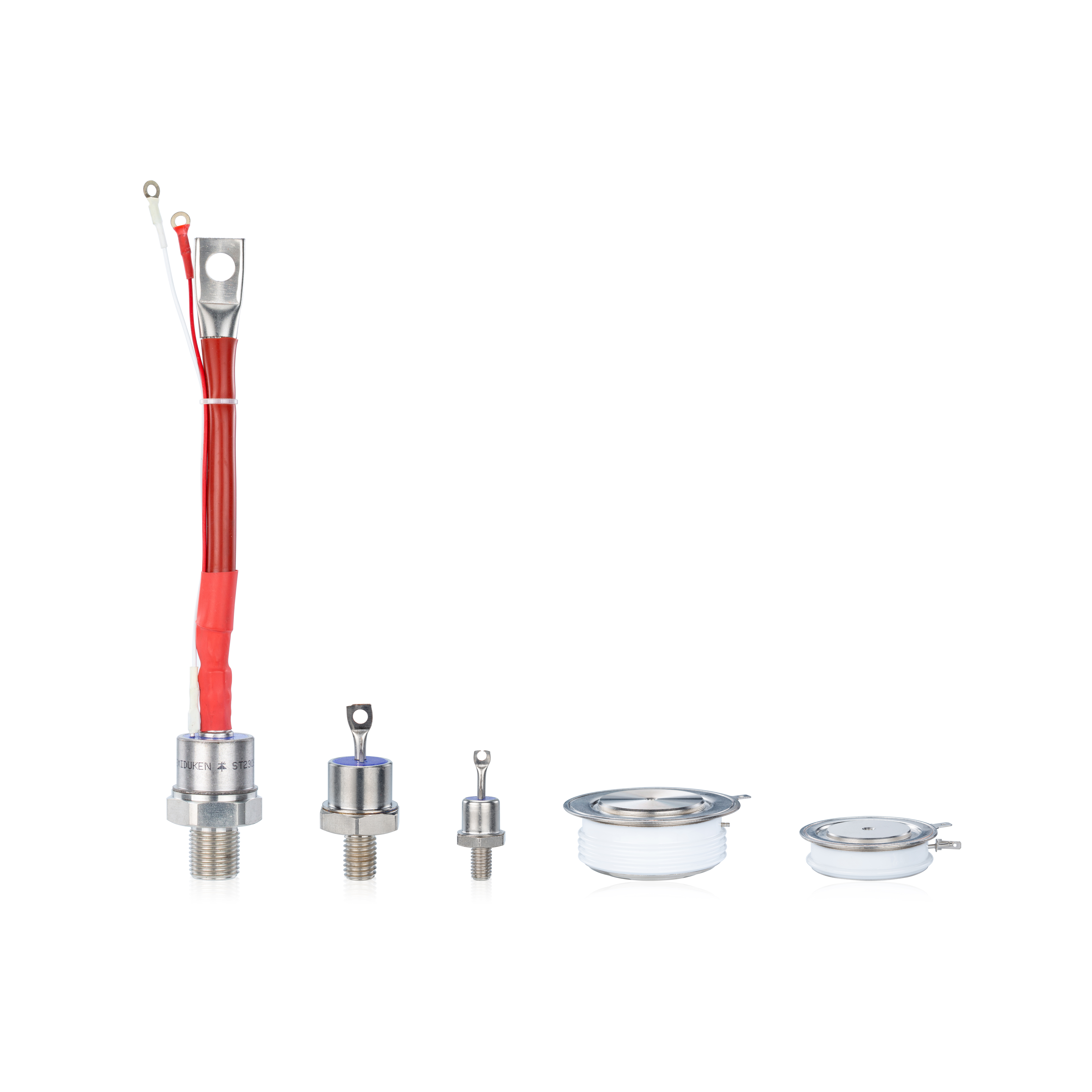
In motor starters and AC phase controllers, surge events are common. The Aluminium housing disc package high surge current rating 300A phase control thyristor delivers strong protection and mechanical durability. With its heat-spreading design and sealed disc casing, it’s well-suited to field environments and aggressive load profiles.
Support professionals guide customers through choosing proper mounting torque, interface materials, and surge suppression schemes.
4. Application Engineering for Real-World Deployments
Manufacturers offering design assistance greatly simplify the integration of thyristors. These services can include simulation reviews, failure analysis, PCB layout validation, or field support during commissioning.
With 300A devices playing critical roles in energy-intensive systems, reliable technical support is essential—not just for purchase decisions, but also for ensuring predictable performance throughout the thyristor’s lifecycle.