Strategies to Improve Lifetime Reliability of 1500A Phase Control Thyristors in High‑Power Systems
In demanding industrial environments, ensuring the long‑term reliability of high‑current power semiconductors is crucial. A 1500A phase control thyristor plays a central role in applications such as heavy motor drives, industrial rectifiers, and power factor correction systems. To maximize their service life, engineers must understand how design specifications—from the datasheet KP1500A‑6500V to real‑world performance factors like low leakage current and high surge current rating, as well as features such as Aluminium housing and disc package — influence the device’s operational longevity.
Understanding Key Specification Impacts
The first step in improving lifetime reliability is to closely study the manufacturer’s datasheet KP1500A‑6500V. This document provides benchmarks for thermal limits, electrical performance, and safe operating areas that dictate how the thyristor behaves under stress. One of the most critical specifications is low leakage current, which determines how much current flows when the thyristor is in the off‑state. Devices with lower leakage generate less internal heat, which reduces thermal cycling stress and delays material degradation.
For systems operating near their maximum voltage range, leakage current control becomes even more vital. High leakage can lead to elevated junction temperatures, accelerating wear mechanisms such as electromigration and dielectric breakdown. By designing circuits that maintain low leakage current well within the datasheet’s limits, engineers can significantly reduce the rate of aging in the 1500A phase control thyristor.
Another specification that directly influences service life is the high surge current rating. Industrial loads frequently cause current spikes, especially during motor startup or fault conditions. A thyristor rated for higher surge currents can absorb these short‑duration peaks without sustaining permanent damage. In fact, using components with a high surge current rating beyond the expected application peaks builds a buffer against unexpected electrical abuse.
Thermal Design: The Foundation for Durability
Even with ideal electrical characteristics, a thyristor’s lifetime is ultimately constrained by thermal management. Heat is the primary enemy of semiconductor reliability—it accelerates chemical and physical processes that cause failure. The Aluminium housing of a 1500A phase control thyristor contributes to excellent heat conduction, rapidly moving thermal energy away from the silicon junction.
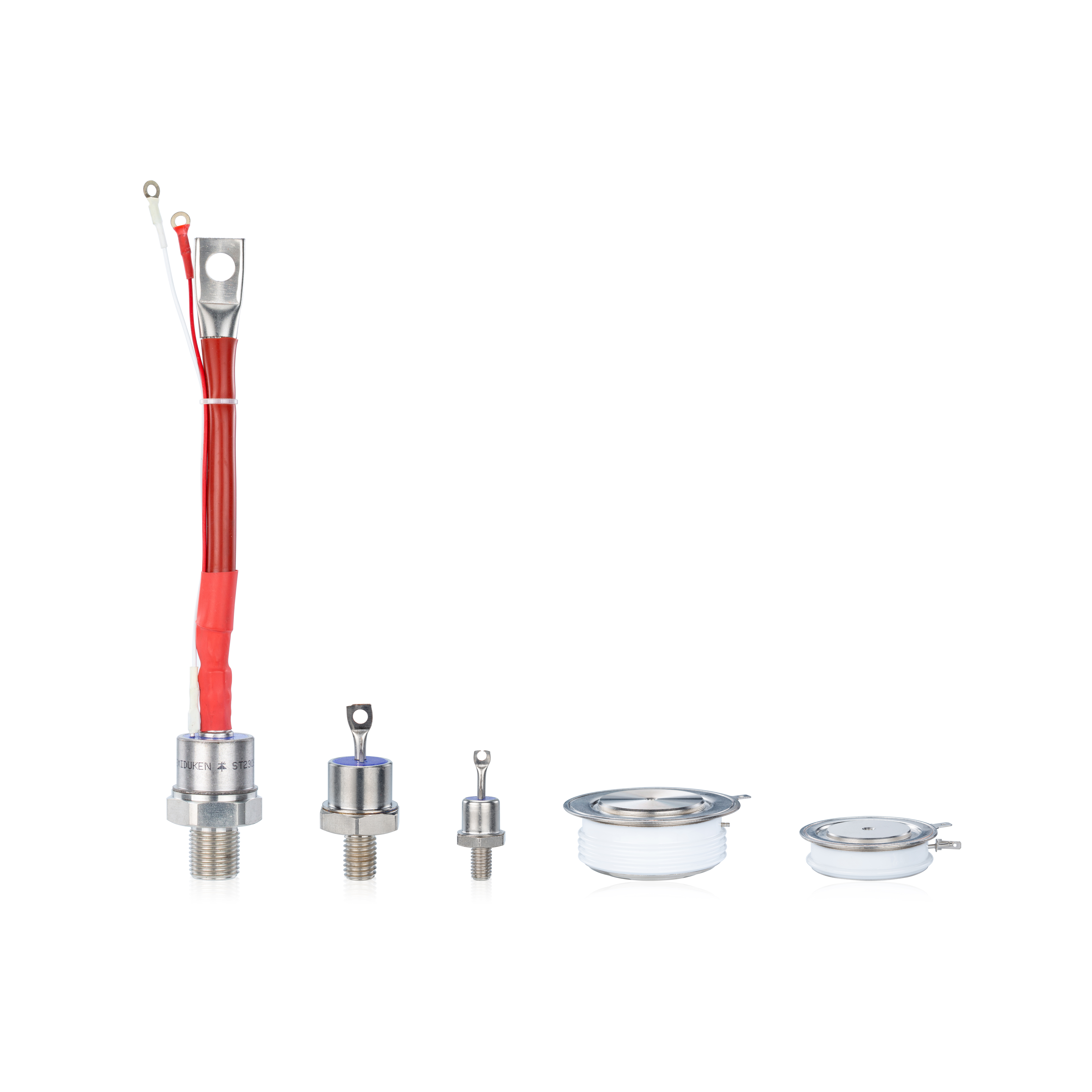
Additionally, the disc package design provides a flat, reliable interface for attaching heat sinks and cooling plates. This structural feature supports efficient thermal paths and reduces hot spots that can trigger premature failure. In systems where airflow is limited, or where forced‑air cooling is impractical, liquid cooling blocks attached to the disc package further enhance heat removal.
Thermal resistance and junction‑to‑case temperature differentials are often provided in the datasheet KP1500A‑6500V. By integrating these values into thermal models, designers can predict how hot the junction will run at different load levels and cooling conditions. By adjusting system design—such as increasing heat sink surface area or optimizing airflow—engineers can help ensure that the 1500A phase control thyristor operates within a temperature range that promotes long life.
Circuit Protection and Lifetime
Protection circuits are another cornerstone of lifetime improvement. Even a thyristor with a high surge current rating can fail prematurely if subjected to repeated voltage spikes, dv/dt stress, or uncontrolled switching conditions. Integrating snubber networks, transient suppression diodes, and controlled gate drive circuits helps mitigate these risks.
A snubber network dampens voltage spikes across the thyristor terminals, reducing stress during turn‑off events. Transient suppressors protect against electrical noise and system anomalies that can cause unintended triggering or prolonged stress. Carefully setting gate thresholds ensures that the thyristor switches cleanly only when intended, avoiding false triggering that could contribute to wear.
In systems where power quality fluctuates or where harmonics are prevalent, these protective measures become even more essential. By planning protective schemes that complement the datasheet KP1500A‑6500V recommendations, maintenance teams can significantly reduce the incidence of premature failures.
Environmental and Maintenance Practices
Field conditions exert a substantial influence on component lifetime. Dust, humidity, corrosive agents, vibration, and temperature cycling contribute to wear mechanisms not always captured in idealized datasheet testing. Therefore, routine maintenance is critical.
Inspecting and cleaning thermal interfaces ensures that the 1500A phase control thyristor maintains efficient heat transfer. Tightening or replacing mounting hardware prevents thermal expansion from loosening connections, which can increase contact resistance and localized heating. Environmental enclosures that protect against contaminants, while allowing adequate ventilation, further preserve device performance.
Condition monitoring—such as periodic checks of leakage current levels, temperature profiles, and waveform integrity—can alert technicians to developing issues before they become catastrophic. By detecting early signs of deviation from normal operating behavior, replacements can be scheduled proactively, preserving system uptime.
Holistic Lifetime Optimization
A holistic approach combines careful reading of the datasheet KP1500A‑6500V, thoughtful circuit design, thermal engineering, protective circuitry, and proactive maintenance. Achieving low leakage current and leveraging high surge current rating capabilities, while ensuring optimal thermal paths through Aluminium housing and disc package constructions, culminates in a system that not only performs well but endures.