Maximizing the Lifetime of 1500A Phase Control Thyristors in Industrial Applications
In the realm of high-power electronics, the 1500A phase control thyristor plays a critical role in managing and modulating current in heavy-duty environments. To ensure operational efficiency and long-term performance, understanding what contributes to its lifetime is essential. This article focuses on factors that influence longevity, including insights from the datasheet KP1500A‑6500V, characteristics like low leakage current, and structural features such as high surge current rating, Aluminium housing, and disc package design.
Electrical Performance and Device Stability
A major indicator of thyristor reliability is its low leakage current under reverse voltage conditions. This feature reduces internal heating and prevents power dissipation during off-state operation. The 1500A phase control thyristor exhibits a robust blocking capability, and the datasheet KP1500A‑6500V confirms its superior off-state behavior.
By minimizing leakage, engineers can extend the device's usable life in high-temperature or high-voltage systems. Stable leakage performance means lower thermal cycling stress, directly contributing to junction longevity.
Moreover, the datasheet specifies dynamic performance criteria including dv/dt and di/dt limitations. Operating within these bounds ensures the thyristor doesn’t suffer from false triggering or gate degradation over time. Proper gate drive circuitry aligned with datasheet recommendations preserves switching integrity across the device’s lifespan.
Mechanical Design and Thermal Management
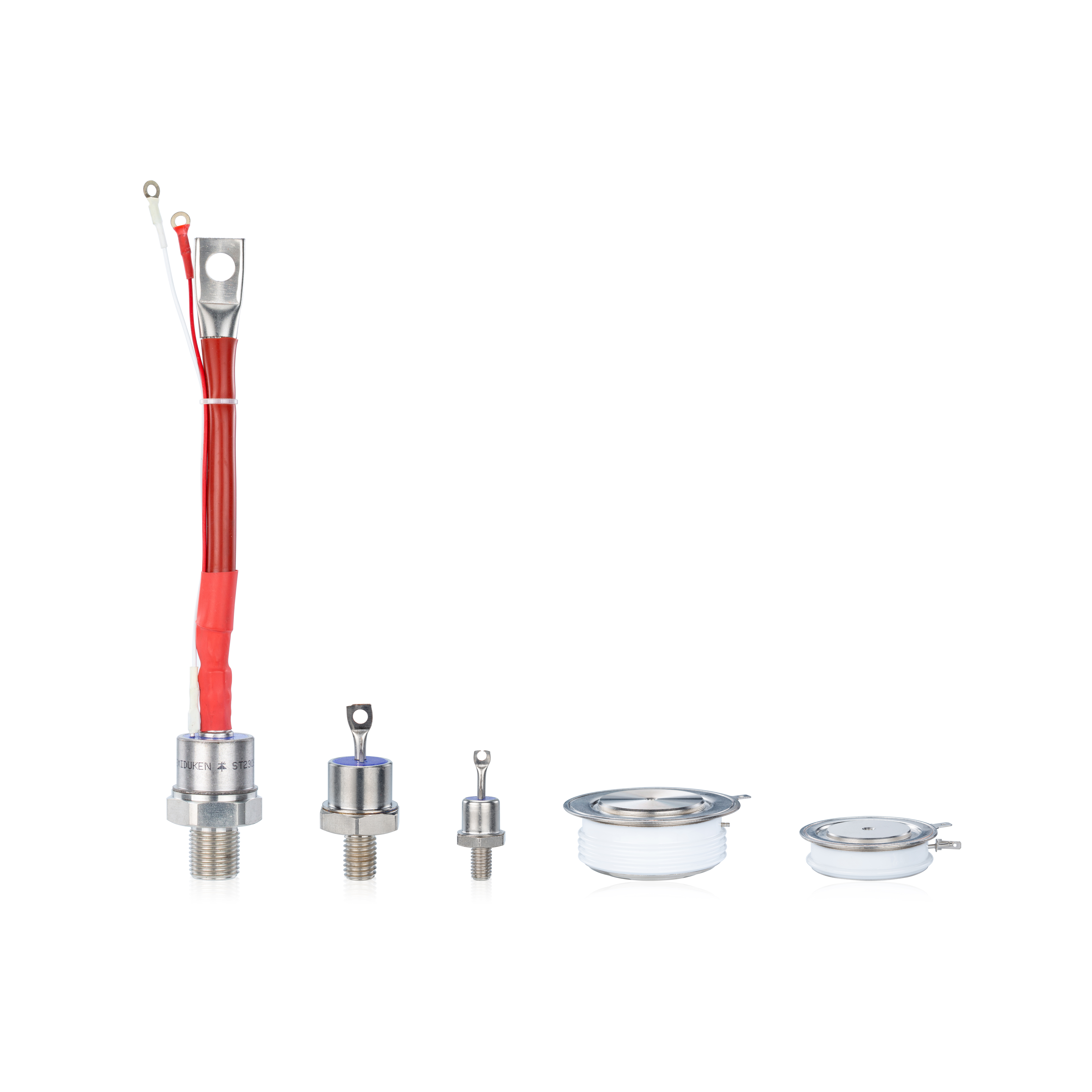
The Aluminium housing and disc package design of the 1500A phase control thyristor are engineered for optimal heat dissipation and structural integrity. These features protect against thermal fatigue, a major factor limiting lifetime in cyclic or load-variable environments.
Disc packages ensure uniform pressure and thermal distribution, minimizing hotspot formation. The Aluminium casing aids in rapid heat transfer to external heat sinks or forced-air cooling systems. These design elements, emphasized in the datasheet KP1500A‑6500V, directly influence the mean time between failures (MTBF) for such thyristors.
In high-frequency or pulse applications, maintaining an effective thermal path is essential. Devices with poor heat dissipation often suffer from silicon aging and eventual breakdown. Incorporating the correct mounting pressure and interface material, as outlined in the datasheet, can significantly improve thermal stability.
Tolerance to Electrical Overstress
Applications like AC motor control, power converters, and industrial rectifiers frequently expose thyristors to peak currents well beyond their rated average. The high surge current rating of the 1500A phase control thyristor ensures it can endure these conditions repeatedly without structural or electrical failure.
Surge capabilities outlined in the datasheet KP1500A‑6500V reflect the robustness of the thyristor's silicon die and encapsulation. Devices with higher surge tolerance experience lower rates of premature failure due to overcurrent events such as short circuits or start-up surges.
Additionally, a well-implemented snubber network and gate protection can extend operational life by preventing voltage overshoot and reducing reverse recovery stresses.
Maintenance, Environment, and Lifespan Planning
Routine maintenance and environmental control also contribute to the long life of a 1500A phase control thyristor. Keeping thermal interfaces clean, replacing degraded heat sinks, and monitoring system voltage ripple are vital for performance preservation.
Datasheet reliability curves—such as temperature derating and thermal impedance—help system designers plan component replacement intervals and predict wear-out points. Following the guidelines provided in the datasheet KP1500A‑6500V, especially in harsh environments, ensures consistent performance over years of operation.
READ MORE: