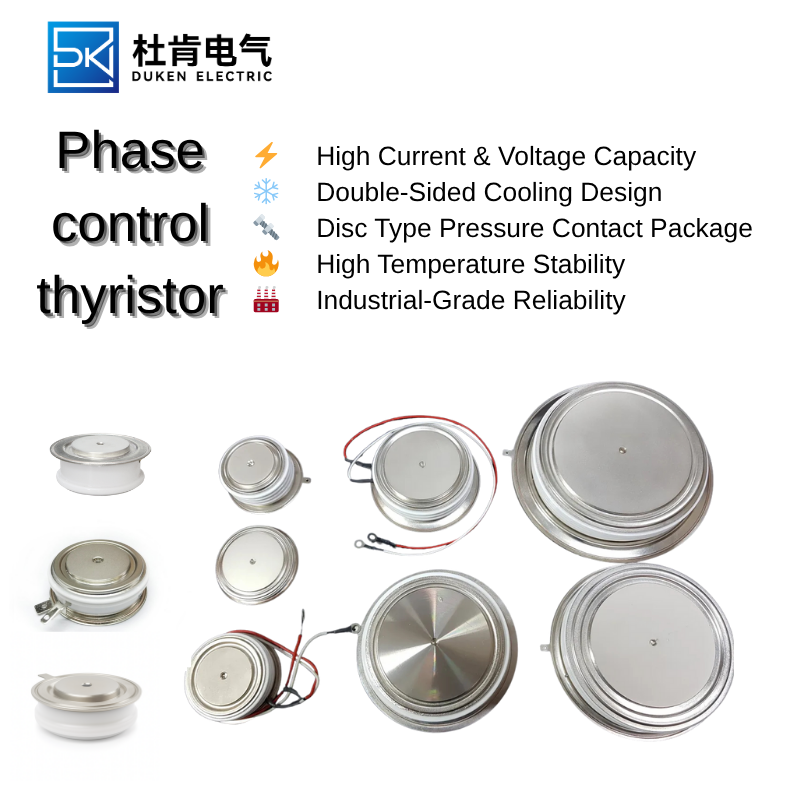
Key Specifications of 2200A Phase Control Thyristors: What Engineers Must Know
In high‑power industrial applications, the 2200A phase control thyristor plays a fundamental role in controlling current flow, regulating voltage, and ensuring stable electrical performance. When engineers specify these devices for heavy‑duty systems such as large motor drives, industrial furnaces, or energy conversion platforms, understanding detailed specifications is crucial to success. This article explores the key parameters that define performance, reliability, and long‑term durability of 2200A phase control thyristors in demanding environments.
1. Junction Temperature and Gate Trigger Performance
One of the most important criteria in any thyristor specification is its ability to withstand high thermal stress without degradation. A premium model will exhibit high junction temperature tolerance gate trigger control 2200A phase control thyristor characteristics that allow it to handle extreme operating conditions. Junction temperature tolerance is not just about withstanding high temperatures; it also affects how precisely the device responds to gate trigger signals under stress.
For example, in heavy motor control applications, engineers rely on the high junction temperature tolerance gate trigger control 2200A phase control thyristor to maintain stable conduction even when the system experiences temperature spikes due to prolonged duty cycles. High junction temperature tolerance also minimizes the risk of thermal runaway, which can lead to device failure or premature aging.
In addition to its thermal profile, gate trigger control must be consistent. Devices that combine high junction temperature tolerance with refined gate trigger sensitivity ensure smooth firing angle control. This is essential for applications such as phase‑angle control rectifiers, where precise timing of the gate trigger pulse directly affects overall system efficiency and harmonic performance.
2. Thermal Characteristics and Voltage Loss
Another critical aspect of specification concerns the relationship between thermal management and electrical efficiency. For many industrial users, the high thermal stability low on‑state voltage drop 2200A phase control thyristor represents the ideal balance between heat resistance and energy loss. A device with superior thermal stability can dissipate heat efficiently even when subjected to prolonged high currents, reducing the need for oversized cooling systems.
Low on‑state voltage drop is a vital parameter because every volt of unnecessary drop translates to wasted power and additional heating. The high thermal stability low on‑state voltage drop 2200A phase control thyristor is engineered to minimize forward conduction losses while maintaining robustness at elevated operating temperatures. This dual advantage is particularly beneficial in systems like DC link rectifiers for variable frequency drives, where both thermal resilience and electrical efficiency significantly affect system performance.
When selecting such thyristors, engineers analyze detailed data curves showing how the device performs at different junction temperatures and current levels. Only those with verified high thermal stability low on‑state voltage drop 2200A phase control thyristor performance signatures can reliably achieve both durable operation and energy‑efficient conduction across various load conditions.
3. Mechanical Design and Surge Capability
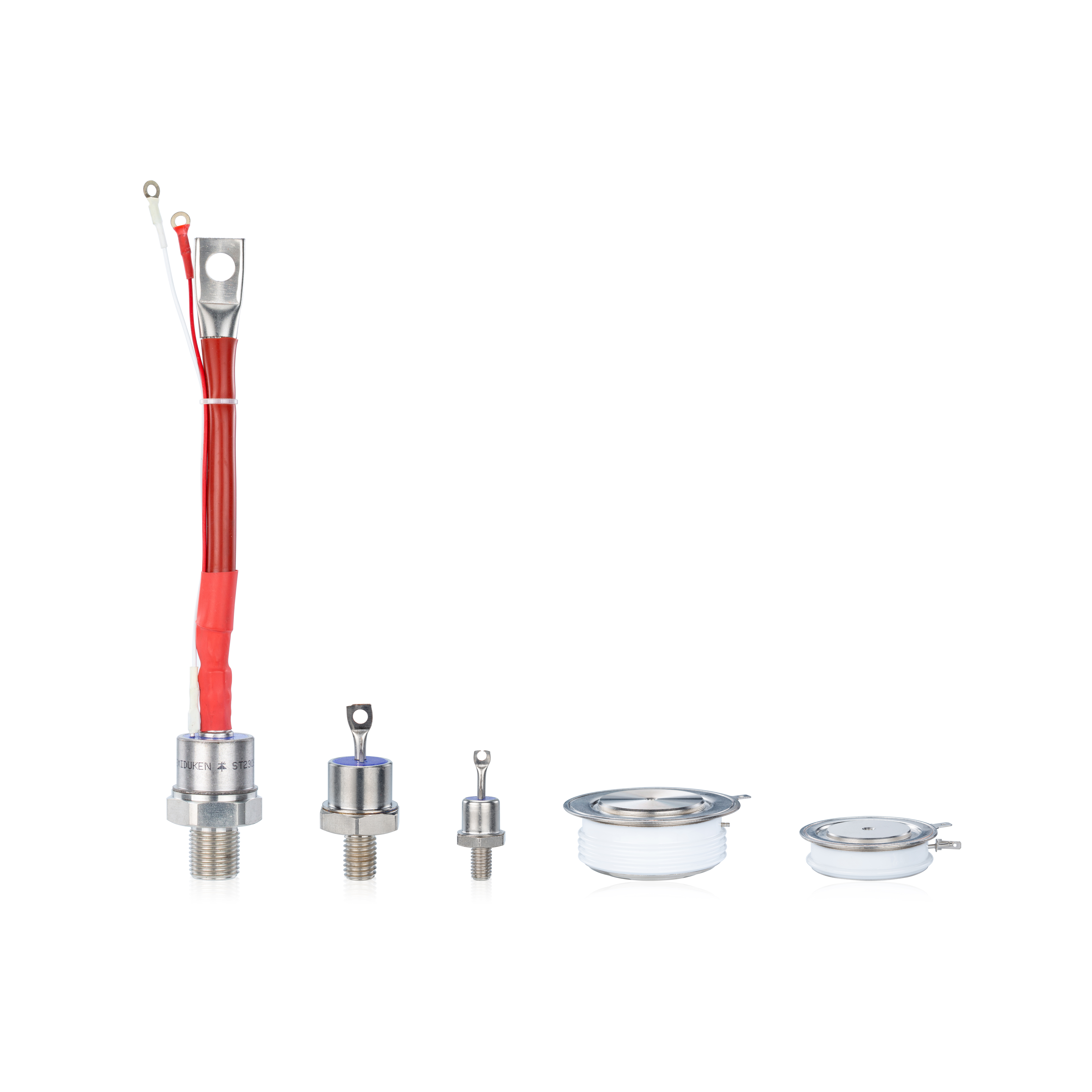
Beyond electrical and thermal parameters, the mechanical design of a thyristor package is another factor that influences reliability. Heavy electrical systems often face transient events such as inrush currents and surge loads, so a strong package is essential. The Aluminium housing disc package high surge current rating 2200A phase control thyristor has become a preferred choice due to its balance of mechanical protection, heat conduction, and surge handling capability.
An aluminium housing disc package offers enhanced mechanical rigidity, which helps protect the semiconductor junctions from physical stress and vibration. In addition, the design facilitates efficient heat conduction from the junction to the heatsink, contributing to the Aluminium housing disc package high surge current rating 2200A phase control thyristor’s ability to absorb and survive momentary but significant current spikes.
Surge current ratings are especially critical in grid‑connected applications or systems that experience load switching, where transient currents can exceed steady‑state levels by several times. Thyristors with verified Aluminium housing disc package high surge current rating 2200A phase control thyristor performance typically undergo stringent testing to certify that they can withstand these transient events repeatedly without degradation.
4. Application‑Specific Considerations
When specifying components for a particular industrial use case, engineers often integrate these key parameters into a broader selection framework. Some applications demand ultra‑low losses and high thermal stability, while others prioritize surge handling or gate trigger consistency. For example, in high‑power induction heating or large rolling mill controls, both high junction temperature tolerance and high surge current capability are critical, meaning that the best 2200A thyristors must excel in all these areas simultaneously.
Moreover, engineers reviewing datasheets will find that performance graphs and life‑test data provide deeper insights beyond raw specification numbers. For instance, accelerated life testing at elevated junction temperatures confirms that a high junction temperature tolerance gate trigger control 2200A phase control thyristor and a high thermal stability low on‑state voltage drop 2200A phase control thyristor can maintain performance long after initial commissioning.
5. Summary: What to Look for in Specifications
In summary, the most important specifications for 2200A phase control thyristors revolve around thermal tolerance, gate control integrity, conduction efficiency, mechanical design, and surge capacity. Choosing a device that merges high junction temperature tolerance gate trigger control 2200A phase control thyristor, high thermal stability low on‑state voltage drop 2200A phase control thyristor, and an Aluminium housing disc package high surge current rating 2200A phase control thyristor ensures robust performance, long service life, and reduced operational risk in heavy industrial projects.