Key Factors Influencing the Lifetime of 1500A Phase Control Thyristors in Critical Power Applications
Ensuring the longevity of high‑power semiconductor devices like the 1500A phase control thyristor is essential for industrial reliability, reduced maintenance costs, and optimal performance. In applications ranging from large motor control to power distribution, designers often consult the datasheet KP1500A‑6500V to understand how core electrical and mechanical characteristics—such as low leakage current, high surge current rating, Aluminium housing, and disc package design—impact device lifespan. This article explores the key influencing factors and practical strategies to maximize service life.
Electrical Stress and Leakage Phenomena
One of the most critical contributors to reduced lifetime in power thyristors is excessive leakage current. A 1500A phase control thyristor with low leakage current significantly limits unintended current flow during off‑state periods. This minimizes internal heating, which otherwise accelerates semiconductor aging and contributes to junction wear. According to the datasheet KP1500A‑6500V, engineers can expect specific leakage current ranges at varying temperatures, enabling them to plan designs that reduce thermal stress.
Leakage current is not only a performance metric—it also serves as an early warning indicator for device degradation. When monitored over time, increases in leakage can signal imminent failure, allowing for proactive replacements before catastrophic breakdowns occur. By designing systems to operate well within datasheet‑specified leakage levels, system lifetime is extended.
Another aspect of electrical stress is the high surge current rating. Industrial power systems often see short bursts of high current during load transitions or fault conditions. A thyristor designed with a robust surge rating can absorb these peaks without internal damage. If the device is undersized for expected surges, repeated overstress events can lead to microstructural damage, solder fatigue, or even thermal runaway in extreme cases.
Thermal Management and Package Influence
Heat is a primary enemy of any semiconductor. Even when electrical stresses like leakage and surge events are well controlled, poor thermal design can significantly shorten component life. The Aluminium housing of a 1500A phase control thyristor serves as an efficient thermal conductor, pulling heat away from the silicon die and toward external cooling mechanisms.
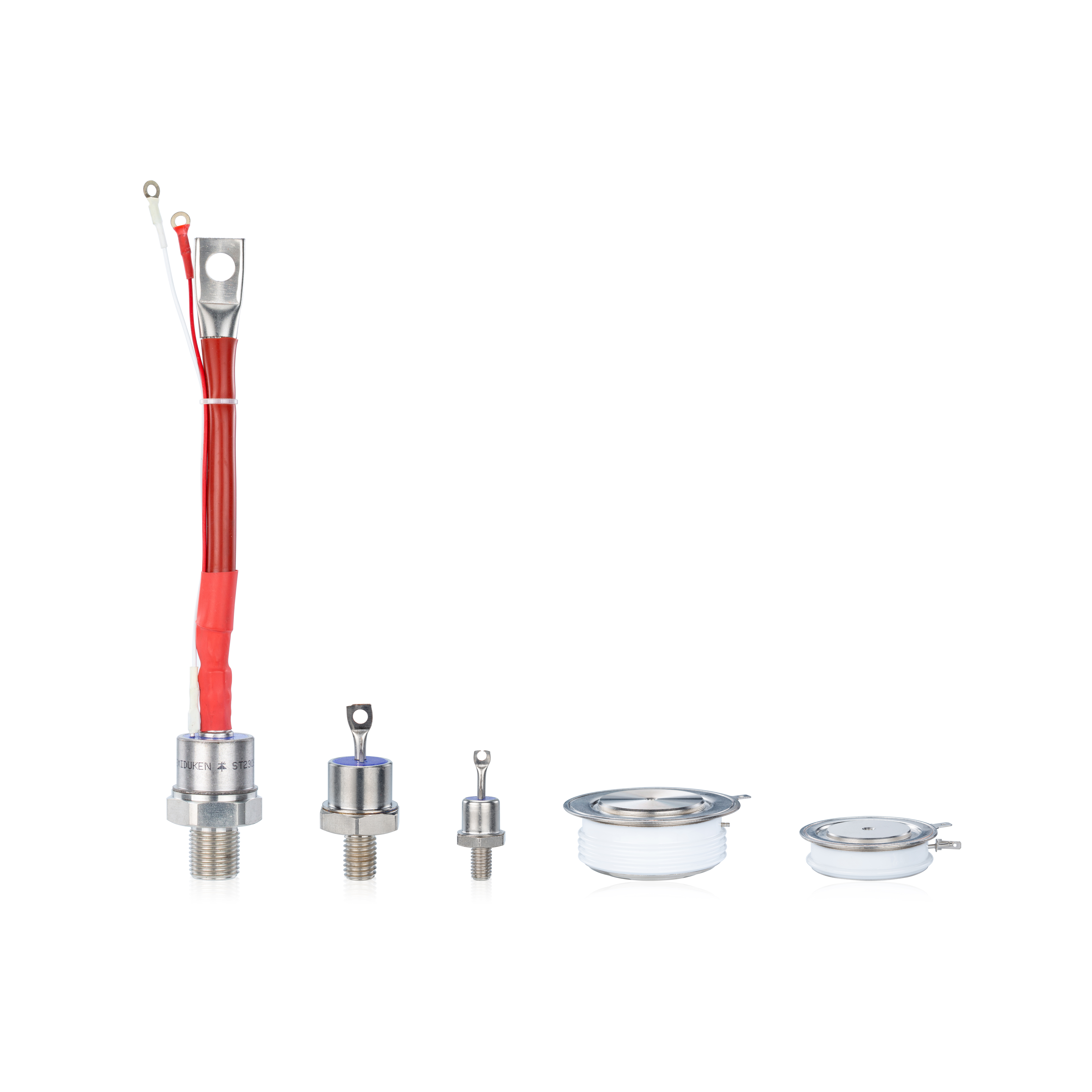
The disc package further aids in this effort by presenting a flat, conductive surface that improves heat transfer to heat sinks or cold plates. Uniform thermal distribution is crucial: hotspots formed by uneven heat dissipation are common origins of early semiconductor failure.
Designers should refer to the datasheet KP1500A‑6500V for thermal resistance and junction‑to‑case temperature profiles. These figures allow for thermal modeling under various load conditions, helping engineers determine how close the device operates to its maximum permissible temperature. Operating consistently near this limit, even with low leakage current and high surge tolerance, will reduce overall lifetime.
Real‑World Operation and Environmental Considerations
Field conditions introduce variables that datasheets cannot fully capture. Environmental factors such as humidity, airborne particulates, and mechanical vibration can hasten degradation, especially when paired with standard electrical stressors.
To mitigate these effects, designers often incorporate protective enclosures that shield the thyristor from harmful conditions while still enabling heat dissipation. Regular inspections ensure that thermal interfaces remain free of dust and corrosion, which would otherwise hinder heat transfer.
Monitoring system health, including leakage current trends and surge event logs, also provides early diagnostics. Detecting subtle changes before they escalate into failures allows maintenance crews to intervene proactively, preserving uptime and extending device life.
Predictive Maintenance and Lifecycle Planning
Leveraging data over a device’s operational history supports predictive maintenance strategies. By correlating leakage current increases or temperature excursions with historical lifetime data from the datasheet KP1500A‑6500V, engineers can schedule replacements before performance degrades severely. Predictive models also help allocate maintenance resources efficiently, avoiding emergency downtimes.
Additionally, operating a 1500A phase control thyristor within a managed load environment—avoiding repeated peak surges without adequate cooling or recovery time—prevents cumulative stress that shortens service life.
Final Strategies for Enhanced Longevity
In summary, maximizing the lifetime of 1500A phase control thyristors involves a combination of careful electrical design, robust thermal management, and proactive maintenance. Understanding and applying specifications from the datasheet KP1500A‑6500V, ensuring low leakage current, leveraging high surge current rating, and optimizing heat dissipation with Aluminium housing and disc package all contribute to extending operational life. When combined with real‑world monitoring and maintenance practices, these strategies ensure that high‑power systems perform reliably over the long term.