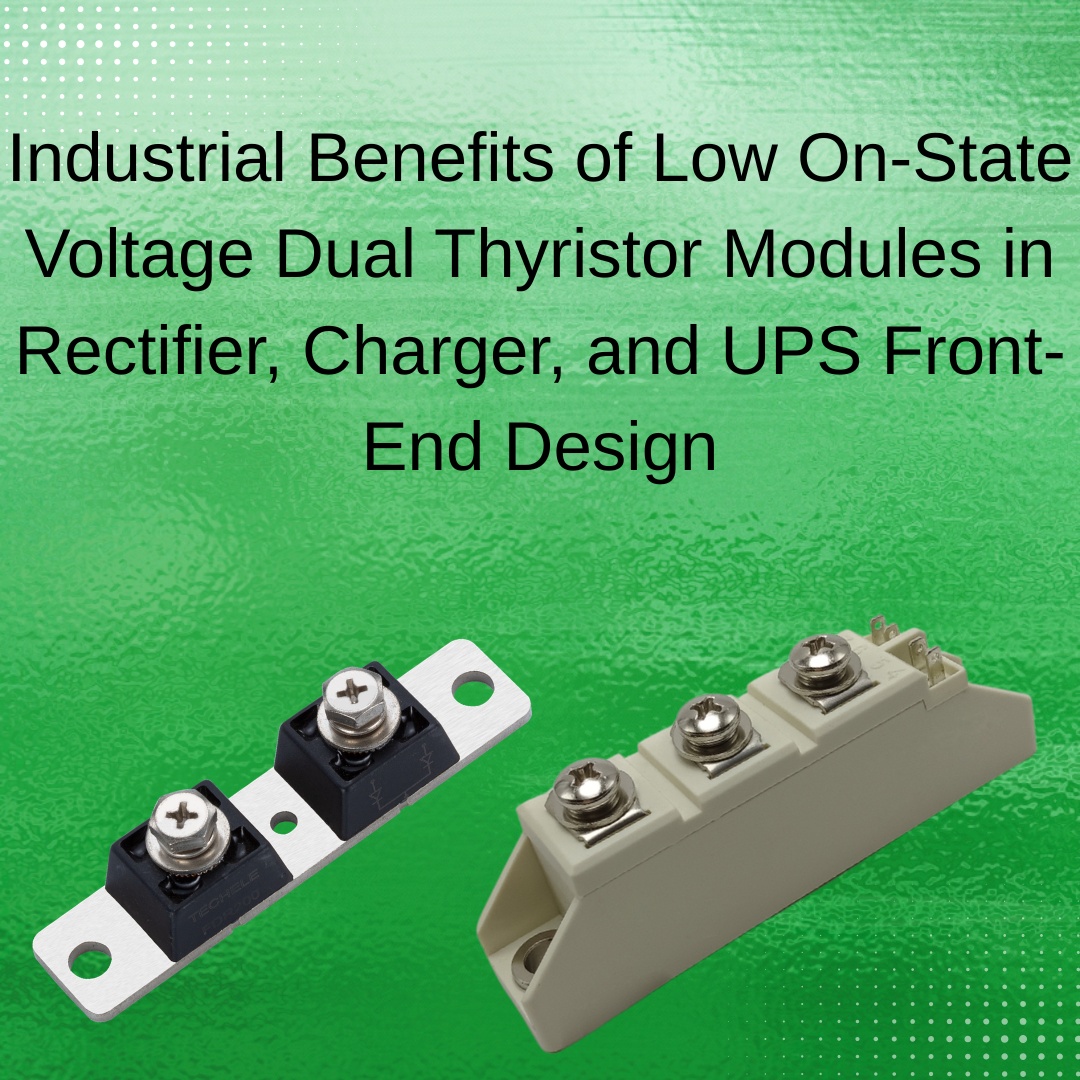
Industrial Benefits of Low On-State Voltage Dual Thyristor Modules in Rectifier, Charger, and UPS Front-End Design
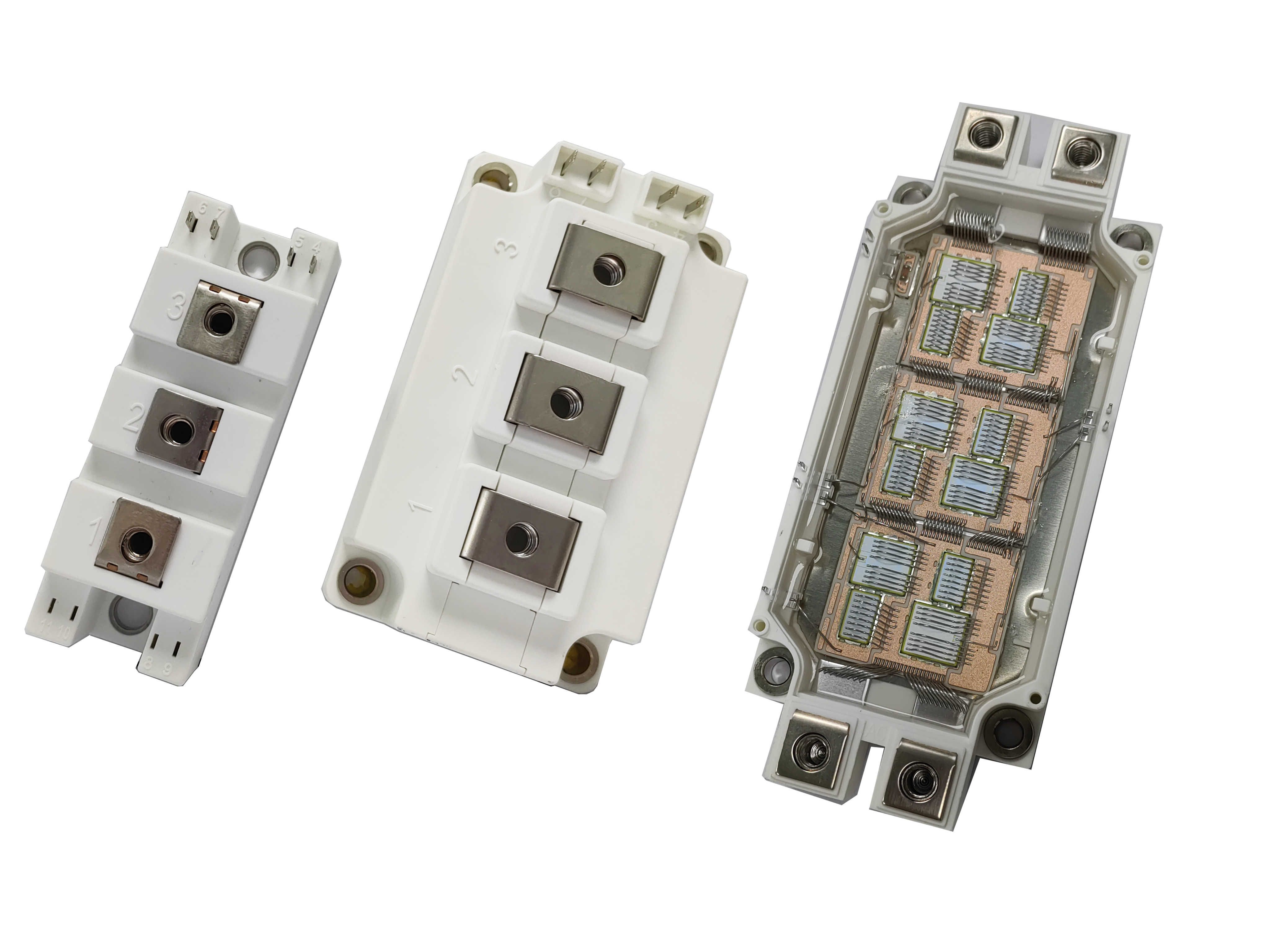
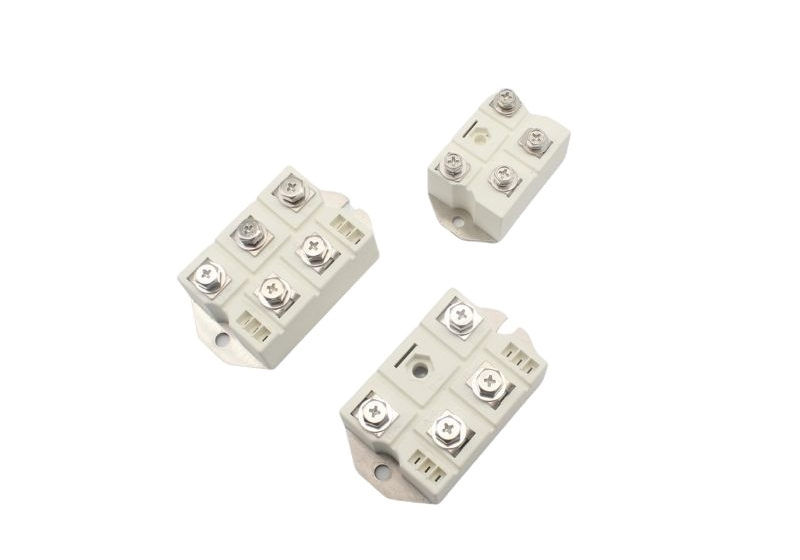
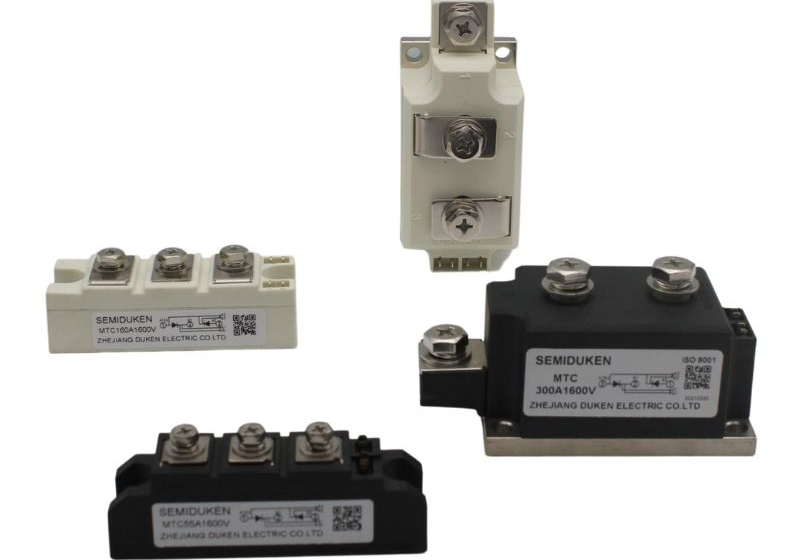
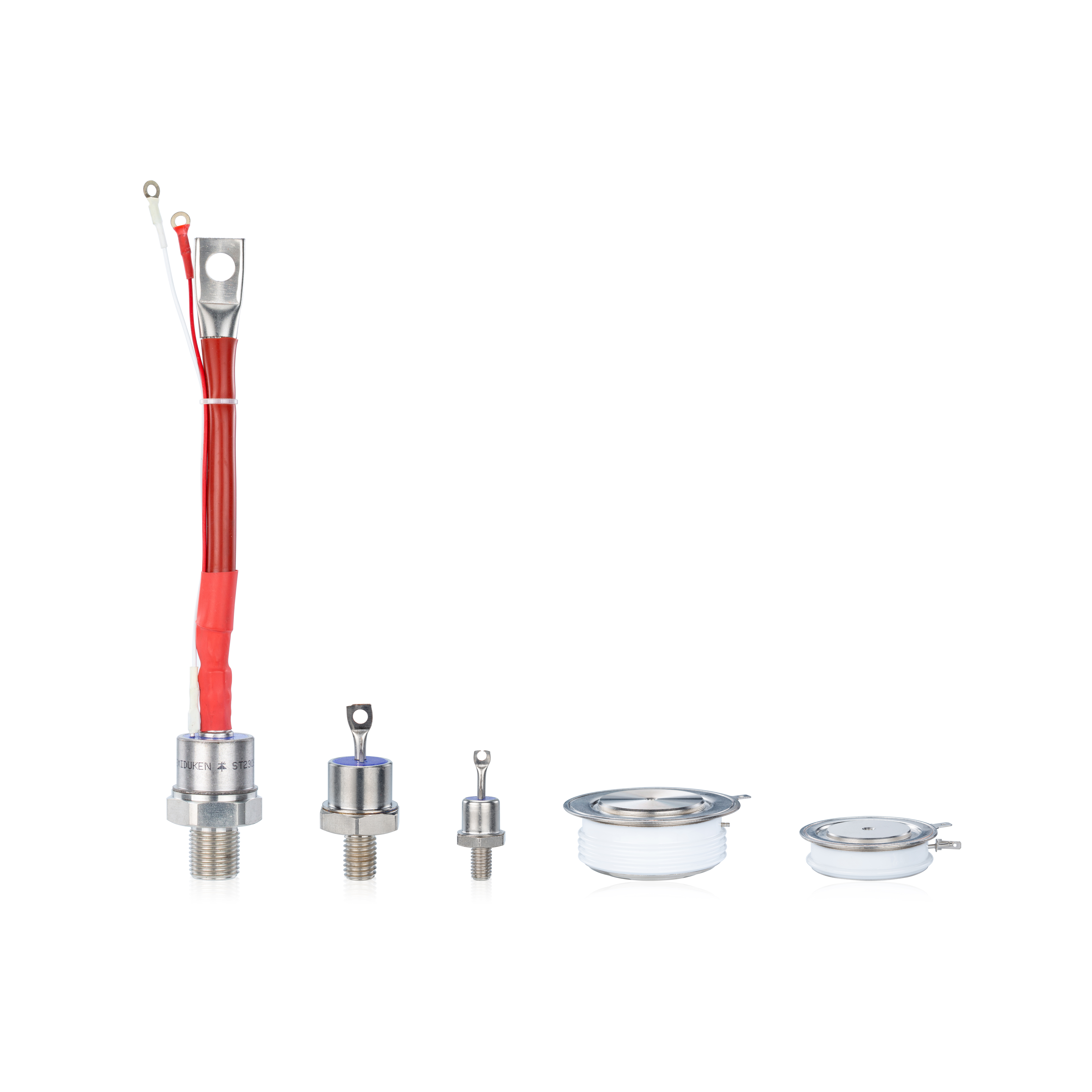
In industrial power conversion equipment, the front-end stage is responsible for some of the most demanding electrical tasks in the entire system. It must process incoming AC power, tolerate abnormal current events, operate efficiently during long service hours, and support stable downstream performance. This is why engineers working on a Phase-controlled Rectifier/Charger/UPS Front-end often pay close attention to the semiconductor module selected for the power stage. A module that lacks surge endurance or operates with excessive conduction loss can create avoidable heat, reduce reliability, and increase maintenance needs. By contrast, a High surge current low on-state voltage industrial phase control dual thyristor module provides a strong combination of efficiency, robustness, and practical integration value.
These modules are widely used because they support industrial applications that demand both stable control and rugged electrical performance. Whether the system is a controlled rectifier, industrial charger, UPS front-end, furnace heating controller, desalination process supply, soft-start circuit, or solar inverter support stage, the front-end module must operate reliably in real field conditions. This means surviving surge events, reducing conduction loss, and maintaining performance under long-term thermal stress. A High surge current low on-state voltage industrial phase control dual thyristor module is especially useful because it gives designers a balanced solution rather than forcing them to choose between ruggedness and efficiency.
Why Low On-State Voltage Improves Front-End Efficiency
A major source of heat in semiconductor power stages is conduction loss. The higher the on-state voltage drop, the more electrical energy is converted into unwanted heat. In a front-end power system that operates continuously, this loss accumulates and becomes a major thermal design issue. That is why the lower-loss behavior of a High surge current low on-state voltage industrial phase control dual thyristor module is so important in practical industrial use.
In a Phase-controlled Rectifier/Charger/UPS Front-end, the semiconductor module may spend long periods conducting significant current. This is common in charger systems, input rectifier stages, and UPS front-end assemblies that support continuous-duty equipment. A High surge current low on-state voltage industrial phase control dual thyristor module reduces conduction losses during these periods, which lowers cabinet temperature, eases heat sink demands, and improves overall energy efficiency. This benefit is particularly important in equipment where space is limited and cooling must be optimized carefully.
Lower on-state voltage also helps engineers improve long-term reliability. Excessive heat is one of the main causes of semiconductor aging and can affect nearby components as well. By using a High surge current low on-state voltage industrial phase control dual thyristor module, front-end designers can reduce thermal stress not only on the module itself but on the entire surrounding power assembly. Over time, this can support longer service intervals and more dependable equipment operation.
Surge Endurance Is Still Essential in Real Industrial Systems
Efficiency alone is not enough in heavy-duty power equipment. The front-end stage must also survive abnormal current events without immediate failure. Transformer energization, sudden startup conditions, switching transients, and fault recovery can all create short-duration current peaks that exceed normal operating levels. This is why surge capability remains one of the most important features of a High surge current low on-state voltage industrial phase control dual thyristor module.
This requirement is especially clear in HVDC surge protection furnace heating High surge current low on-state voltage industrial phase control dual thyristor module applications. In HVDC-related equipment, surge conditions may occur during switching changes or protection events, placing extreme stress on the power device. Furnace heating systems also generate challenging electrical environments because they often combine heavy thermal load with demanding startup behavior. A HVDC surge protection furnace heating High surge current low on-state voltage industrial phase control dual thyristor module offers the durability needed in these conditions while still maintaining efficient conduction during normal operation.
A HVDC surge protection furnace heating High surge current low on-state voltage industrial phase control dual thyristor module helps the front-end stage remain more reliable by increasing its ability to tolerate electrical stress without compromising daily efficiency. This balance is important because industrial designers rarely want a device that is only rugged but thermally inefficient. They need a solution that can do both, and that is exactly why this type of module remains widely used.
Process Control Applications Need Thermal and Electrical Balance
Industrial process systems often run for long durations and require stable, predictable power regulation. This is especially true in applications such as 1.43V temperature control desalination High surge current low on-state voltage industrial phase control dual thyristor module environments. Desalination systems, thermal process equipment, and controlled industrial heating assemblies rely on front-end semiconductor modules that can maintain efficient power flow without generating avoidable heat.
A 1.43V temperature control desalination High surge current low on-state voltage industrial phase control dual thyristor module supports these needs by combining reduced conduction loss with strong current capability. In process-control environments, the ability to maintain lower power dissipation is valuable because it helps improve thermal consistency and reduces strain on system cooling arrangements. Long-running equipment benefits greatly from this type of electrical efficiency, especially when thermal predictability affects process stability.
The same balance of efficiency and durability also supports broader process-control integration. A 1.43V temperature control desalination High surge current low on-state voltage industrial phase control dual thyristor module is not useful only because it can conduct current. It is valuable because it supports reliable operation over long periods under real industrial stress, which is what matters most in production and infrastructure environments.
Soft-Start and Solar Inverter Support Expand Front-End Flexibility
Industrial semiconductor modules are often selected not only for one application, but for their ability to support multiple related system types. A Phase-controlled Rectifier/Charger/UPS Front-end shares many electrical priorities with soft-start systems and renewable energy support circuits. All of these applications benefit from a device that can handle surge current, operate with low loss, and deliver stable performance in compact industrial assemblies.
For this reason, a soft-start temperature control solar inverter High surge current low on-state voltage industrial phase control dual thyristor module is especially attractive in power systems where startup behavior and transition control matter. During energization, a soft-start temperature control solar inverter High surge current low on-state voltage industrial phase control dual thyristor module can help reduce electrical and mechanical stress by supporting smoother startup behavior. This is useful in solar inverter support circuits, industrial motors, temperature-controlled systems, and other front-end assemblies where controlled power rise improves both protection and operational stability.
A soft-start temperature control solar inverter High surge current low on-state voltage industrial phase control dual thyristor module also makes it easier for engineers to use one robust module family across several industrial design categories. This simplifies part selection and supports more consistent reliability across diverse power platforms.
Conclusion
Front-end power conversion demands semiconductor modules that can combine efficient conduction with strong resistance to industrial electrical stress. A well-designed Phase-controlled Rectifier/Charger/UPS Front-end benefits greatly from a module that lowers heat generation while surviving surge events and supporting long-term stability. A High surge current low on-state voltage industrial phase control dual thyristor module offers that combination and performs effectively in HVDC surge protection furnace heating High surge current low on-state voltage industrial phase control dual thyristor module systems, 1.43V temperature control desalination High surge current low on-state voltage industrial phase control dual thyristor module applications, and soft-start temperature control solar inverter High surge current low on-state voltage industrial phase control dual thyristor module environments. For engineers seeking durable and efficient front-end power control, this type of dual thyristor module remains a highly practical choice.