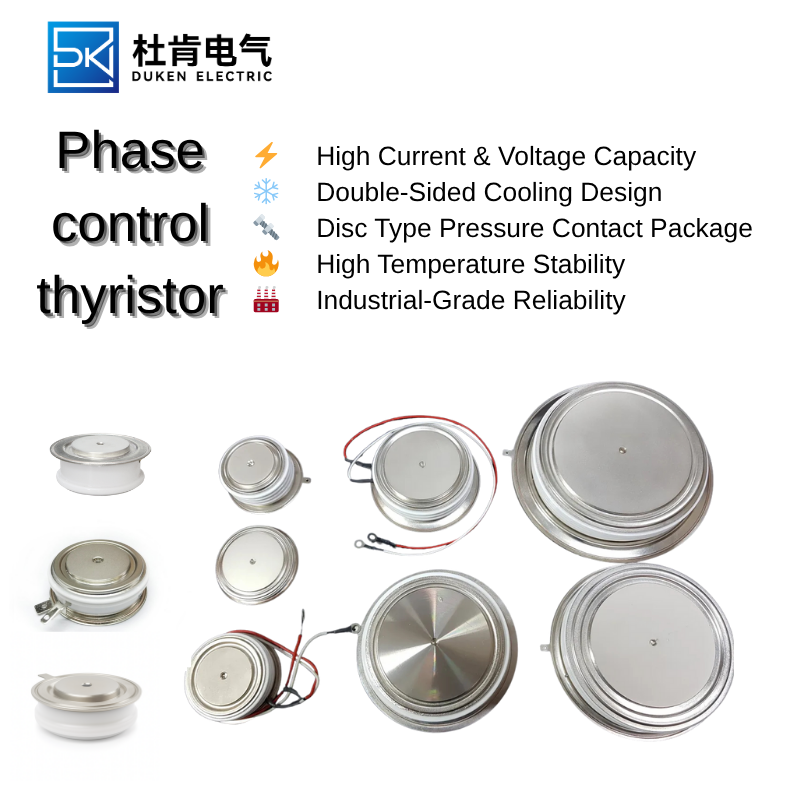
Evaluating 2200A Phase Control Thyristors for High-Power Industrial Use
The 2200A phase control thyristor plays an essential role in high-power industrial equipment, offering the switching capability necessary for precision control in demanding electrical environments. Applications such as heavy-duty rectifiers, static power converters, and electric rail systems depend on the device’s ability to manage massive current loads safely and efficiently. This article focuses on the essential criteria for evaluating 2200A thyristors, highlighting the importance of thermal resilience, voltage drop characteristics, and surge current handling.
1. Gate Trigger Performance in High-Temperature Scenarios
The high junction temperature tolerance gate trigger control 2200A phase control thyristor offers a unique advantage in temperature-sensitive settings. These devices maintain consistent firing characteristics even when operating in environments where heat dissipation is difficult, or where ambient temperatures are inherently high—such as near industrial furnaces or inside high-density switchgear cabinets.
Gate trigger control ensures that the thyristor transitions from the off-state to the conducting state precisely when required, even under thermal stress. Without stable gate characteristics, phase control circuits can experience mistimed conduction, resulting in waveform distortion and possible equipment malfunction.
Industrial engineers prioritize the high junction temperature tolerance gate trigger control 2200A phase control thyristor because of its robust thermal margin and stable gate parameters. Its performance under extreme temperatures directly contributes to the uptime and reliability of large-scale industrial operations.
2. Efficiency Enabled by Voltage Drop and Thermal Stability
In energy-intensive operations, efficiency is crucial. The high thermal stability low on‑state voltage drop 2200A phase control thyristor ensures that power losses remain minimal during conduction. Even a slight reduction in forward voltage drop translates into substantial energy savings when the device handles thousands of amperes continuously.
Thermal stability means the thyristor maintains its electrical properties over a wide temperature range without significant derating. Whether in steel rolling plants, aluminum smelting facilities, or marine propulsion systems, the high thermal stability low on‑state voltage drop 2200A phase control thyristor ensures optimal performance over time.
Users often analyze real-world forward drop performance and long-term heating profiles before committing to a specific part. Those metrics offer insight into how well the thyristor will perform after months or even years of constant operation under full load.
3. Surge Endurance and Aluminium Disc Packaging
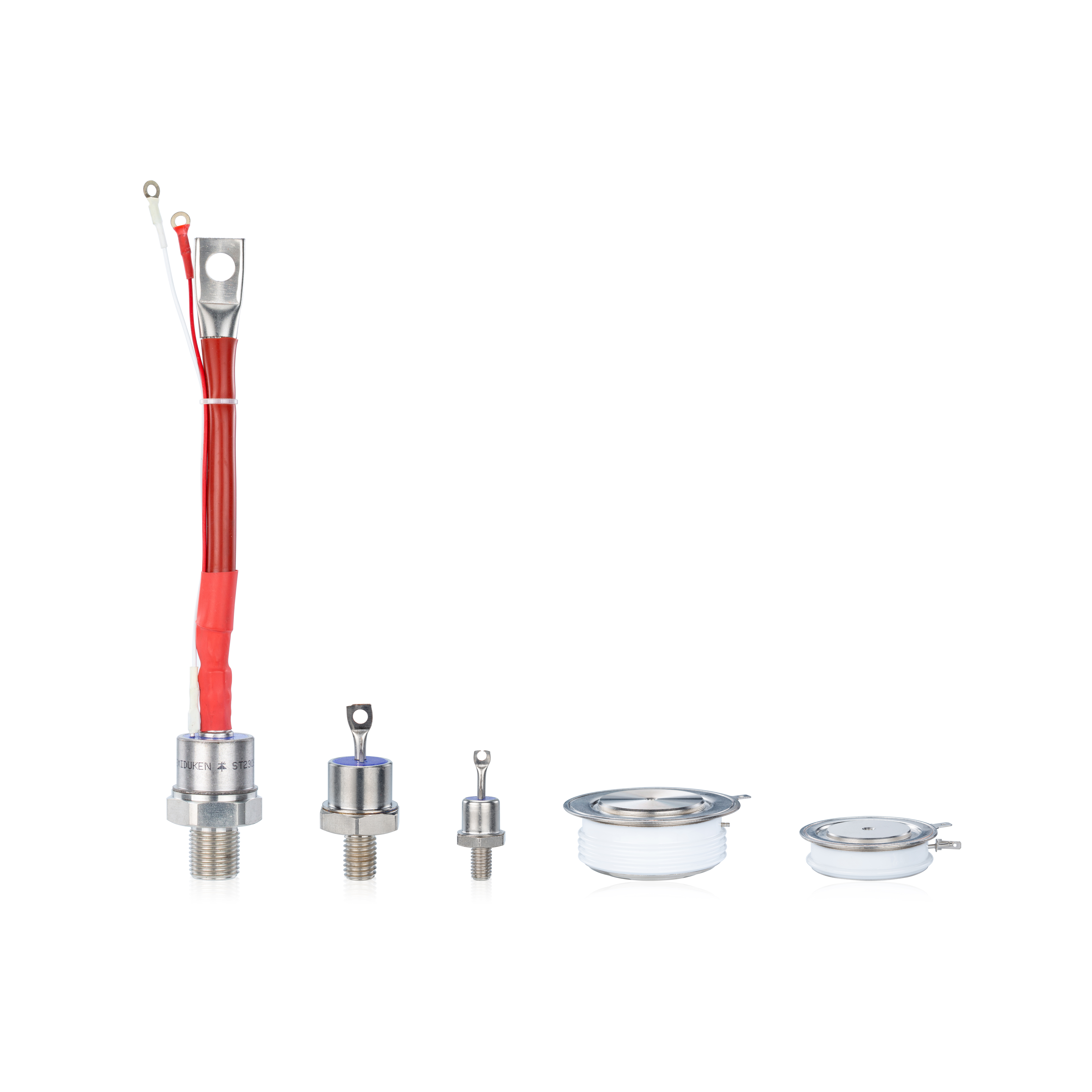
Surge capability is a must for any thyristor designed for industrial-grade use. Power surges caused by switching transients or load fluctuations can reach several times the device’s nominal current rating. A Aluminium housing disc package high surge current rating 2200A phase control thyristor is engineered precisely to handle such situations.
The aluminium housing provides not just structural rigidity but also excellent thermal conductivity. This packaging allows for fast and uniform heat evacuation from the silicon junction, protecting the device during pulse overloads. Additionally, the disc design simplifies mounting and improves pressure distribution during assembly.
During surge current testing, a Aluminium housing disc package high surge current rating 2200A phase control thyristor is evaluated based on its ability to handle repetitive pulse conditions without thermal fatigue or physical degradation. That makes it particularly suitable for systems with variable or intermittent load cycles.
4. Compatibility with Industrial Control Systems
Another advantage of premium-grade thyristors lies in their ability to integrate seamlessly with modern control systems. Devices that meet the high junction temperature tolerance gate trigger control 2200A phase control thyristor specification typically feature tight gate trigger ranges, making them ideal for digitally-controlled firing modules.
Similarly, the high thermal stability low on‑state voltage drop 2200A phase control thyristor is a preferred choice for PWM and phase-angle control systems, where minimal deviation in conduction characteristics is critical for maintaining wave integrity.
On the packaging front, the Aluminium housing disc package high surge current rating 2200A phase control thyristor is compatible with common clamping systems, ensuring quick replacement and maintenance—a big plus for industries that operate on tight downtime constraints.
5. Final Thoughts on Selection Criteria
When selecting a 2200A thyristor, design engineers and procurement specialists must evaluate:
Trigger performance at high junction temperatures
Voltage drop and conduction efficiency
Packaging durability and surge endurance
Compatibility with existing control and mechanical systems
Only devices that meet the combined specifications of high junction temperature tolerance gate trigger control 2200A phase control thyristor, high thermal stability low on‑state voltage drop 2200A phase control thyristor, and Aluminium housing disc package high surge current rating 2200A phase control thyristor can offer the long-term reliability and cost-effectiveness demanded by modern industrial applications.