Enhancing the Operational Life of 1500A Phase Control Thyristors in Power Electronics
The robust performance of a 1500A phase control thyristor is crucial in heavy‑duty applications, where uninterrupted service and long device life can drastically reduce maintenance costs and system downtime. This article explores how following specifications such as those found in the datasheet KP1500A‑6500V, managing low leakage current, and understanding the impact of a high surge current rating, Aluminium housing, and disc package design contribute to extended lifetime and reliability under varied industrial conditions.
Electrical Characteristics and Lifespan Correlation
Operational lifetime begins with understanding the electrical behavior of the component. In high‑current circuits, excessive leakage during off periods accelerates internal stress and heat buildup. A 1500A phase control thyristor that exhibits low leakage current ensures minimal parasitic losses and keeps internal heating under control. The datasheet KP1500A‑6500V provides expected leakage current values across temperature ranges, allowing engineers to model long‑term performance accurately.
Minimizing leakage improves not only thermal stability but also reduces the frequency of thermal cycling fatigue — one of the leading causes of semiconductor wear. Paired with controlled gate driver circuits, a thyristor with low leakage properties can maintain its structural integrity over millions of switching cycles.
Equally important is the device’s ability to manage peaks beyond regular operating currents. Industrial applications often encounter transient spikes. The high surge current rating of the 1500A phase control thyristor ensures it can withstand short‑term current bursts without degradation. Devices that lack adequate surge capacity are prone to junction cracking and metallurgical fatigue, which drastically shorten service life.
Thermal Management: A Cornerstone of Longevity
Thermal behavior often dictates how long a high‑power device will last. Even with steady electrical performance, poor heat dissipation can lead to localized hotspots, which are precursors to early failure. The Aluminium housing around the 1500A phase control thyristor acts as an effective conductor of heat, channeling it away from the semiconductor junction.
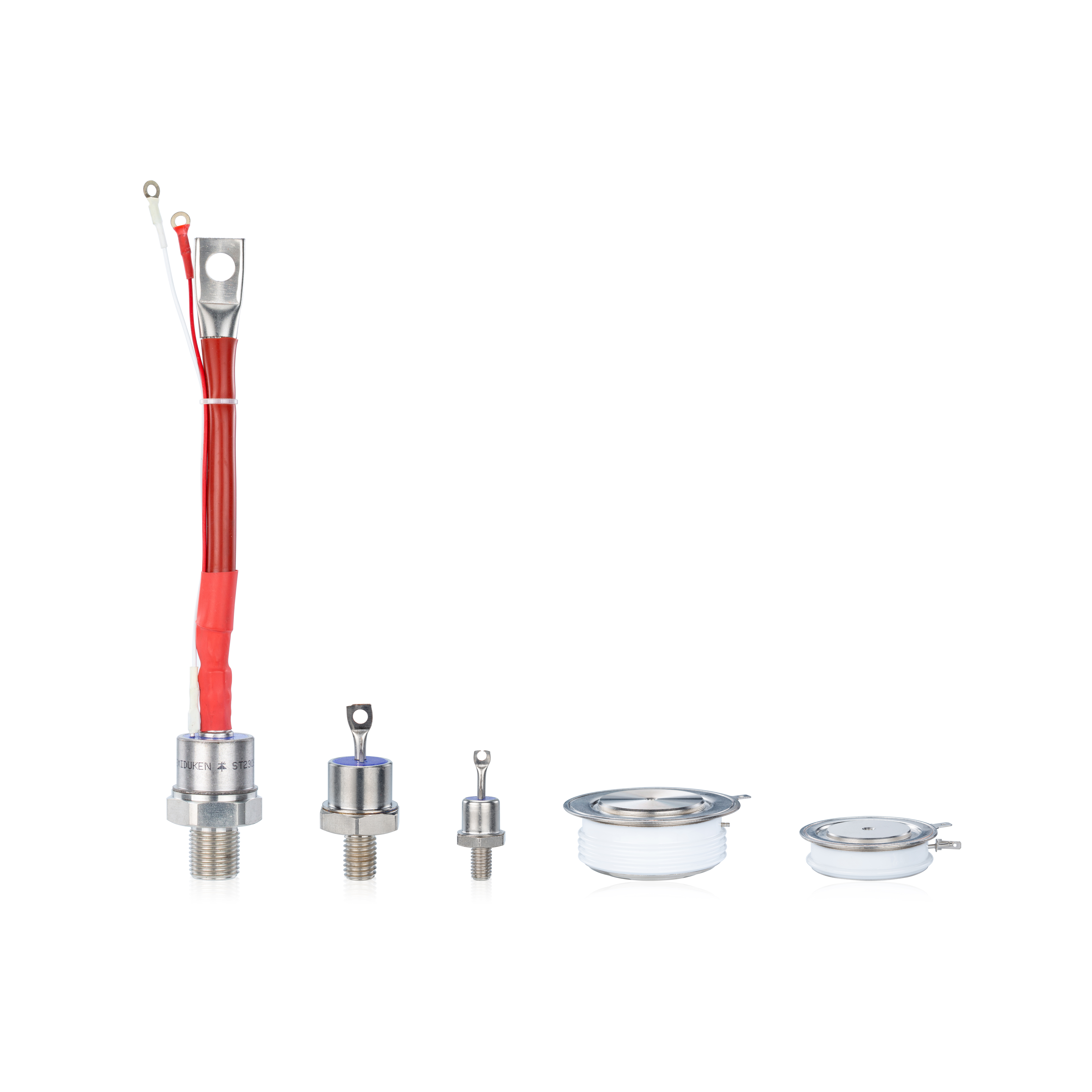
A well‑designed disc package offers a flat, uniform surface that simplifies attachment to heat sinks and cooling assemblies. Without effective thermal paths, even devices with low leakage and high surge ratings cannot escape heat‑induced wear.
Temperature gradients also influence solder joint integrity and can introduce mechanical stress. The right combination of a disc package and Aluminium casing promotes even thermal distribution and helps maintain consistent junction temperatures — critical to extending overall device life.
Application Environments and Maintenance Practices
Real‑world industrial environments introduce variables that specifications alone cannot predict. Dust, humidity, vibration, and fluctuating load demands each play a part in stressing a 1500A phase control thyristor.
Maintenance schedules should include periodic inspection of thermal interfaces, cleaning of cooling fins, and verification of electrical connections. Corrosion or poor contact resistance at terminals increases operational heat and accelerates wear.
A proactive maintenance regime can address issues before they impact the device’s electrical behavior. Monitoring for rising leakage currents or unusual thermal profiles can alert technicians that a thyristor is approaching its wear limit, in which case replacement before failure is more economical than emergency downtime.
Predictive Modeling and Replacement Strategies
Predictive modeling using datasheet parameters like those found in the datasheet KP1500A‑6500V enables engineers to set realistic replacement intervals. Factors such as average operating temperature, system load variability, and observed leakage trends feed into lifetime models that forecast wear‑out points.
Moreover, understanding how low leakage current and high surge current rating interplay with mechanical and thermal stresses gives system architects the insight needed to stagger replacements across multiple units — reducing total system impact when individual components are serviced.
Conclusion: Strategy for Extended Service
To ensure a long, reliable life for a 1500A phase control thyristor, system designers and maintenance teams must collaborate. Relying on datasheet‑based specifications, implementing robust thermal solutions, and staying vigilant in maintenance practices together form a comprehensive strategy. Recognizing the importance of electrical stability, mechanical design, and environmental control ensures devices operate within intended boundaries throughout their lifecycle.