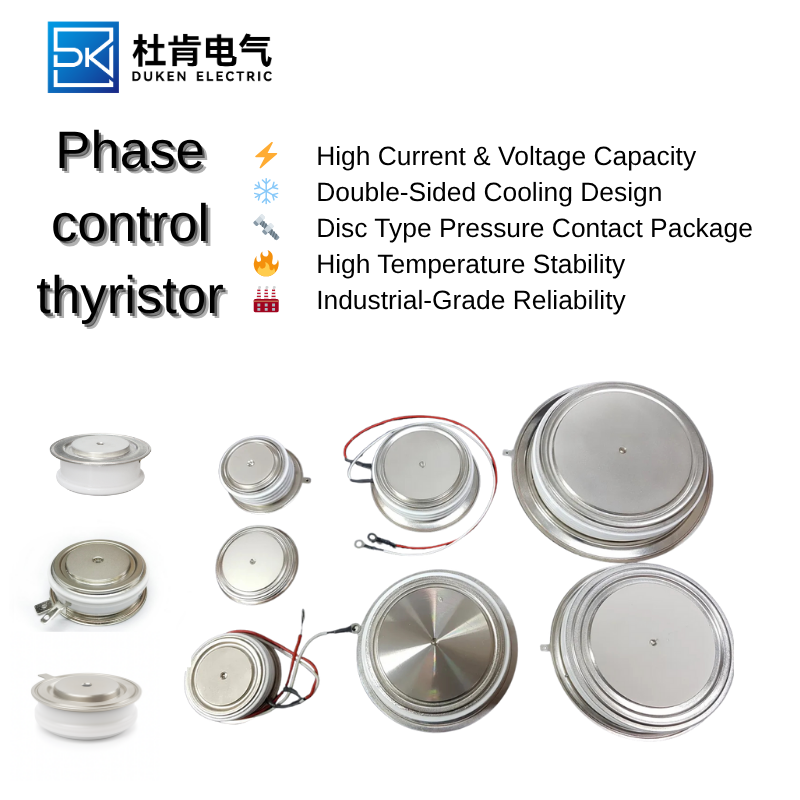
Comprehensive Installation Guide for 2000A Phase Control Thyristors in Mining Equipment Power Control
Introduction
In today’s mining industry, reliable power control is fundamental for the smooth operation of heavy-duty equipment. As the demand for higher current ratings and more robust components rises, the 2000A phase control thyristor has become a key component in mining equipment power control systems. However, due to its high current handling capacity and advanced design, installing this thyristor correctly is crucial for safety, efficiency, and long-term performance. This guide provides step-by-step instructions and professional insights into installing 2000A phase control thyristors, highlighting the importance of forced-cooling heat sinks and best practices for mining power control environments.
Key Considerations Before Installation
Before beginning the installation, engineers and technicians should thoroughly review the mining equipment power control system’s requirements. The 2000A phase control thyristor is specifically engineered to manage large currents and withstand demanding conditions common in mining operations. Its correct integration not only boosts operational efficiency but also extends the lifespan of both the thyristor and the equipment it serves.
Assess Power Control Needs: Start by evaluating the mining equipment’s peak and average current requirements, voltage levels, and control strategy.
Select Compatible Forced-Cooling Heat Sinks: High-current thyristors such as the 2000A model generate significant heat. Using a properly rated forced-cooling heat sink is essential to prevent thermal runaway and guarantee optimal performance. The heat sink’s design should match the thyristor’s specifications and the mining environment’s cooling capacity.
Check All Accessories: Ensure all necessary mounting hardware, thermal interface materials, and electrical connections are ready before installation begins.
Step-by-Step Installation Process
Site Preparation and Safety
De-energize all systems: Safety first—ensure that the mining equipment power control circuits are completely de-energized and locked out.
Grounding: Properly ground the installation site to prevent electrical hazards.
Workspace setup: Set up an organized, static-free work area to handle sensitive components safely.
Mounting the 2000A Phase Control Thyristor
Positioning: Place the thyristor close to the load and within easy reach of the forced-cooling heat sink to minimize wiring resistance and optimize thermal management.
Thermal Interface Application: Apply a thin, even layer of thermal compound between the thyristor and the heat sink. This maximizes thermal conductivity and ensures the forced-cooling heat sink can dissipate the large amounts of heat generated during operation.
Mechanical Securing: Use recommended torque settings to secure the thyristor to the heat sink, ensuring even pressure distribution and avoiding mechanical stress that could damage the semiconductor wafer.
Electrical Connection and Integration
Connect to Power Control Circuitry: Follow the mining equipment power control schematic closely, using appropriately rated cables and connectors for the 2000A current level.
Signal Wiring: Wire the gate and cathode signals according to manufacturer guidelines, maintaining short, direct runs to reduce noise and ensure reliable triggering.
Double-Check All Connections: Verify tightness and integrity of every connection before proceeding.
Testing and Commissioning
After the 2000A phase control thyristor is installed and the forced-cooling heat sink is secured:
Initial Power-Up: Slowly power up the system while monitoring temperatures, voltages, and current draw.
Monitor Heat Sink Performance: Ensure that the forced-cooling heat sink maintains safe operating temperatures under full load. Overheating is a sign of poor thermal contact or insufficient cooling capacity.
Test Gate Trigger Functionality: Use diagnostic equipment to verify that the gate circuit is triggering the thyristor properly, and that switching occurs as expected in response to mining equipment power control commands.
Maintenance Tips and Long-Term Reliability
Regular Inspections: Periodically inspect all connections and the forced-cooling heat sink for dust, debris, or wear that could impact performance.
Temperature Monitoring: Use thermal sensors to continually monitor thyristor and heat sink temperatures.
Documentation: Keep a log of all installation, maintenance, and performance data for future reference.
Conclusion
The 2000A phase control thyristor is a cornerstone of modern mining equipment power control. Correct installation, including the use of an efficient forced-cooling heat sink and adherence to best practices, ensures safe operation, minimal downtime, and a long service life. By following this guide, engineers can confidently integrate these powerful devices into mining systems and achieve optimal performance.